The US-Iran War: What's Happening and Why It Matters
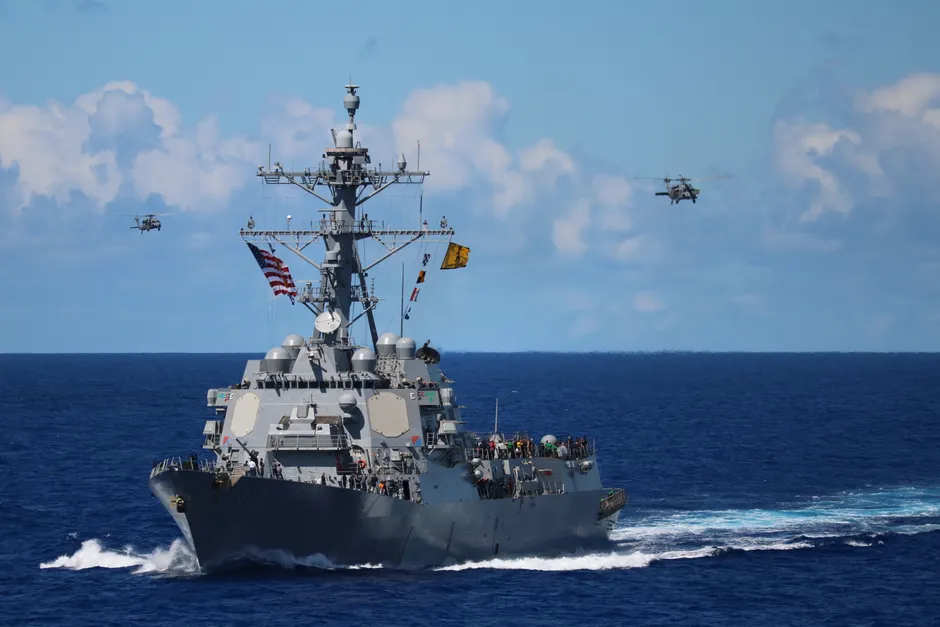
The US military announced it was beginning its ninth straight night of attacks on Iran on July 19–20, 2026. At the same time, a temporary deal that was supposed to help end the US-Iran war appeared to have fallen apart The Guardian. The US military said on X that it would keep attacking Iranian military forces that have been targeting commercial ships and sailors passing through the Strait of Hormuz. The Strait of Hormuz is a narrow waterway between Iran and Oman that connects the Persian Gulf to the open ocean. About one-fifth of all the oil the world uses every day normally flows through it. The fighting, now in its second week, has pulled in several nearby countries and caused deaths on both sides.
Here is how the fighting escalated. On July 17, two American soldiers were killed in Jordan. The US military said it attacked Iran on July 18 to "swiftly punish" Iran's Revolutionary Guard, which is an elite military force that answers directly to Iran's top leader. Another US soldier was killed in Iraq the same day while trying to safely destroy an Iranian drone that had been shot down. Donald Trump said the US is hitting Iran "very hard" to honour the American service members killed in recent days. Iran's supreme leader, Ayatollah Mojtaba Khamenei, said the US would pay for trying to escalate the conflict.
The scale of the US attacks, according to Iranian officials, is very large. Iran said the US struck 95 locations across 12 cities in the 10 days before July 20. A bridge connecting the Iranian cities of Bandar Abbas and Kehuristan was damaged, as shown in a photo published July 20. The US military's own reports confirm a steady pace of attacks: about 90 targets hit on July 7–8, over 80 targets on July 7 in a separate round, roughly 140 targets in one wave using fighter jets and drones, another wave on July 12 using aircraft and cruise missiles, and more strikes on July 16 using aircraft and precision-guided weapons CENTCOM. The US military also published a report on July 19 titled "U.S. Completes 8th Consecutive Night of Strikes Against Iran."
The US has focused its attacks on the Strait of Hormuz. US airstrikes have targeted Iranian military positions along the coast to weaken Iran's ability to control the strait Reuters. The targets have included command centers, air defense systems, missile and drone facilities, and coastal monitoring stations. The governor's office of Qeshm Island, which sits on the Strait of Hormuz, reported the island was hit by a US projectile at about 7 p.m. Tehran time on July 14. Iran has warned that the Strait of Hormuz is a "red line" and that it would "resist until the end."
Iran has fought back on several fronts. Iran said it fired on a US ship in the Indian Ocean on July 17 and also attacked US allies Reuters. Kuwait's army said its air defenses were responding to hostile drones from Iran. Bahrain's interior ministry said air raid sirens went off and told people to stay calm and go to the nearest safe place. Bahrain is home to the US Fifth Fleet, a major American naval force, and had already been hit by Iranian strikes in the days before July 20. The Israeli military said sirens sounded in the southern areas of Kfar Aza and Sa'ad, but this turned out to be a false alarm. Iran's Revolutionary Guards claimed they launched a "surprise attack" on an enemy command center in Syria on July 20 in revenge for soldiers killed in Iranshahr.
Ships passing through the Strait of Hormuz are still in danger. A maritime monitoring group called UK Maritime Trade Operations received a report of an incident 8 nautical miles northwest of Oman's Kumzar area, saying a vessel was on fire. The cause has not been confirmed. This adds to a series of similar incidents involving tankers and commercial ships in the strait since the fighting began.
The broader context here is that the conflict has gone far beyond just the US and Iran. Every Gulf country that hosts US military bases, from Bahrain to Kuwait, is now in range of Iranian attacks, whether by drone, missile, or small boats. The Revolutionary Guard's claimed attack on a command center in Syria shows that Iran is using its network of allied armed groups across the Middle East, not just fighting from its own territory. The collapse of the temporary deal removes what little diplomatic progress existed. With Trump saying the campaign is about avenging fallen soldiers and Khamenei promising the US will "pay," both leaders have taken public stances that make it politically difficult to step back.
The main risk is about oil and global stability. If Iran can keep harassing or destroying ships in the Strait of Hormuz, even without fully blocking it, that would cause an immediate jump in oil prices and could draw more countries into the conflict. The US strategy of systematically destroying Iran's coastal military facilities appears aimed at taking away that ability before Iran can use it. Whether the strikes have done enough to protect shipping is still an open question. Iran's continued drone attacks on Kuwait and Bahrain, its firing on a US ship in the Indian Ocean, and the still-unexplained vessel fire near Oman's coast all suggest the answer is not yet.