Iran and the US: How We Got to "Full-Scale War" and Why Oil Prices Are Rising

On July 20, 2026, Iran's president, Masoud Pezeshkian, said his country is in a "full-scale war" with the United States. He made the statement at a meeting of Iran's top judicial body, the Supreme Judicial Council. His words were published by Iran's state news agency, IRNA, and came the morning after the US military completed its ninth night in a row of airstrikes on Iranian military targets. IRNA
Pezeshkian said the economy is the most important part of the war, and that Iran "must accept the repercussions of the conflict" with the US. Al Jazeera He did not give this speech to parliament or to the military. He gave it to judges and legal officials. That choice suggests he was preparing Iran's government for a long period of economic hardship, not calling for an immediate military push.
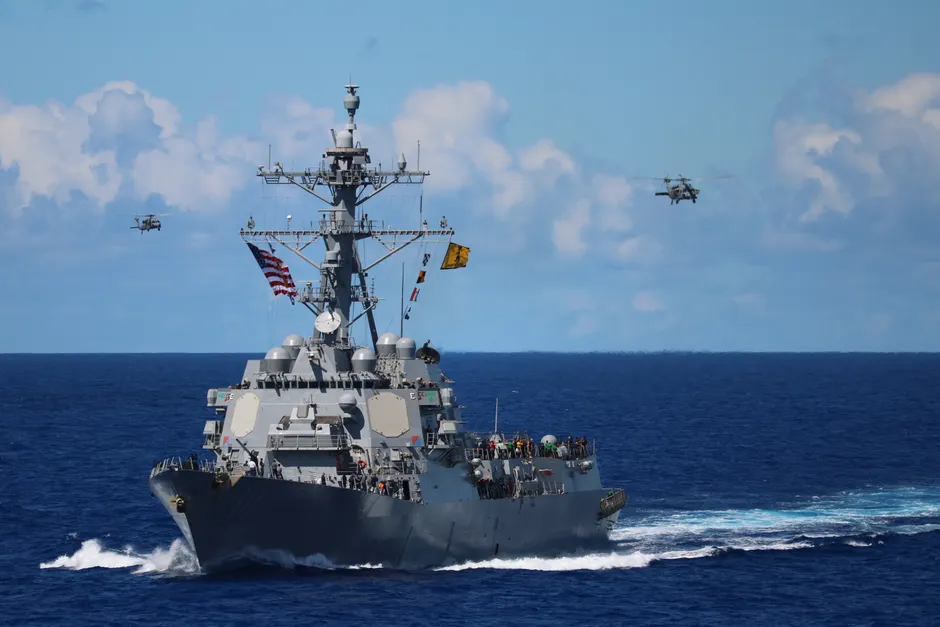
The US has been expanding its airstrikes night after night. American forces have hit military command centers, air defence systems (the equipment countries use to shoot down incoming missiles and aircraft), coastal surveillance sites, missile and drone launch sites, and communications networks. Iranian news outlets reported strikes near Tabriz, a city thought to hold underground missile bases, and Bushehr, where Iran's only working civilian nuclear power plant is located. The US military's press release listed additional targets including Chah Bahar, Jask, Konarak, Abu Musa, and Bandar Abbas. The Guardian CENTCOM
Iran has fired back. It attacked Bahrain, a small Gulf country that hosts the US Navy's Fifth Fleet, and Kuwait. Iran also struck commercial oil tankers in the Strait of Hormuz, a narrow waterway between Iran and Oman. Before the war, about a fifth of all the oil and gas traded worldwide passed through this strait. The Guardian
A group in Yemen called the Houthis, who are allied with Iran, announced on July 20 that they were blocking ships from entering Saudi Arabian ports. They said this was in response to Saudi Arabia targeting an airport in Yemen's capital, Sana'a. The blockade matters because Saudi Arabia had been using a different shipping route, through the Red Sea, to export its oil and get around Iran's closure of the Strait of Hormuz. Now both routes are under pressure. With fewer safe paths for oil to reach global markets, the price of oil went above $90 a barrel on July 20, its highest in a month. The Guardian
This fighting has effectively destroyed a peace agreement that the US and Iran had reached just weeks earlier. In June 2026, the two sides signed a Memorandum of Understanding, a non-binding agreement that was meant to stop the attacks and reopen the Strait of Hormuz. It included a 60-day period to give both sides time to talk. That period has not officially ended, but the fighting has become so intense, now in its second week of nightly strikes, that the agreement no longer seems to hold.
There are still people trying to make peace. Qatar and Pakistan have continued speaking to both Iran and the US. Iran's interior minister was expected to travel to Pakistan's capital, Islamabad, on July 20. Mediators have shared a proposal for a 10-day ceasefire (a temporary halt to fighting) to try to revive the June agreement, according to an Iranian official who spoke to the Reuters news agency. Iran's foreign ministry spokesperson, Esmail Baghaei, confirmed that mediators had passed along diplomatic messages and ideas in recent days. US Secretary of State Marco Rubio said the US was still open to negotiations with Iran but that "it has to be real." The Guardian
The war's toll on people became clear on July 18, when a US service member was killed in northern Iraq. He was handling a downed drone that still had unexploded weapons on it. His death shows how the fighting has spread beyond Iran's borders, pulling in Iraq and other countries in the Gulf region.
The broader context here is that mediators face a tough problem. The June agreement was built on the idea that both Iran and the US wanted a break. But Pezeshkian's focus on the economy suggests Iran sees this as a long test of endurance, not something a 60-day pause can resolve. At the same time, the US has been systematically destroying Iran's coastal defences and military capabilities, and that kind of campaign can be hard to stop halfway. Whether a 10-day ceasefire can bridge the gap depends on whether either side sees a believable way out of a conflict that Iran now calls a full-scale war.