Why Thousands Are Protesting in Ukraine Over Its Top General

Ukraine's top military leader, General Oleksandr Syrskyi, was expected to lose his job as of July 20, 2026. An anonymous military source told The Guardian that "His destiny is decided." But Ukraine's military leadership denied the reports that same day, saying Syrskyi and his deputy were still carrying out their duties. No official order removing him had been posted on President Zelenskyy's website as of that date.
The trouble started when Zelenskyy fired his defence minister, Mykhailo Federov, around July 16, 2026. Federov, 35, was seen as a reformer who had improved Ukraine's battlefield position in his six months on the job The Guardian. The Associated Press reported on the reshuffle and protests the same day AP. Zelenskyy confirmed that Federov and Syrskyi could no longer work together. Federov accused Syrskyi of blocking reforms with red tape and favouring military units that were personally loyal to him The Guardian.
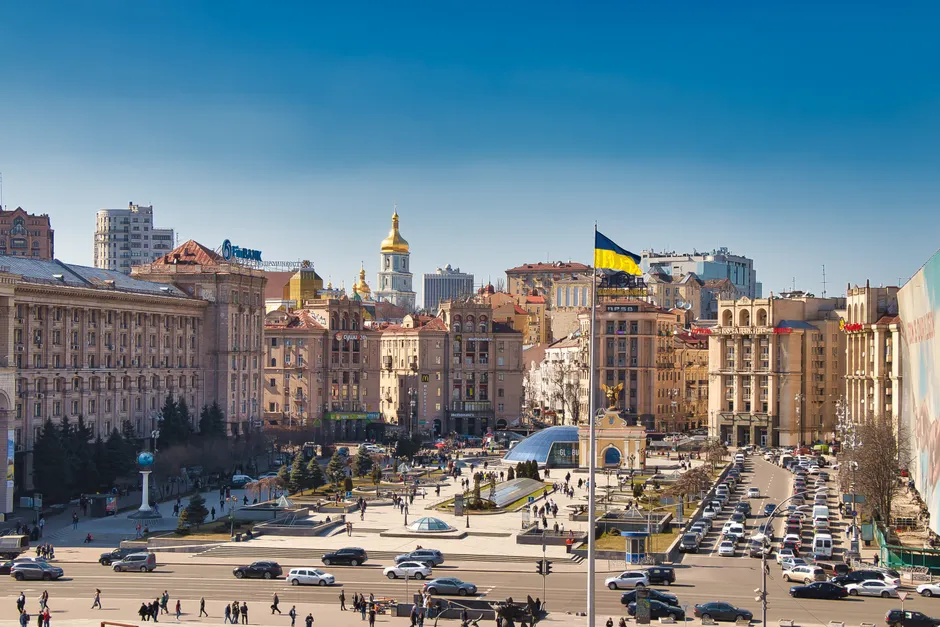
Federov's firing sparked five days of protests outside the presidential office in Kyiv. Thousands of people chanted "Syrskyi out" and waved cheese graters as a joke about the commander's name. Protest leaders gave Zelenskyy a deadline of Friday, around July 24, to bring Federov back. If he did not, they threatened a nationwide, open-ended protest The Guardian.
Zelenskyy's chief of staff, Kyrylo Budanov, said on or before July 20 that "the position of society has been heard" and that the situation was being resolved "professionally and constructively" The Guardian. The military's denial came alongside this softer language, creating an official stance that acknowledged public anger while pushing back against the specific reports about Syrskyi leaving.
On July 20, Zelenskyy met with possible replacements for Syrskyi. One of them was Mykhailo Drapatiy, head of Ukraine's joint armed forces, who became famous for driving a tank through a pro-Russian blockade in Mariupol in 2014. Zelenskyy's new defence minister, Yevheniy Khmara, attended the meetings with top military figures The Guardian. The anonymous military source said the replacement should be well-liked but should not have obvious political ambitions.
Syrskyi has been leading the military during a complicated war. In late June 2026, he reported that Ukrainian forces had taken back over 670 square kilometres of territory since the start of the year, and that Russian advances had slowed by more than half in the first six months of 2026 Ukrinform. He also said Russia sees a new round of conscription (forcing civilians into military service) as a last resort, possibly waiting until after their parliamentary elections Ukrinform. As recently as May 2026, Syrskyi told Zelenskyy that despite a declared ceasefire, Russian forces had not slowed their attacks president.gov.ua. He also warned that Russia still planned to seize Ukrainian land and create a buffer zone in the north Ukrinform.
Syrskyi trained at a military academy in Moscow The Guardian, a detail that has drawn suspicion in Ukraine, where ties to Soviet-era military education are politically sensitive. The clash between Federov's push for change and Syrskyi's way of running the military, with Federov saying the general was unwilling to openly discuss problems within the armed forces Ukrinform, revealed a deeper tension in how Ukraine's civilian government and military leadership work together.
The broader context here matters for several reasons. Changing a top general in the middle of a war is always disruptive, but what makes this situation unusual is how it is happening. This is not a quiet decision made behind closed doors. It is a crisis driven by street protests that are demanding two very specific things: remove Syrskyi and bring back Federov. That puts a different kind of pressure on the president than simply being unhappy with how the war is going.
The parallel with Ukraine's past is hard to miss. Large crowds outside the presidential office demanding specific people be removed bring to mind Ukraine's Maidan protests of past decades, though on a smaller scale and aimed at military leadership rather than the president himself. The July 24 deadline creates a moment where things could escalate. If Zelenskyy does not bring Federov back, the threat of a nationwide, open-ended protest raises the possibility of ongoing domestic unrest while the war with Russia is still being fought.
Budanov's words, "the position of society has been heard," are deliberately vague. They acknowledge the protesters' concerns without promising any specific action, whether removing Syrskyi or reinstating Federov. The military's outright denial, on the other hand, could look embarrassing if Syrskyi is fired within days. The anonymous source's claim that Syrskyi's "destiny is decided" suggests that people inside the military have already accepted what the official statement has not confirmed. Whether that gap closes with an official firing order or with the protests fading away should become clear by the July 24 deadline.