Why Trump Is Blaming Iran for Houthi Attacks on Oil Ships

President Trump warned on July 23, 2026, that the United States would hold Iran directly responsible for any future attacks by Yemen's Houthis on commercial shipping. The warning escalates a confrontation that has already drawn U.S. military strikes on Iranian soil and pushed oil prices higher (NYT).
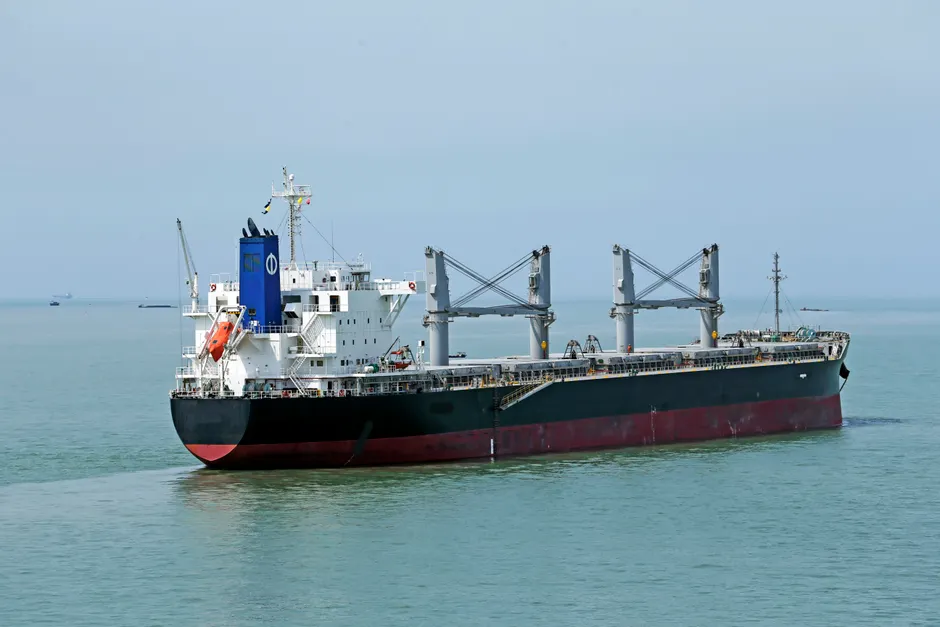
The Houthis are an armed group that controls part of Yemen, a country on the southern edge of the Arabian Peninsula. The day before Trump's warning, the Houthis said they had attacked two oil tankers flying Saudi Arabia's flag — the Encelia and the Layla — in the Red Sea. The group said the ships had broken a blockade the Houthis had declared, and that they used missiles and drones in the strikes (Al Jazeera; Euronews; NY Post).
Oil markets reacted right away. On July 22, the price of a barrel of oil (sold under the benchmark known as Brent crude) rose 3.3% to $94. The same day, four oil tankers carrying Saudi oil to Asia turned around in the Bab el-Mandeb Strait (Reuters). That strait is a narrow waterway between Yemen and East Africa — one of the most important routes in the world for ships carrying oil. Think of it as a highway that millions of barrels of oil pass through every day. When several ships turn back at once, it means the companies operating them see the risk of Houthi attacks as high enough to abandon their planned routes.
This is not the first time Trump has pinned the Houthis' actions on Iran. In March 2025, during an earlier round of U.S. military raids on Yemen that the Houthis say killed 53 of their fighters, Trump said he would hold Iran responsible for any future attacks by the group (Al Jazeera; Times of Israel). By saying it again now — while the U.S. is actively bombing Iran — the administration appears to be treating Houthi strikes on commercial shipping as if Iran itself carried them out, and responding with military force on that basis.
That bombing campaign is already underway. As of July 18, 2026, the U.S. military had carried out 12 nights of airstrikes against Iran (AP). Combined with the Houthi threat in the Red Sea, the U.S. now faces a two-front maritime confrontation: one targeting Iran's military directly, the other contesting one of the busiest shipping lanes in the world.
Oil prices have felt this pressure for months. Brent crude topped $98 a barrel earlier in 2026 during the Iran war and the Houthi attacks on shipping (AP). The price has swung up and down but stayed high. It hit $100.46 on March 12, dropped to $94.75 on April 7, and briefly rose above $100 on March 29 after a Houthi attack on Israel made the conflict seem wider (Reuters, March 12; Reuters, April 7; Reuters, March 29). The $94 close on July 22 falls within that same range, though the specific trigger this time — a strike on ships flying Saudi Arabia's flag — adds a new element.
The Houthis' choice of Saudi targets is a shift. In 2025 and early 2026, their attacks mostly threatened ships linked to the U.S. or Israel. The Encelia and Layla fly Saudi Arabia's flag, which means the Houthis are now going after vessels connected to a country that has tried to stay on good terms with both the United States and Iran. Saudi Arabia, based on the available reporting, has not been directly involved in the U.S. strikes on Iran.
The broader context here is one of escalating steps, each one making the next harder to undo. The U.S. has linked Houthi attacks to Iran in words since at least March 2025 and has now acted on that link by bombing Iranian territory. The Houthis have expanded their targets to include Saudi oil ships. Each move narrows the paths to a diplomatic solution: Iran is being blamed for actions it may not be directly ordering, while Saudi Arabia's commercial fleet is caught in a conflict driven increasingly by decisions in Washington and Tehran. For energy markets, the central question is whether the disruptions in the Bab el-Mandeb Strait continue. Four tankers turning back is a single event. A lasting shutdown of safe passage through that strait would push oil prices well beyond the $94–$100 range the market has traded this year.