Apple Maps Is Heading Straight Into Ford's Cars

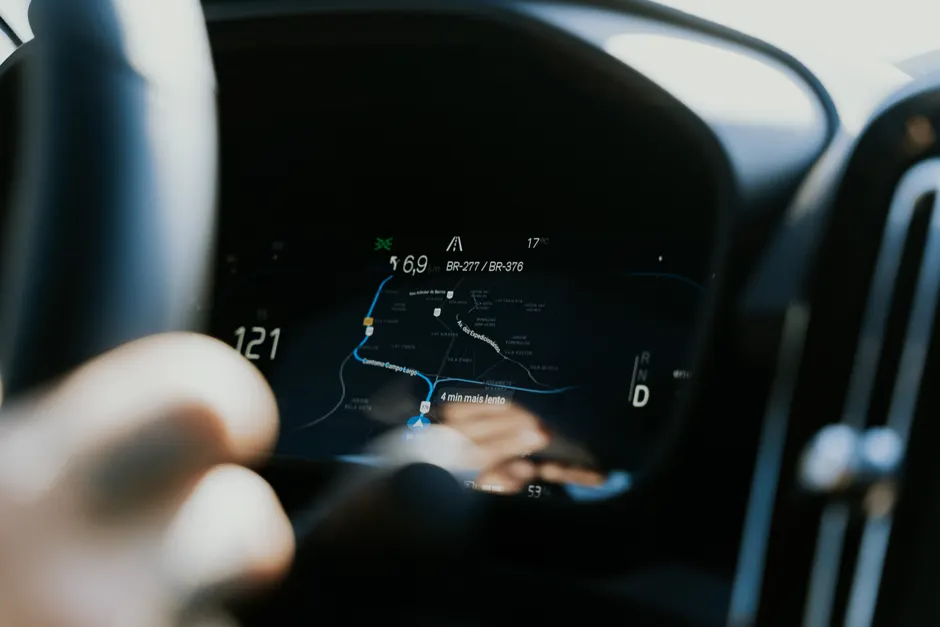
Apple has announced a new tool called MapKit for Automotive that lets carmakers build Apple Maps navigation directly into their vehicles. Ford is the first automaker to sign on, and will bring the feature to a new line of electric vehicles starting with a $30,000 midsize truck in 2027. The two companies signed a deal, though they have not shared the financial details. TechCrunch
This is different from Apple CarPlay, which lets you mirror iPhone apps on your car's screen. CarPlay depends on your phone being connected. MapKit for Automotive runs on the car's own computer, so the maps are always available even without a phone.
The embedded Apple Maps will feed road-level information to Ford's next-generation BlueCruise system, which lets drivers take their hands off the wheel on highways. The upgraded BlueCruise is expected in 2027 and will handle entire highway trips, including entrance and exit ramps. Ford said it will eventually offer "point-to-point autonomy" comparable to Tesla's Full Self-Driving (Supervised) software. The goal is for drivers to be able to take their eyes off the road by 2028.
The integration also supports electric vehicle-specific features. Battery preconditioning, which warms up a battery before the car reaches a charger so charging is faster, will be handled by the embedded map data. Ford Pro commercial fleet customers could also benefit from routing to job sites and seeing other fleet vehicles on the map.
Ford developed a shared electric vehicle platform called UEV that will support a midsize truck, sedan, crossover, three-row SUV, and small commercial vans. The $30,000 midsize truck is the first vehicle expected to ship with MapKit for Automotive built in.
The partnership builds on a relationship that already exists through CarPlay. Ford previously made fast charger routing available to its customers through Apple Maps in CarPlay, and was the first automaker to make the Tesla Supercharger network available to its customers. Ford
The difference between CarPlay mirroring and a built-in system matters for a few reasons. CarPlay lives on your phone and projects to the car screen, so when the phone is gone, the navigation is gone too, and it cannot directly talk to the car's internal systems like the battery management or driver assistance features. A built-in system running on the car's own computer means the maps are always there, can communicate directly with the car's electronics, and becomes part of the driving system rather than just a display.
The industry has been moving in this direction. Google built an embedded system called Android Automotive OS that runs natively on Volvo, Polestar, and Renault vehicles, among others. Apple has now taken a similar path, though MapKit for Automotive is specifically a mapping and navigation tool rather than a full infotainment operating system.
The decision to use Apple Maps data in BlueCruise is the most technically important part of this partnership. Hands-free driving systems rely heavily on detailed map data for lane-level positioning, road shapes, and exit-ramp logic. Ford's current BlueCruise works on highway segments that have been mapped and checked in advance. Moving to a system that handles entire highway journeys including ramps, and then progresses to point-to-point autonomy and eyes-off driving in 2028, requires map data that is richer, updated more often, and more tightly connected to the car's real-time sensors than a mirrored phone app can offer. Apple Maps was rebuilt from the ground up starting in 2018 with Apple's own data collection, and now includes lane-level detail, 3D road models, and detailed city experiences in select markets. Whether that data is good enough to serve as the primary input for conditional automation, where the car can drive itself in specific conditions but a human must be ready to take over, is a question that will only be answerable once the system ships and faces real-world situations.
For Ford, the partnership also solves a practical problem. Building and maintaining a detailed mapping platform in-house is expensive and requires constant data-collection infrastructure. Tesla built its own. GM's Super Cruise relies on a partnership with a company called Mapbox and lidar-collected road data. Ford is betting that Apple's mapping infrastructure, built into the car, can serve as the foundation for its self-driving plans.
The $30,000 midsize truck price point is notable. Ford is targeting a mainstream segment where profit margins are thin and costs matter. Using Apple Maps rather than building a navigation system from scratch helps keep per-vehicle software costs down while taking advantage of Apple's continuously updated map data. The UEV platform covers everything from commercial vans to three-row SUVs, meaning the same mapping and driver-assistance system can be spread across Ford's entire next-generation EV lineup.
The broader context here is that Apple's move into built-in automotive mapping raises questions about how other carmakers will respond. If MapKit for Automotive proves competitive with Google's embedded offering and Tesla's in-house system, the mapping layer of the car becomes a market dominated by two or three big players. Automakers that have invested in their own navigation and driver-assistance mapping may need to reconsider whether building their own is still worth it compared to the pace of improvement Apple and Google can fund.
Ford has not disclosed the financial terms of the agreement, nor whether MapKit will be exclusive to Ford for any period. The 2027 timeline for the first vehicles and the upgraded BlueCruise, with eyes-off capability targeted for 2028, makes this a multi-year roadmap rather than something arriving soon.