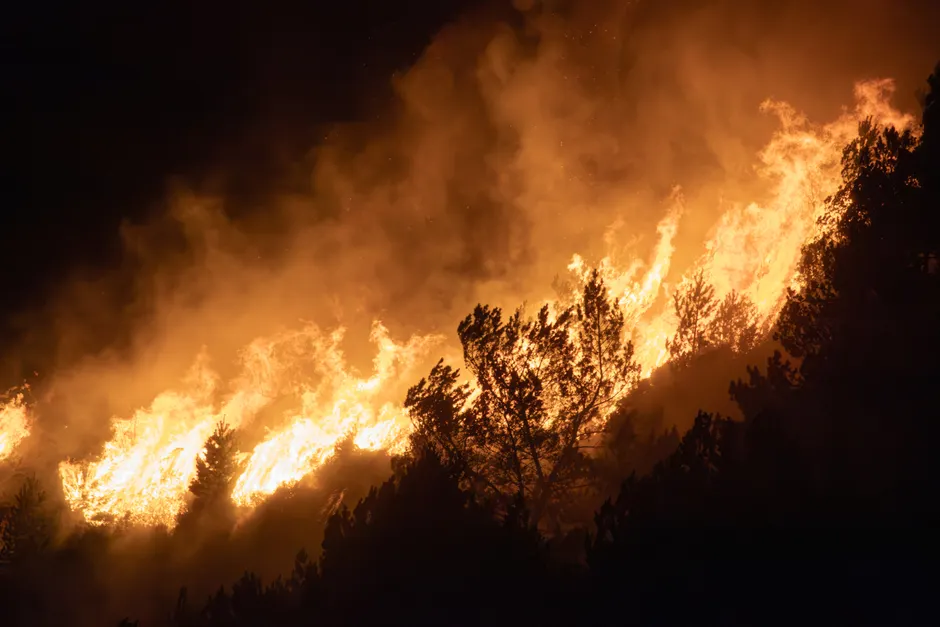
Wildfires Are Burning Across France and Spain at the Same Time
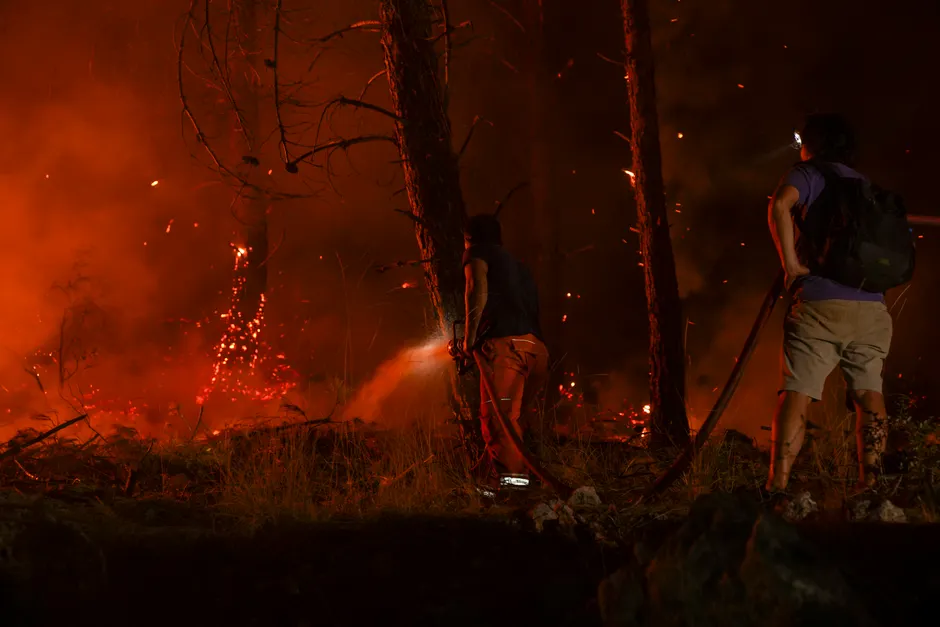
France and Spain are both fighting major wildfires at the same time, and tens of thousands of people have had to leave their homes. Spain declared a national emergency on July 23, 2026. The next day, France ordered people to leave the Cap Ferret peninsula, a strip of land on the southwest coast.
In Spain, the emergency covers wildfires burning in the Madrid area and Ávila province, according to Bloomberg and France 24. The declaration came after weeks of fires growing across several regions. Nearly 125,000 hectares — an area bigger than the city of Los Angeles — had burned in Spain by July 24, 2026. That compares with 393,000 hectares for all of 2025, according to Arab News.
Prime Minister Pedro Sánchez has visited two fire zones in recent days. He went to La Mierla in Guadalajara province on July 22 and to Los Gallardos in Almería province on July 13, where he said the government would use public money to help rebuild affected areas. More than 1,200 people were evacuated because of the Guadalajara wildfire as of July 21, Reuters reported.
The wildfires in Spain have not been just one fire in one place. The Spanish Council of Ministers noted on July 7 that an earlier wildfire, which started on May 31, had already led to an emergency declaration. That means the fire season had been going for weeks before the national emergency was declared.
In France, the Gironde region has seen the worst of the most recent fires. A wildfire that started in Saumos on July 22 moved toward the towns of Le Porge and then Lège-Cap-Ferret. This led to evacuation orders for Le Porge, Saumos, Le Temple, and Lège-Cap-Ferret. On July 24, the French government turned on its FR-Alert system, which sends emergency warnings directly to people's phones, because the fire was spreading so fast. Hundreds of people left the Cap Ferret peninsula by boat, and tens of thousands of people were evacuated from a vacation area west of Bordeaux, according to BBC News. About 20,000 people were evacuated from towns and resorts along the French Atlantic coast on July 23, U.S. News reported.
The Gironde fires are the latest in a series of wildfires that have hit France throughout July. A wildfire in the Var region of southern France started on July 21 and burned 2,550 hectares, leading to the evacuation of about 400 people. Earlier in the month, a wildfire in southwest France burned more than 11,000 acres and forced more than 10,000 people to leave nearly 30 villages as of July 6. On July 2, nearly 3,000 people were evacuated in southern France, with half of those coming from three campsites. At least 12,000 people were evacuated from 27 towns in the Pyrénées-Orientales area as of July 8, though 12 of those towns had been reopened to residents by the same date. A large wildfire also hit the Fontainebleau forest in Seine-et-Marne, starting on July 12.
The fires have taken a human toll. Two firefighters died during the July 2026 wildfires in France, Reuters reported. The fires have also caused damage beyond France and Spain: wildfires destroyed olive groves in Sicily, Italy, in July.
Having major wildfires burning in several European countries at the same time puts a lot of pressure on firefighting teams and on the systems countries use to coordinate across borders. France has asked the EU for help, France 24 reported. This triggers a system called the Union Civil Protection Mechanism, which lets EU countries share firefighting planes, helicopters, and crews when one country cannot handle the fires alone. Spain's national emergency declaration, meanwhile, allows the federal government to take charge of the response. That is a big deal for Spain, where regional governments normally handle wildfire emergencies on their own.
The broader context here is a fire season that started early and has kept getting worse. The May 31 wildfire noted by the Spanish Council of Ministers suggests that the land was already dry enough to burn well before the hottest summer months. The Saumos fire, which spread from its starting point through several towns toward Lège-Cap-Ferret, shows how hard it is to stop a fire in areas where pine forests sit right next to popular tourist spots during the busiest time of year. The Cap Ferret peninsula is a narrow strip of land with few roads leading out, which explains why boats were needed to get people to safety.
What makes this crisis stand out is the combination of national emergency declarations, mass evacuations across several French regions, and requests for cross-border EU help — all happening at once. The 125,000 hectares already burned in Spain by July 24 are below the 393,000-hectare total for all of 2025, but they burned in a much shorter period. Whether the burning continues at this pace or speeds up through August will determine how the 2026 fire season compares to past years. But the fact that two major European countries activated their emergency systems at the same time is itself what defines this crisis.