Wildfires in France and Spain Have Forced Over 250,000 People to Leave Their Homes

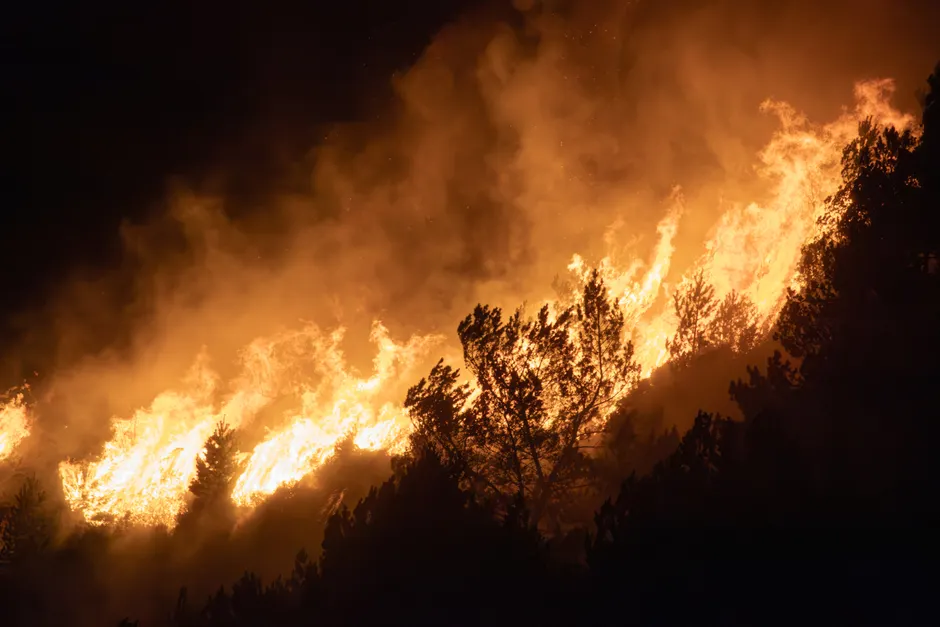
More than 250,000 people have been forced to evacuate their homes as wildfires burn through large parts of France and Spain. Spain has declared a national emergency over wildfires for the first time in its history The Guardian.
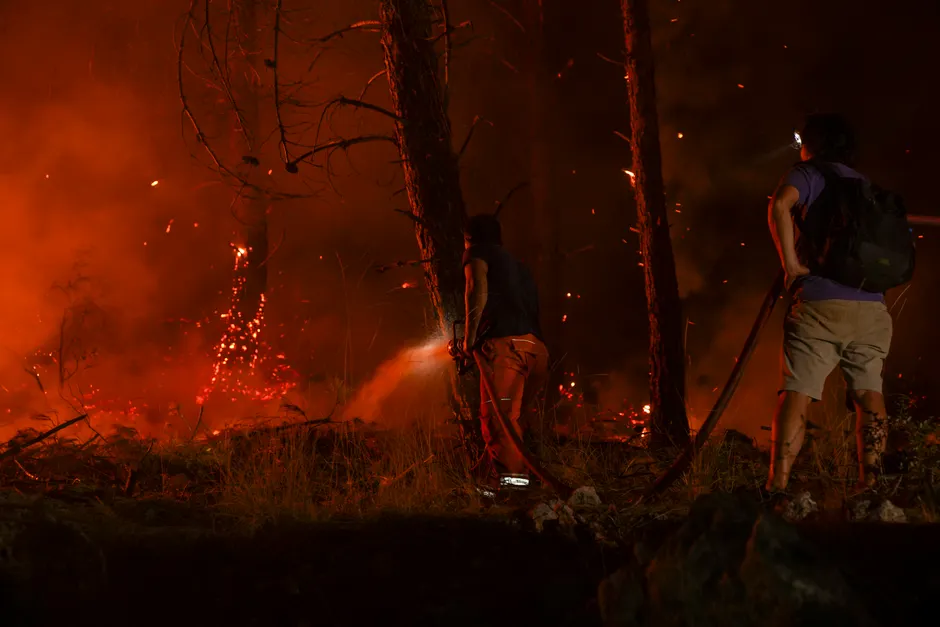
The evacuations span two countries. About 70,000 people were displaced from central Spain, while 197,000 were evacuated from France. France's interior minister Laurent Nuñez said the evacuations were "probably" the biggest peacetime evacuation the country has ever seen The Guardian. The French government deployed 1,500 soldiers and rushed 1.5 million face masks to protect civilians from breathing in smoke. Dozens of French firefighters have been injured.
Spain's Prime Minister Pedro Sánchez said fires had burned 130,000 hectares of forest in Spain so far in 2026, about a third higher than the country's usual annual average. In France, fires had burned more than 98,000 hectares as of July 25 The Guardian. A hectare is roughly the size of a sports field, so 130,000 hectares is an enormous area of land.
The human cost has been most severe in southwestern France. Two firefighters died on Tuesday, July 21, while fighting a violent fire near Bordeaux-Mérignac airport, according to the Gendarmerie Nationale Ouest-France. They were named Anthony Berthôme and Wilfried Schmitter. Both were inside a tanker truck that became trapped by the flames, according to BFMTV and Franceinfo reporting.
The vehicle was equipped with a fire self-protection system (système d'autoprotection), which is a built-in mechanism that sprays water over the truck to shield it from flames. That detail has drawn scrutiny given the fatalities. The director of SDIS 33 (the departmental fire and rescue service for the Gironde area) held a press briefing addressing the deaths.
The Bordeaux-area blaze was being fought by 500 firefighters as of July 23, according to the prefecture, which said at that point that no one had been injured in that specific wildfire Reuters. The BBC confirmed the deaths of the two firefighters near Bordeaux's airport BBC. Reuters also published a video report confirming the fatalities, citing French officials.
Spain's declaration of a national emergency over wildfires is an unprecedented step for Madrid. A national emergency in Spain concentrates decision-making power at the central-government level, allowing the activation of military and civil-protection resources beyond what regional governments can mobilize on their own. That Madrid took this step over wildfires, rather than over the earthquakes or flooding that have historically triggered such declarations, reflects the scale of the crisis.
For France, Nuñez's description of the evacuations as probably the largest in peacetime places the current disaster in a specific operational context. France has faced major wildfire seasons in recent years, particularly in the Gironde region, but the number of people displaced in this event is far higher than in past years. The decision to distribute 1.5 million face masks signals that authorities are treating smoke inhalation as a health risk affecting large populations, not just people in the direct path of the flames.
The deaths of Berthôme and Schmitter raise questions about firefighter safety protocols under extreme fire conditions. That their truck was equipped with a self-protection system yet was still overcome points to conditions that went beyond what the system was designed to handle. The SDIS 33 press briefing will likely be a focal point for investigations into whether terrain, wind shifts, or tactical decisions contributed to the entrapment.
The broader context here is one of compound risk across two of the EU's largest economies at the same time. With 228,000 hectares burned collectively across both nations as of late July, the 2026 fire season has already exceeded annual averages in Spain and is consuming French forest at a pace that strains both countries' emergency resources. The simultaneous activation of large-scale evacuations, military deployments, and emergency declarations in two neighboring states creates coordination challenges that EU-level mechanisms, such as the Union Civil Protection Mechanism, are designed to address but have rarely been tested at this combined scale.