A Powerful Earthquake Hit Japan — Here's What Happened and Why It Matters

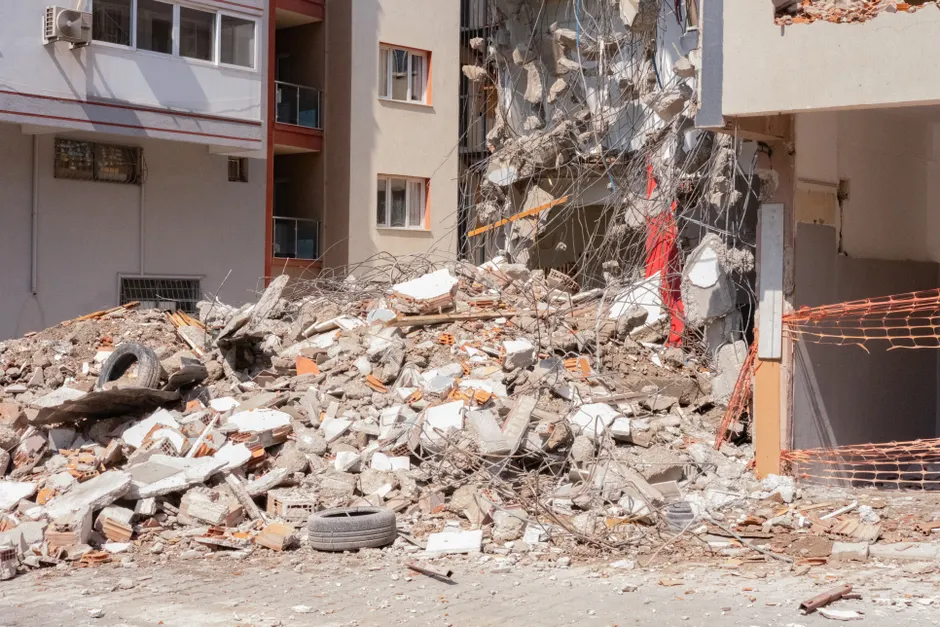
A 7.1-magnitude earthquake struck the Kumamoto region of Japan on July 28, 2026, at 4:27 p.m. local time (8:27 a.m. BST) The Guardian. It registered the highest level — a 7 — on Japan's own earthquake intensity scale, called the Shindo scale. Buildings collapsed, fires broke out, and roads and railways were badly damaged.
Japan's weather agency, the Japan Meteorological Agency (JMA), said the earthquake started only 10 kilometers underground. That is quite shallow. The closer an earthquake is to the surface, the more shaking people feel above it.
The JMA first warned that a small tsunami — a wave caused by the quake — of about one metre might hit, but later cancelled the warning. Trains stopped running and flights were grounded in the area The Guardian. Then heavy rain fell in Nagoya, a city in a neighbouring region, adding another problem on top of the earthquake damage Reuters.
Police received reports of what sounded like an explosion at a large shopping centre called Aeon Mall in the Kumamoto area. In the town of Kashima, the mall's second floor collapsed, leaving many people trapped inside The Guardian. A man named Kazuya Tsurunaga told the TV station TBS that he heard an explosion while sitting in a pub about 300 metres from the mall and saw a large cloud of smoke The Guardian.
Beyond the mall, several buildings were on fire or had partially collapsed. Large cracks opened up on major roads, including a raised highway The Guardian. Prime Minister Sanae Takaichi said the government had put together an 'Emergency Assembly Team' to handle the disaster The Guardian.
Several major companies evacuated their workers from factories in the area. TSMC, a company that makes computer chips; Sony; and Fujifilm all pulled staff out as a safety measure The Guardian. The International Atomic Energy Agency (IAEA) said Japan's nuclear regulator found no damage or safety problems at the Sendai nuclear power plant nearby The Guardian.
Japan has one of the most advanced earthquake monitoring systems in the world. The JMA runs about 200 seismographs (instruments that detect ground shaking) and 600 intensity meters, and also uses data from over 3,600 more meters run by local governments and a national research institute JMA. The information flows in real time to JMA headquarters in Tokyo and an office in Osaka JMA. Japan's earthquake intensity scale, the Shindo scale, goes from 0 (not felt at all) up to 7, with steps in between like 5 upper and 6 lower JMA. When a quake of level 3 or higher happens, the agency sends out a report within 90 seconds JMA.
The broader context here is that Kumamoto has a history of dangerous earthquakes, and this part of Japan is home to many factories that the whole world depends on.
Because this earthquake was so shallow, the shaking at the surface was especially strong. A Shindo 7 reading means the shaking was violent enough to cause most buildings to suffer severe or total collapse. Kumamoto went through something similar in 2016, when a 6.5 quake was followed two days later by a 7.3 quake. That sequence killed 273 people and injured over 2,800. A new 7.1 quake in the same area raises real concerns about whether the region's fault lines are still active and whether more large aftershocks could follow.
For the wider world, the factory evacuations by TSMC, Sony, and Fujifilm show how much of the global supply of computer chips and electronics comes from this one region. Even a short pause at these factories can affect supplies worldwide. The fact that the Sendai nuclear plant was unharmed is very good news, because it avoids a second crisis on top of the earthquake. The heavy rain that followed makes things harder: when the ground is soaked and already cracked by a quake, landslides become much more likely. Together with damaged roads and highways, this means the recovery will be complicated and could take a long time.