A Big Earthquake Hit Japan — and a Rebuilt Shopping Mall Collapsed Again
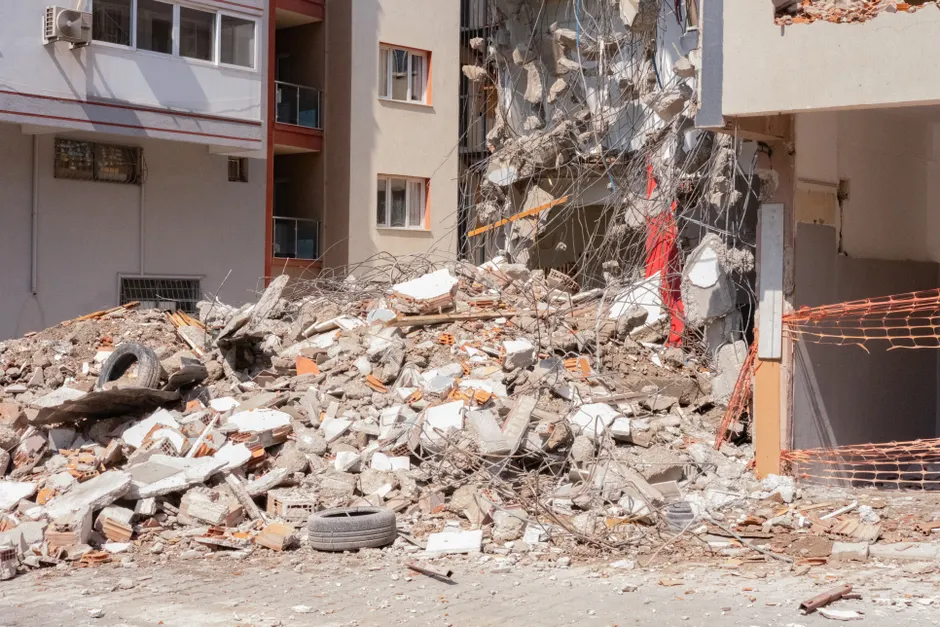
A powerful earthquake shook the Kumamoto region on Japan's southern island of Kyushu on July 28, 2026. It caused the second floor of an Aeon Mall shopping center in Kashima Town to collapse and left at least 50 people injured, according to Reuters. Japan's weather agency, called the JMA, measured the earthquake at magnitude 7.1 and issued a tsunami warning, which was lifted within two hours. An American agency called the USGS measured it slightly lower at magnitude 6.8 and said the center of the quake was about 5 km east of a city called Uto.
Magnitude is a number that describes how much energy an earthquake releases. A 7.1 is a major earthquake capable of serious damage. The USGS also said this was a "shallow strike-slip" earthquake, meaning the ground tore sideways along a crack in the earth, and the crack was close to the surface, which makes the shaking stronger where people live.
The worst damage was at the Aeon Mall in Kashima Town, in Kumamoto Prefecture. The second floor of the shopping center collapsed during the quake. NPR reported that between 20 and 30 employees were inside at the time (NPR). The local fire department said many people were trapped inside the collapsed building, according to The Guardian and France 24. NHK, Japan's public broadcaster, reported that police said about 20 to 30 people are unaccounted for (NHK. Reuters separately reported that workers were missing after the earthquake.
The Aeon Mall had just reopened after being rebuilt from the 2016 Kumamoto earthquake, according to Reuters. That earlier earthquake in 2016 measured magnitude 7.0, caused widespread damage across Kumamoto Prefecture, and killed 50 people.
Beyond the mall, other damage was reported across the region. A footbridge collapsed, and roads were damaged, according to BBC News. A local power company called Kyushu Electric reported more than 40,000 households without power. The JMA recorded more than 60 aftershocks — smaller earthquakes that follow the main one — ranging from magnitude 1 to 4. The aftershocks clustered across two areas the JMA calls "Kumamoto Region" and "Amakusa and Ashikita Region," both in Kumamoto Prefecture (JMA).
Shaking was felt across a wide part of Kumamoto Prefecture. The JMA recorded noticeable shaking in Amakusa City, Ashikita Town, Tsunagi Town, Hitoyoshi City, and Nishiki Town (JMA). WGN-TV reported that shaking was felt in the Amakusa and Ashikita regions (WGN-TV.
The two agencies, JMA and USGS, reported slightly different magnitudes: 7.1 versus 6.8. This is normal. They use different equipment and different methods to calculate the size of an earthquake. JMA fine-tunes its calculations for Japan's specific geology, while USGS uses a global standard. For earthquakes like this in Japan, a small gap between the two numbers is common and does not mean either one is wrong.
The USGS said the earthquake was a shallow strike-slip event, which fits the geology of this part of Japan. In 2016, a similar type of earthquake tore along a crack in the earth called the Futagawa-Hinagu fault zone. Whether this new earthquake happened on the same crack or a nearby one will require more study. The fact that the quake was centered near Uto, which sits close to the end of the Futagawa fault, suggests the two may be connected, but this has not been confirmed.
Prime Minister Fumio Kishida's office responded publicly. AP News published video of the Japanese PM commenting after the earthquake struck Kyushu (AP News. The quake hit on a Tuesday at early afternoon local time, meaning the mall and nearby businesses were open on a normal weekday schedule.
The broader context here is one of compounding seismic risk in Kumamoto Prefecture. A structure rebuilt after the 2016 earthquake, presumably under updated building codes, has failed again under an earthquake of similar size. The number of people unaccounted for, the spread of infrastructure damage, and the ongoing aftershocks all suggest a long and difficult recovery ahead. The difference between the JMA and USGS magnitude numbers, while routine, will matter for engineers assessing buildings afterward. They evaluate structures based on how hard the ground actually shook at the site, not the headline magnitude number. The JMA's intensity data showed a level of shaking that can damage vulnerable buildings but is below what devastated Kumamoto in 2016. The fact that the mall collapsed at this lower intensity level raises questions about whether the ground beneath the site amplified the shaking, whether the building had hidden weaknesses, or whether damage from the 2016 earthquake had weakened it over time.


