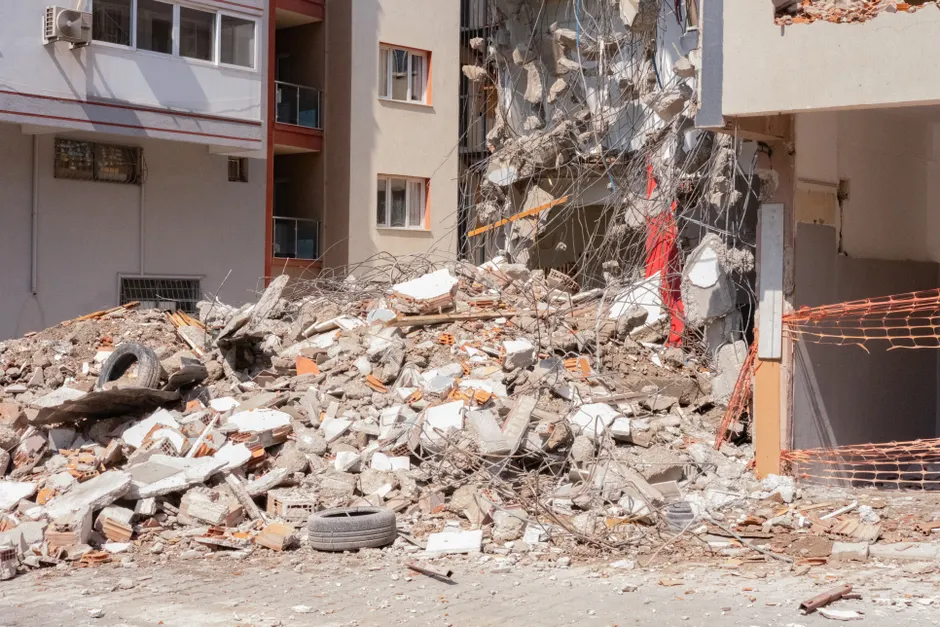
A Big Earthquake Hit Japan — Here's What Happened

A powerful earthquake shook Kumamoto, a region on Japan's southern island of Kyushu, at about 4:27 in the afternoon on July 28, 2026. At least 28 people were killed, dozens more were hurt, and several people were trapped inside a collapsed shopping mall. The local government has officially named it the "2026 Kumamoto Earthquake" Kumamoto Prefecture.
GMA News, citing the Kumamoto prefectural government and other sources, reported 28 deaths from the quake, which started directly under the prefecture GMA News. Kyodo News separately confirmed one death from a house collapse Kyodo News. CNN reported at least 50 people injured CNN. Al Jazeera said one hospital took in more than 50 injured people, while a second hospital in Yatsushiro city received about 40, including 10 in serious condition Al Jazeera.
The Aeon shopping centre in Kumamoto collapsed during the quake, trapping people inside. NBC News reported that 20 to 30 mall employees were among those affected NBC News. Reuters said workers were missing after an explosion at the same mall Reuters. A train also derailed in the area The Guardian.
Reuters and CNN reported the earthquake's strength as magnitude 7.1, based on information from Japan's weather and earthquake agency Reuters; CNN. Magnitude measures the total energy an earthquake releases. Japan also uses a separate scale from 0 to 7 that describes how strong the shaking feels at a specific place. The Kumamoto government recorded a level 7 — the top of that scale Kumamoto Prefecture.
Officials told about 300,000 people across Kumamoto to leave their homes for safety NBC News. The governor of Kumamoto, Governor Kimura, made a public statement about the earthquake on July 28 Kumamoto Prefecture.
A disaster response team for Kumamoto Prefecture started up automatically the moment the earthquake hit at 4:27 p.m. The team held its first meeting at 8:00 p.m. at the Prefectural Office Disaster Prevention Center Kumamoto Prefecture. A law called the Disaster Relief Act was applied that same day to 9 cities, 10 towns, and 1 village in Kumamoto. This law lets local and national governments work together to provide emergency shelters, medical care, and debris cleanup Kumamoto Prefecture.
Japan has an earthquake early warning system run by the Japan Meteorological Agency (JMA). The system uses about 200 seismographs (instruments that detect ground shaking) and 600 intensity meters, plus over 3,600 more meters run by local governments and a national research institute. All this data is processed in real time at JMA offices in Tokyo and Osaka. When shaking reaches a certain level, the agency sends out a report within 90 seconds. The early warning system gives people a heads-up about how strong the shaking will be and when it will arrive.
This is not Kumamoto's first major earthquake. The disaster response team starts automatically when an earthquake hits instead of waiting for someone to turn it on. That automatic trigger is a lesson learned from past earthquakes on Kyushu. The quick use of the Disaster Relief Act across 20 towns and cities also shows planning designed to send help before full damage reports are in.
The broader context here is that Japan's layered earthquake preparedness faced a severe test in real time. The reported death toll of 28, if confirmed, would make this one of the deadliest earthquakes in Japan in recent years. The collapse of the Aeon shopping centre, with missing workers and a possible explosion, raises questions about how well large commercial buildings are built to withstand earthquakes in active zones. The train derailment, the evacuation of 300,000 people, and two hospitals strained with injured patients all point to widespread damage that will take days to fully assess. Whether the death toll stays at 28 or rises will depend largely on rescue efforts at the Aeon mall and on whether inspectors find other buildings that have failed.
A smaller earthquake — magnitude 5.1 — was recorded by JMA on July 1, 2026, at 8:40 a.m. in the same general Kyushu region JMA. Whether that earlier quake was connected to or served as a warning sign for the July 28 earthquake is something JMA's scientists will need to study. That analysis has not yet been published.