The Robot Spacecraft NASA Hired to Save a Telescope Is Spinning Out of Control

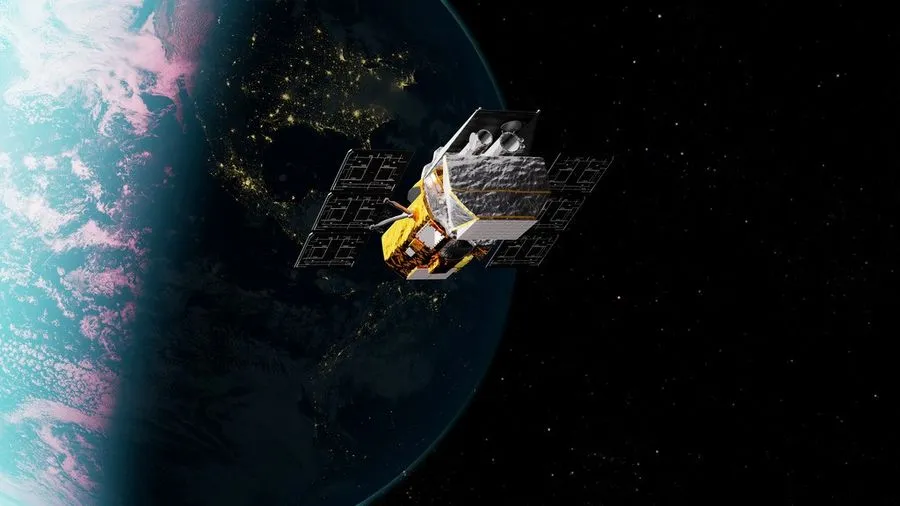
A spacecraft called LINK, which NASA hired to push one of its telescopes to a higher orbit, is tumbling out of control, according to confirmations from both NASA and Katalyst Space (TechCrunch). The spacecraft began spinning over the weekend before July 28, 2026, making communications difficult because its antenna keeps rotating away from Earth.
NASA reports that two of the three reaction wheels controlling LINK's alignment have failed, and there are problems with one of the thruster systems. Reaction wheels are spinning devices inside a spacecraft that keep it pointed in the right direction, similar to how a spinning top stays upright. Flight controllers are trying to recover the spacecraft by using a backup set of thrusters to slow its spin. Katalyst Space stated that it has already begun a series of thruster burns and is "seeing the intended effect" (TechCrunch).
This mission is the first time NASA has hired a private company to lift one of its observatories to a higher orbit. The Swift Observatory, launched in 2004, detects short-lived space events such as gamma ray bursts. It needed an urgent boost before an October "point of no return" deadline, after which its orbit would be too low to save (Los Angeles Times).
LINK was launched on July 3, 2026, aboard a Northrop Grumman Pegasus rocket, having been packed inside a Pegasus XL at NASA's Wallops Flight Facility on June 8 (NASA Science). The spacecraft has a solar panel array spanning about 20 feet (6 meters) across (NASA Science). Kieran Wilson, chief engineer for the LINK mission at Katalyst Space, told reporters ahead of the mission that the spacecraft was built very quickly because of the urgent need to raise Swift within a few months.
The timeline was compressed. Katalyst engineers unboxed the LINK spacecraft at NASA Goddard Space Flight Center on April 14, 2026, and it underwent vibration testing there the next day (NASA GSFC). By July 15, NASA published a blog post saying commissioning was on track for the mission to boost Swift (NASA Science). Roughly two weeks later, the spacecraft was spinning uncontrollably.
Katalyst Space raised a $12 million funding round in June 2026, backed by Fortitude Ventures and Geodesic Capital. The company has also won funding from the US military, which is interested in vehicles that can service satellites or keep an eye on rival spacecraft.
The broader context here is the risk that comes with building a spacecraft on a tight schedule. When a spacecraft is built quickly to meet a narrow launch window, there is less time to thoroughly test every system. Having two reaction wheels and a thruster system fail on the same vehicle raises the question of whether the rush to launch left too little time to confirm that backup systems would work when needed.
There is also the dual-use nature of this technology to consider. NASA's Swift boost mission is a science project, but the US military is also investing in Katalyst's vehicles for satellite servicing and tracking rival spacecraft in orbit. That means the reliability of these spacecraft matters beyond astronomy. A failure on a civilian mission also tells the military something about the risks of relying on the same type of vehicle.
For the emerging business of repairing and moving satellites in space, a partial recovery using backup thrusters would show the value of building spare systems into these vehicles. Even if LINK stops spinning, though, it may not have the precise control needed to safely approach Swift, which was never designed to be grabbed or serviced by another spacecraft. The October deadline adds pressure. If LINK cannot complete the boost, Swift's orbit will keep dropping past the point where another mission could step in.
If the backup thruster burns succeed in stopping the spin, Katalyst and NASA will still need to determine whether the one remaining reaction wheel and the backup thrusters are enough to carry out the careful approach and docking needed to boost Swift. The gamma ray observatory is still working, but its remaining time in orbit without help is limited.