Europe Just Had Its Hottest Summer Ever — Here's What Happened
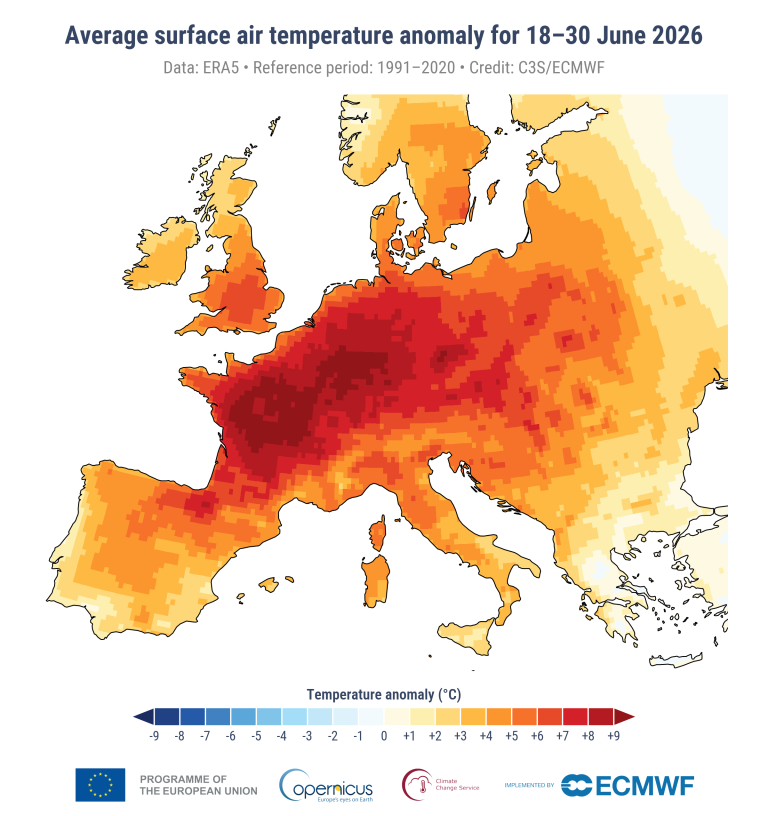
Europe went through its hottest summer ever recorded in 2026. June was the second-hottest for Europe overall and the hottest ever for western Europe, according to two major weather organizations: the Copernicus Climate Change Service (an EU program that tracks Earth's climate) and the World Meteorological Organization (a UN agency that coordinates weather reporting worldwide).
The average temperature over European land in June 2026 reached 19.14°C, which is 1.78°C higher than the average for 1991–2020. For western Europe, the June average was even higher: 20.74°C, which is 3.05°C above the norm. Both figures were reported on July 9, 2026. Across the whole planet, the June-to-August 2026 period was also the warmest on record, according to Copernicus data.
One big reason for the record June heat was the highest ocean surface temperatures ever recorded for that time of year, as noted by the World Meteorological Organization. Warm oceans act like a slowly cooling oven — they keep releasing heat into the air above them, which means the land nearby doesn't cool down much at night. That makes the heat harder to escape.
The human cost was immediate and measurable. Europe saw an estimated 10,000 excess deaths (meaning deaths above what would normally be expected for that time of year) during a heatwave in late June 2026, according to Reuters reporting published July 13. Germany alone had an estimated 5,120 heat-related deaths as of July 9, per data from the Robert Koch Institute (Germany's national public health agency) cited by Reuters. Tourists and residents across southern Europe were told to stay indoors.
The heat lasted into mid-July. The average high temperature across western Europe was forecast at 29.4°C on July 14, 2026 — 6.3°C above normal — with a further forecast of 27.5°C for July 17. Wildfires burned across France and Spain as the prolonged heat dried out soil and plants, creating fuel that made fires spread faster. By late July, wildfires were still affecting both countries.
This summer's extremes did not come out of nowhere. In August 2025, a major heatwave hit southwestern Europe during what was the third-warmest August on record, lasting until August 18. Daily high temperatures reached 40°C across much of the region and peaked at 45°C in Portugal, according to Copernicus. That event was an early sign of the more severe conditions that followed in 2026.
The 2026 heat also reached Britain, pushing the zone of heat risk beyond the Mediterranean countries that have dealt with the worst of recent European heatwaves. This expansion raises questions about whether countries in northern Europe — which historically have not faced much extreme heat — are prepared for it.
Climate scientist Johan Rockström offered a blunt warning in a National Observer opinion piece published June 29, 2026: "Remember. This is just the beginning. It will get worse, before potentially getting better." His comment frames the 2026 summer not as a rare event but as part of a trend that climate scientists have been predicting for years.
The broader context here is that these extremes are stacking on top of other pressures. The 10,000 excess deaths from late June alone, along with Germany's 5,120 heat-related fatalities, puts 2026 among the deadliest heat years in recent European memory. These numbers arrive alongside wildfires, drought, and strain on infrastructure across multiple countries, all stretching emergency response systems across the continent.
What makes the 2026 summer stand out is that several records happened at once: the warmest European summer overall, the hottest June for western Europe, record ocean temperatures, and a rising death toll within weeks of the heat's start. The Copernicus data, published July 9, confirms that western Europe's June reading of 3.05°C above average is one of the most extreme temperature jumps recorded for any month in the European dataset.
For policy and planning, the 2026 data reinforce what public health and weather agencies have been watching with growing urgency: heat is no longer just a southern European problem. The spread into Britain, combined with Germany's high death toll, suggests that heat emergency plans, city cooling strategies, and healthcare capacity need to be reassessed across the whole continent. The gap between how many people are dying and how quickly institutions are responding is something worth watching closely in the months ahead.


