Ghana Went Dark: What Happened and Why It Keeps Happening
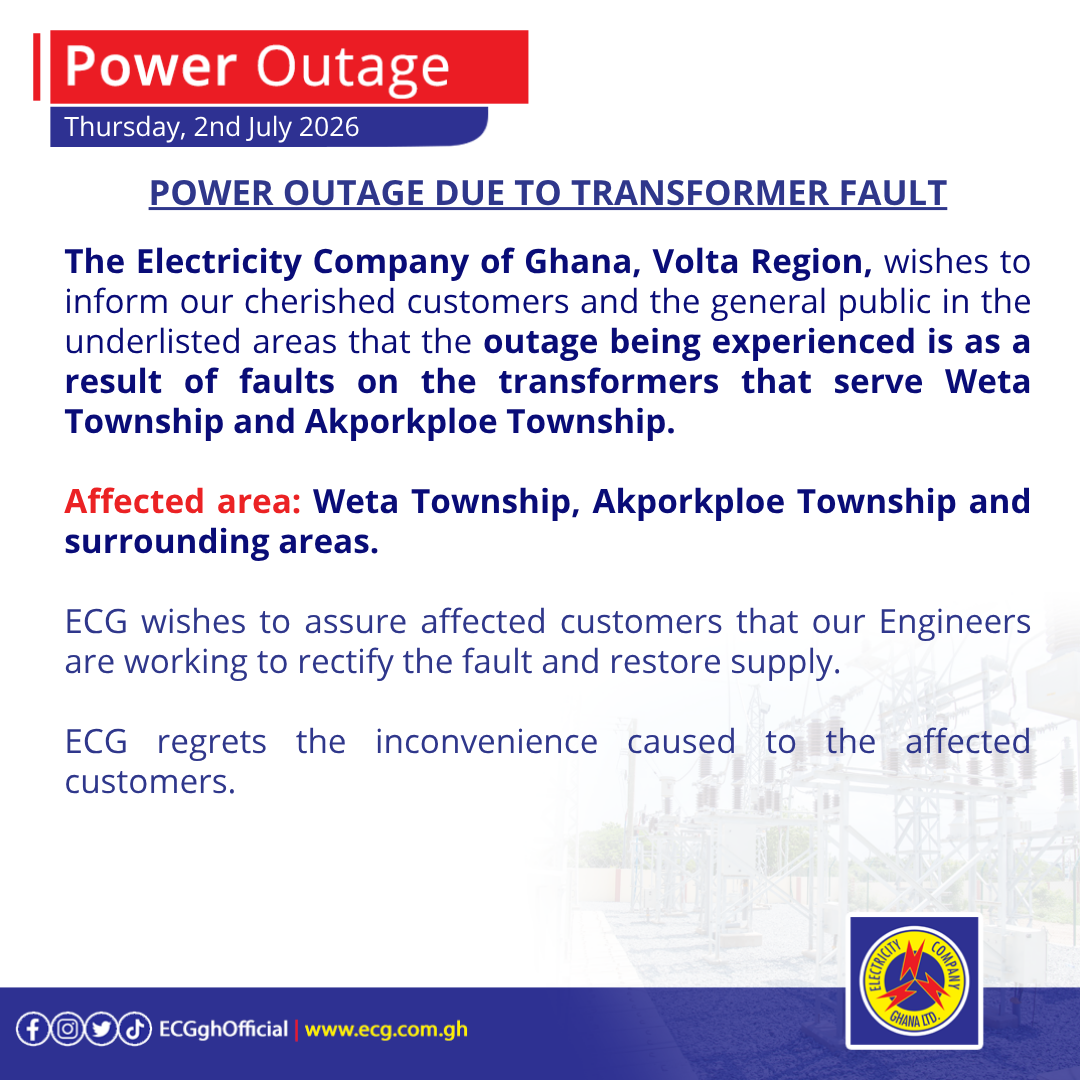
A major fault on Ghana's national power grid caused widespread electricity outages on July 29, 2026. The capital Accra, the commercial hub Kumasi, and much of northern Ghana were all left without power. The state-run power distribution company confirmed that several power plants were forced to shut down early Wednesday morning. This cascaded into what GhanaWeb called a nationwide blackout BBC, GhanaWeb.
Ghana Grid Company Limited, known as GRIDCo, is the organisation that operates the transmission system — the network of lines and stations that carry electricity from power plants to local areas. GRIDCo issued a public statement saying its engineers are working continuously to restore power "in the shortest time possible without compromising safety." It also confirmed it is investigating the cause of the outage. However, GRIDCo did not say how long it would take for normal power supplies to resume BBC.
The impact was immediate and broad. Homes, businesses, and essential services across multiple regions were left without electricity. Many commuters struggled to get to work because their phones had run out of charge. Without charged phones, they could not pay for transport or order taxis through apps like Uber. This showed how dependent everyday travel in Ghana's major cities has become on mobile technology BBC.
This event did not occur in a vacuum. Ghana has experienced regular power shortages for years. People call these shortages "dumsor," which means "on and off" in the Akan language. The problem has become a political issue over multiple election cycles. Households and businesses alike have long complained about unreliable power. Most of Ghana's electricity comes from hydropower plants — facilities that use flowing water to generate electricity — that are old and have not been properly maintained. As population growth and urbanisation have increased demand, Ghana has in recent years turned to gas-fired power plants to supplement the hydropower supply BBC.
GRIDCo's own communications suggest that grid disturbances are a recurring problem, not a one-off event. The company's press releases page lists multiple "System Disturbance" notices over the past several years: a February 10, 2026 release titled "System Disturbance in Parts of the Transmission Network"; a June 29, 2026 release concerning a temporary shutdown of the Mallam and Achimota Primary Substations; a May 1, 2025 "System Disturbance" notice; a "System Disturbance — Northern Region" release dated February 7, 2024; another "System Disturbance" dated March 3, 2024; a "Power Systems Disturbance" notice dated September 8, 2023; and a "System Disturbance" release dated May 9, 2022 GRIDCo. As of this report, no press release dated July 29, 2026, appears on that page, though BBC reports that GRIDCo has issued a public statement on the current outage.
The frequency of these notices tells its own story. Think of a power grid like a highway system. If one road has a pothole, traffic can usually reroute. But if many roads are in poor condition and there are too few alternate routes, a single accident can bring the whole system to a halt. GRIDCo's transmission network has been generating multiple system-wide disturbance reports every year. The reliance on old hydropower plants that have not been well maintained makes the foundation of the power supply fragile. Gas-fired plants add capacity, but they depend on fuel supplies and prices, which adds another layer of complexity. When a major fault spreads across such a system, the cascading shutdown of multiple plants points to a lack of backup options, not just the original fault itself.
For a country that has positioned itself as one of West Africa's more stable investment destinations, grid reliability matters beyond domestic politics. Mining operations, manufacturing, and the growing services sector all depend on predictable power. Each nationwide event erodes confidence in that predictability. The absence of a restoration timeline from GRIDCo leaves businesses unable to plan around the disruption.
The broader context here is one of long-term underinvestment in transmission and distribution infrastructure meeting rising demand. Ghana's grid was built for a smaller, less urbanised economy. The rapid spread of mobile-payment systems and ride-hailing services, as shown by the immediate impact on commuters, means that power outages now cause digital disruptions with compound economic effects. The cost of a blackout is no longer measured only in lost factory output but in frozen commerce across platforms that have become essential to daily life.
GRIDCo's investigation will need to identify not just the immediate trigger but the systemic conditions that allowed a single fault to cascade into a nationwide event. Until restoration is complete and findings are published, the episode will reinforce the perception that Ghana's power sector, despite efforts to diversify its energy sources, remains structurally exposed to large-scale failures.