Russia Hit Multiple Ukrainian Cities With Missiles. Here's What Happened.

A wave of Russian missiles struck several Ukrainian cities on 30 July 2026, killing at least seven people. The missiles hit Kyiv, Kryvyi Rih, and Lviv in what Ukrainian officials called a long-planned mass attack.
The deadliest strike hit Kryvyi Rih, a city in central Ukraine. A Russian missile struck a private home where a large family was sheltering. Oleksandr Vilkul, the city's top military official, said six people were killed: two girls aged five and twelve, and four adults. Eight more were wounded, and Vilkul warned the death toll could rise as rescuers continued searching the wreckage. (The Guardian)
In Kyiv, the capital, at least one person was killed. Mayor Vitali Klitschko said fires broke out across several neighborhoods. President Volodymyr Zelenskyy said Kyiv and its surroundings were the main target of the Russian assault, and that Moscow had spent days building up its missile stockpiles before launching it. (The Guardian)
Lviv, a city in western Ukraine near the Polish border, was also hit. Mayor Andriy Sadovyi said residential buildings were damaged. By striking cities spread across the entire country, from the center to the far west, Russia appears to have been trying to stretch Ukraine's air defences thin. (The Guardian)
The night before, on 29 July, Zelenskyy had publicly warned that Russia was preparing a massive attack and said it was likely to happen that very night. Within hours, the warning came true. (The Guardian)
This was not an isolated event. Throughout July 2026, Russia has launched repeated large-scale missile and drone attacks. On 6 July, at least 22 people were killed. On 8 July, Russia fired 169 long-range weapons in a single wave, killing four. On 24 July, a missile struck a defense site near Kyiv, killing ten. (AP News, AP News, AP News) An earlier July attack killed six, including a child, and wounded 29. (AP News) Russia has also used a tactic of striking the same location twice, hitting again after emergency workers arrive. One such follow-on strike in the Odesa region on 18 July damaged rescue equipment, though no rescuers were hurt because they had taken shelter. (Ukrinform)
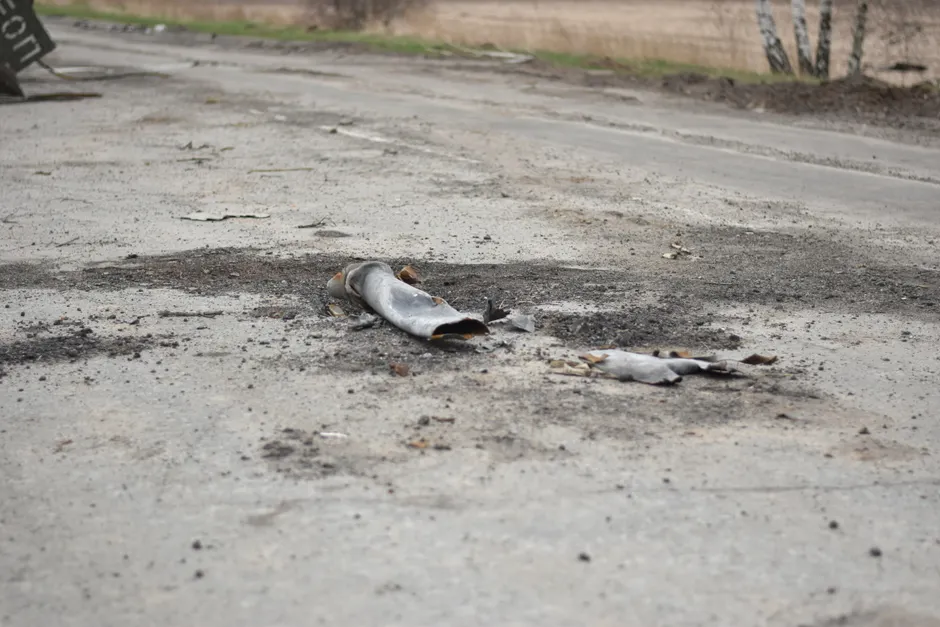
The missile used in the Kryvyi Rih strike was an Iskander-M. This is a short-range ballistic missile — meaning it travels in a high, arcing path toward its target at very high speed — that can be launched from a truck and has a range of about 400 to 500 kilometers. It was fired from Voronezh, deep inside Russian territory, giving Ukrainian defenders very little time to shoot it down, especially when their missile-intercepting supplies are running low. Kryvyi Rih had already been hit by an eight-missile barrage earlier in July. (Ukrinform)
After the strikes, Zelenskyy again asked Ukraine's allies to send more air defence missiles — the weapons used to shoot down incoming rockets. Ukraine's supply is running low, and the gap is most dangerous when it comes to intercepting ballistic missiles. That is the kind Russia keeps using, which Zelenskyy said is where Moscow "makes its bet." (The Guardian, President of Ukraine)
The impact reached beyond Ukraine's borders. Poland, a NATO member, scrambled fighter jets and an early warning aircraft to protect its own airspace during the barrage. This is a routine precaution when Russian missile activity gets close to Polish territory, but it shows how strikes on western Ukraine carry a real risk of spilling over. (The Guardian)
Inside Russia, a Ukrainian drone struck a warehouse belonging to the company Wildberries in Penza, according to regional governor Oleg Melnichenko. He reported one injury and about 200 people evacuated. (The Guardian)
The broader context here is one of escalation and exhaustion on both sides. July 2026 has brought repeated large-scale missile strikes that kill civilians, a steady drumbeat of long-range attacks, and a shortage of air defence missiles in Ukraine that directly affects whether people under fire survive. The deaths of two children in Kryvyi Rih, aged five and twelve, are not a rare accident. They are the predictable result of firing ballistic missiles at residential neighborhoods when the defender does not have enough missiles to shoot them down. Whether Ukraine's allies speed up deliveries of air defence supplies will shape whether August looks any different.