Russia Attacked Ukraine and a Missile Flew Into Poland — Here's What Happened
Russia launched a major wave of missile attacks on Ukraine around July 29, 2026, killing at least eight people, according to Radio Free Europe/Radio Liberty. The attacks included ballistic missiles aimed at Kyiv, the capital, as reported by the city's mayor and confirmed by Reuters. Polish Prime Minister Donald Tusk said the strikes also hit western Ukraine, close to NATO's eastern border.
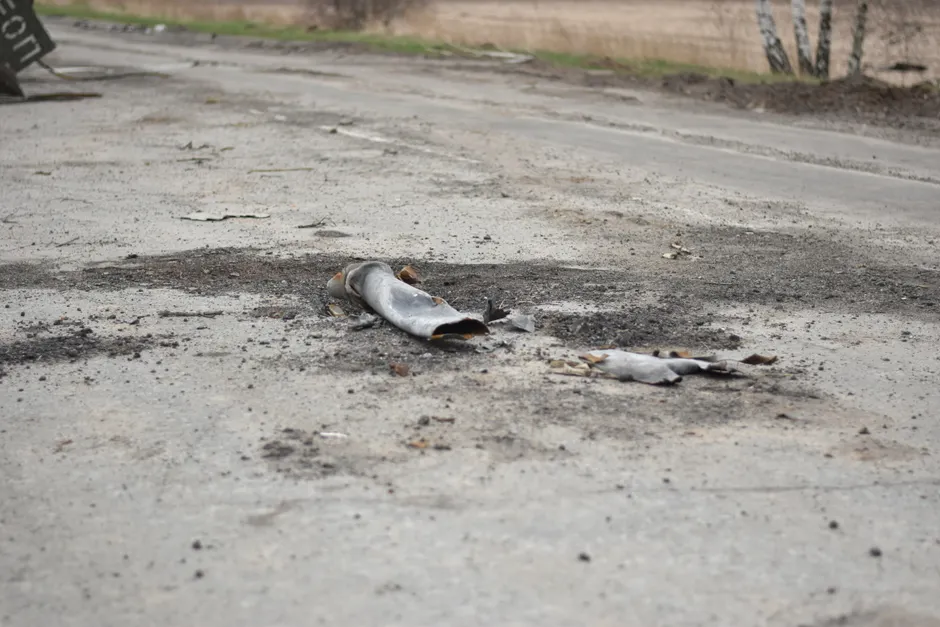
Poland sent fighter jets into the air on July 29 because Russian missiles were flying near the border (Reuters). Tusk said a missile apparently fired by Russia landed deep inside Polish territory (CNN). Ukraine's foreign minister confirmed that a Russian cruise missile — a guided missile that flies low to the ground — crossed into Poland during the attack, as The Guardian reported. The New York Times noted that the missile entered Polish airspace but said it was still unclear whether it had actually hit Polish ground.
An explosion was reported in Poland after the Russian missile attack on Ukraine, around July 30 (The Telegraph). Polish authorities launched an investigation into an object that crashed in eastern Poland, as reported by TVP World. The difference between where the object crashed and earlier reports of a missile landing deep in Poland shows how hard it is to get accurate information during an active missile attack.
Among those killed, a Russian missile attack on the Ukrainian city of Ternopil killed a seven-year-old Polish citizen named Amelia, as documented by the Polish government. A Polish child dying on Ukrainian soil in a Russian strike gives Poland a direct national interest in what happened, separate from whether any missile actually hit Polish territory.
There are two separate things going on here, and it's important not to mix them up. First, a Russian cruise missile entered Polish airspace during the July 29–30 attack on Ukraine — this violated NATO airspace and caused Poland to scramble fighter jets. Second, an object crashed in eastern Poland, and authorities are investigating what it was. The reporting available so far has not confirmed that the missile that entered Polish airspace and the object that crashed are the same thing. Prime Minister Tusk's statement that a missile landed "deep inside Polish territory" is the strongest claim from a senior official, while the New York Times said confirmation of an actual strike on Polish soil was still pending.
The broader context here is the ongoing risk that Russia's attacks on Ukraine could spill over into neighboring NATO countries. NATO is a military alliance where an attack on one member is treated as an attack on all. When something like this happens, any NATO country can trigger what's called Article 4 — a clause in NATO's founding treaty that lets a member call a meeting when its security is threatened. Poland has scrambled jets several times during the war when Russian missiles came close to its airspace. The investigation now underway — figuring out whether the object that crashed in eastern Poland was a Russian missile, a piece of debris, or something else — will determine whether this incident is treated as a confirmed strike on NATO territory or a close call.
The death of a Polish citizen in Ternopil raises the stakes on its own, apart from the airspace question. It gives Warsaw, Poland's capital, a direct national interest in the consequences of the attack regardless of whether Polish soil was hit. How Poland and its allies choose to describe what happened — as a violation that requires a joint response, or as part of the normal pattern of risk near the border — will tell us where NATO draws the line between something it acts on and something it absorbs.
The investigation in eastern Poland is ongoing. What we know for sure right now is that a Russian cruise missile entered Polish airspace and an unidentified object crashed on Polish territory. We do not yet know whether those are the same object, or whether a Russian weapon exploded on Polish soil.