A Big Earthquake Hit Japan — Here's What Happened and Why a Mall Collapse Is Raising New Questions

A powerful earthquake shook the Kumamoto region of Japan on July 28, 2026, at 4:27 p.m. local time. It measured magnitude 7.1 — a major earthquake capable of causing serious damage. The Japan Meteorological Agency, which is Japan's official weather and earthquake monitoring service, placed the center of the quake at 32.6°N, 130.7°E, about 10 kilometers underground JMA. At that shallow depth, the quake's energy had very little earth to travel through before hitting buildings and people on the surface.
The Kumamoto prefectural government has reported at least 23 deaths Voice of Alexandria. Prime Minister Sanae Takaichi, who chaired the first emergency government meeting on July 28 Prime Minister's Office of Japan, confirmed 13 deaths as of the morning of July 29 Prime Minister's Office of Japan. The prefectural count was higher and continued to climb.
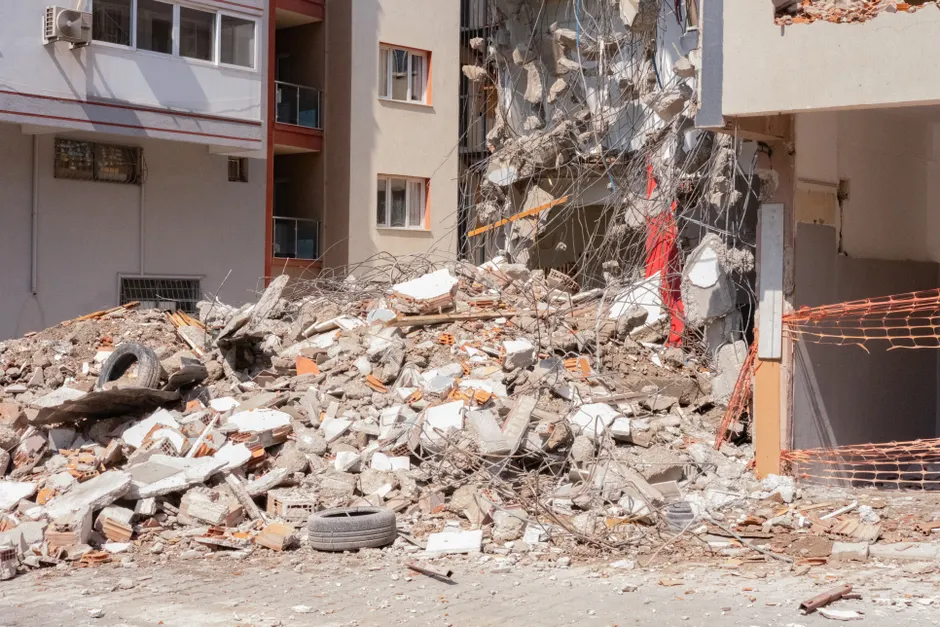
The most serious single-site event was an explosion at the Aeon mall in Kashima, Kumamoto Prefecture, about 50 minutes after the earthquake Al Jazeera. Aeon President Akio Yoshida said staff evacuated about 3,000 shoppers within half an hour of the quake. First responders pulled eight people from the partially collapsed building early on July 29. Three were dead and five were injured, according to a local official cited by AFP France 24. Three Aeon shop workers remained missing as of the most recent reporting Al Jazeera. One survivor was found injured inside a restroom in the mall after the explosion.
Aeon is investigating a possible gas leak as the cause. Yoshida said the probability of gas being the trigger was "very high" Al Jazeera. If that is confirmed, it would follow a well-known pattern: the earthquake shakes the ground hard enough to break underground gas pipes, gas builds up inside a building, and then something ignites it. The earthquake is the first event; the gas explosion is the second.
The mall had reopened just the month before, after recovering from a previous major earthquake that hit Kumamoto in April 2016. It had been upgraded with reinforced ceilings designed to better withstand earthquake shaking Al Jazeera. But those reinforcements were designed for the shaking of an earthquake, not for the force of an explosion. Because the explosion happened nearly an hour after the earthquake, the collapse may have been caused mainly by the gas blast rather than the shaking alone.
More than 100 aftershocks — smaller earthquakes that follow the main one — had shaken Kumamoto by the end of July 28, according to the JMA tally referenced in reporting Al Jazeera. These aftershocks made it dangerous for rescue workers to enter the collapsed mall, because more shaking could bring the structure down further. That delayed rescue efforts during the first 24 hours, when finding survivors is most likely. About 170 soldiers from Japan's Self-Defense Forces were sent to help with rescue operations at the mall Al Jazeera.
Takaichi described the situation as a "race against time" to rescue those trapped in the mall and others affected by the quake, and urged residents to "take all precautions" Reuters. Aerial photographs taken by a Kyodo News helicopter on July 28 showed the broader damage NBC News. The following day, electric poles were seen tilted in Hikawa, Kumamoto Prefecture, suggesting the ground itself had shifted or softened in places beyond the immediate area of the earthquake's center Kyodo News.
In a rescue that drew attention amid the grim recovery, all 25 cats left behind in a cat cafe inside the Aeon mall during the evacuation were rescued on July 29 Al Jazeera.
The 2016 Kumamoto earthquake is the closest comparison. In April 2016, a magnitude 6.5 earthquake hit first, followed two days later by a magnitude 7.3 earthquake. Together they killed 50 people. After that disaster, Japan revised its building standards for earthquake resistance and sped up reinforcement work across Kyushu, the island where Kumamoto is located.
The broader context here is the gap between Japan's advanced earthquake preparation and the vulnerability of utility systems like gas lines. Japan has one of the best earthquake early-warning systems in the world, and the speed with which the JMA published the quake's details reflects that strength. Yet the Aeon mall sequence shows that warnings and reinforced buildings only cover part of the danger. The successful evacuation of 3,000 people was followed by an explosion nearly an hour later. That suggests questions worth asking: whether gas lines shut off automatically after an earthquake, and whether it is safe to be inside large buildings during the aftershock period that follows. With three workers still missing and the death toll still climbing as of July 30, the lessons from this disaster are likely to extend well beyond the rescue effort.