Why Gas Prices Could Jump: The U.S.-Iran Fight Shaking Up Oil

Oil prices steadied on July 30, 2026, after a wild week. The price of Brent crude — the type of oil that sets prices worldwide — dropped 6%, then jumped 7%, all within three days (Reuters). The swings were driven by a fast-moving conflict between the United States and Iran.
Here is how the fighting escalated. The Pentagon confirmed it intercepted an Iranian missile attack on U.S. forces on June 16, 2026 (Politico). Iran also stepped up attacks on cargo ships in the Strait of Hormuz, a narrow waterway where about a fifth of the world's oil passes through every day. The U.S. military struck Iranian air defense systems and radar near the Strait on June 9 (CENTCOM) and again on June 27 after Iran kept attacking ships (CENTCOM). On July 20, Iran attacked an oil tanker and forced its crew to abandon ship (AP News). Three more ships were attacked on July 6–7 (Britannica).
The U.S. then launched a sustained bombing campaign it called "Epic Fury." By July 24, American forces had struck Iranian military targets for 13 nights in a row (Defense.gov). The White House said the strikes began on July 7 on the President's orders, targeting missile sites and air defenses inside Iran (White House). On July 7 alone, U.S. forces hit over 80 targets, then roughly 90 more on July 7–8 (CENTCOM, CENTCOM). The New York Times reported that Pentagon officials called it a clear escalation (NYT). More strikes followed on July 18 after U.S. service members were killed (Al Jazeera, NPR).
There is also a nuclear angle. In June 2025, U.S. forces struck three Iranian nuclear sites. Secretary of Defense Pete Hegseth and General Dan Caine praised the operation (Defense.gov). One target was the Fordow Fuel Enrichment Plant, hit with 30,000-pound bunker-busting bombs designed to destroy underground facilities. The Pentagon called it "historically successful" and "15 years in the making" (Defense.gov).
Meanwhile, Congress is pushing back. Two resolutions — S.J.Res. 180 and H. Con. Res. 89 — would pull U.S. forces out of the conflict with Iran. The White House opposes both (White House, White House). President Trump addressed the nation on July 8 to explain the strikes (White House).
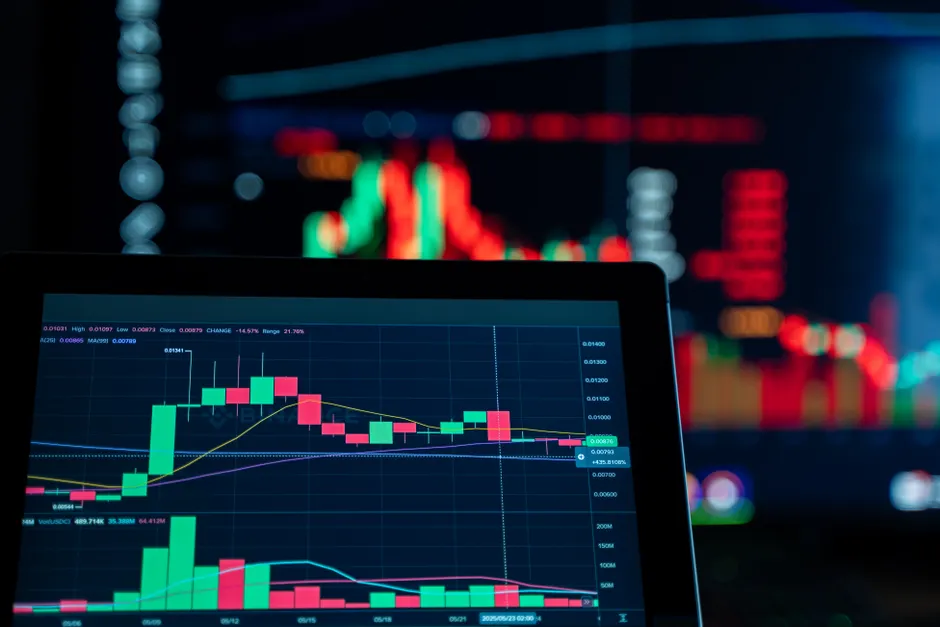
The oil market reacted sharply to every twist. Brent settled at $94.07 on July 22, up $3.06 or 3.36%, after touching $95 — the highest in nearly six weeks (Reuters). Then prices crashed over 6% on July 26 when the U.S. suddenly paused its bombing campaign (Reuters). Brent fell another 4.8% on July 28 as the pause held (Reuters). But prices shot back up 7% on July 29 when the U.S. and Saudi Arabia launched joint strikes on Iran-backed groups in Iraq, blamed for drone attacks on Saudi oil facilities (Reuters).
This shift matters. The U.S. went from striking Iran directly to teaming up with Saudi Arabia against Iranian proxy groups in Iraq. Iran also attacked Gulf states during the conflict, NPR reported (NPR). Saudi Arabia is now actively participating in strikes, not just getting hit. That widens the conflict and adds new risk to oil supplies.
The core takeaway for everyday consumers is that the pause that knocked prices down on July 26–28 did not last. The joint U.S.-Saudi action on July 29 showed that fighting can wind down in one place while heating up in another. With cargo ships still sailing through war zones and Congress debating whether to pull troops out, the gap between an optimistic and a worst-case scenario for oil supply is unusually wide. The fact that prices held steady on July 30, rather than falling, suggests traders think more strikes are coming — and are keeping a floor under prices.
In the background, the White House noted in March 2026 that Iranian-backed militias wounded two U.S. service members in rocket and drone attacks in Iraq and Syria (White House). The U.S. launched strikes the day after a June 25 attack (NPR). The administration's stated reason for fighting is retaliation for attacks by Iran's military, the Islamic Revolutionary Guard Corps, on U.S. bases including one in Jordan (The Hill).