A Big Wildfire in Suffolk Is Coming Under Control — But It Burned Near Nuclear Sites

A large wildfire on Dunwich Heath near Leiston on the Suffolk coast was said to be "stabilising" on 31 July 2026 after burning for more than 24 hours. The fire led to evacuations, a major incident declaration (a formal step that brings in extra help), and fire crews from outside the area being sent to a stretch of coastline that includes two nuclear sites.
The fire started at about 5pm on Wednesday 29 July 2026. By late Thursday 30 July, Suffolk Fire and Rescue Service (SFRS) said the fire appeared to be stabilising, though a spokesperson described it as "dynamic but stable" and said "good progress was being made" (The Guardian). At least 12 fire appliances, the vehicles firefighters use to get equipment and crews to a scene, stayed overnight on Thursday to tackle smaller fires and watch for hotspots. More than 100 firefighters were sent, including six appliances from London Fire Brigade. The SFRS official incident page lists Leiston, Reydon and Southwold, and Halesworth among the attending fire stations (Suffolk County Council). Fire officer Ryan Lovejoy was among those responding (BBC News).
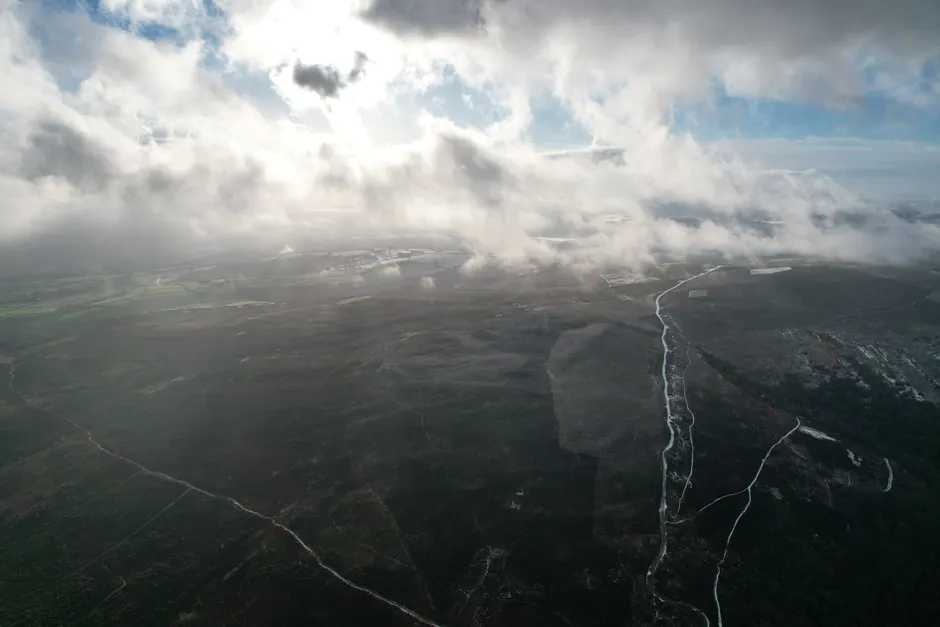
The wildfire grew to about 150 hectares, roughly 370 acres. Firefighters used a helicopter that could drop 100 litres of seawater on each pass. They also flooded trenches with water to help stop the fire spreading. SFRS called the blaze "unprecedented" and declared a major incident (Time). SFRS released video showing blackened trees and scorched ground across parts of the nature reserve.
About 50 people were evacuated from their homes and a nearby holiday park. Some were taken to Westleton village hall, which was turned into a rest centre.
The fire burned a few miles from the Sizewell B nuclear power station and the Sizewell C construction site. EDF, the company that runs Sizewell B, said the wildfire was not affecting operations and that emergency plans were in place (Montel News). Sizewell C said it was "closely monitoring the fire" and that the flames posed a "low risk" to the plant (The New York Times). The Times reported that Sizewell B was on "high alert." Freddie Gulliver, emergency manager at the Suffolk Joint Emergency Planning Unit, said there was no immediate concern about the fire spreading towards Sizewell B.
Conservationists raised concerns for rare birds and wildlife on Dunwich Heath and the nearby RSPB Minsmere reserve. Species of concern included Dartford warblers, nightjars, stonechats, adders, common lizards, and slow worms, all of which depend on the lowland heath habitat that the fire has scorched.
The weather backdrop is stark. According to the Met Office, Suffolk received only 2% of its average July rainfall in 2026 (The Guardian). Heathland plants are naturally easy to ignite because they grow in dry, peaty soil with gorse, a spiky shrub that burns readily. With so little rain, that vegetation becomes even more likely to catch fire and burn quickly.
Prime Minister Andy Burnham said Suffolk's fire service would have all the support it needed to tackle the wildfire. Green Party leader Zack Polanski called for the Prime Minister to host an emergency Cobra meeting, a cross-government crisis session named after the Cabinet Office room where it takes place, to discuss wildfires across Britain. That call signals the Suffolk blaze is being seen as part of a wider pattern of UK wildfire activity.
The broader context here is that having a fire this close to Sizewell B and the Sizewell C construction site adds a layer of risk involving important infrastructure to what would already be a serious environmental incident. EDF's confirmation that emergency plans were activated, Sizewell C's "low risk" assessment, and The Times's reporting of a "high alert" at Sizewell B together suggest closely watched but, according to operators, controlled nuclear safety exposure. The gap between the language used by the operators and the press is worth noting. "No imminent threat" and "high alert" serve different purposes: one reassures, the other keeps people alert to what could happen.
The ecological stakes are considerable. Dunwich Heath and RSPB Minsmere are managed lowland heath habitats, a type of landscape that has already shrunk dramatically across the UK. Species like the Dartford warbler and nightjar act as indicators of heathland health, meaning their presence tells you the ecosystem is in good shape. Fire on this scale does not just push wildlife away. It can change the chemistry of the soil and the recovery of the heath for years, especially if the peat layer catches fire and burns deeply. The full ecological assessment will depend on how thoroughly the ground burned, not just how wide the fire spread. SFRS's footage of scorched trees and blackened ground suggests at least some areas burned severely, but how deep the peat damage goes still needs to be evaluated.
In my view, Suffolk's rainfall deficit, the unprecedented scale of this fire for the area, and the political calls for a Cobra meeting together raise a pressing question: is UK wildfire preparedness, especially near critical national infrastructure, ready for the conditions we are now seeing? The Dunwich Heath fire is stabilising. The conditions that produced it are not.