Why Wildfires Are Burning Across Greece, France, and Spain Right Now

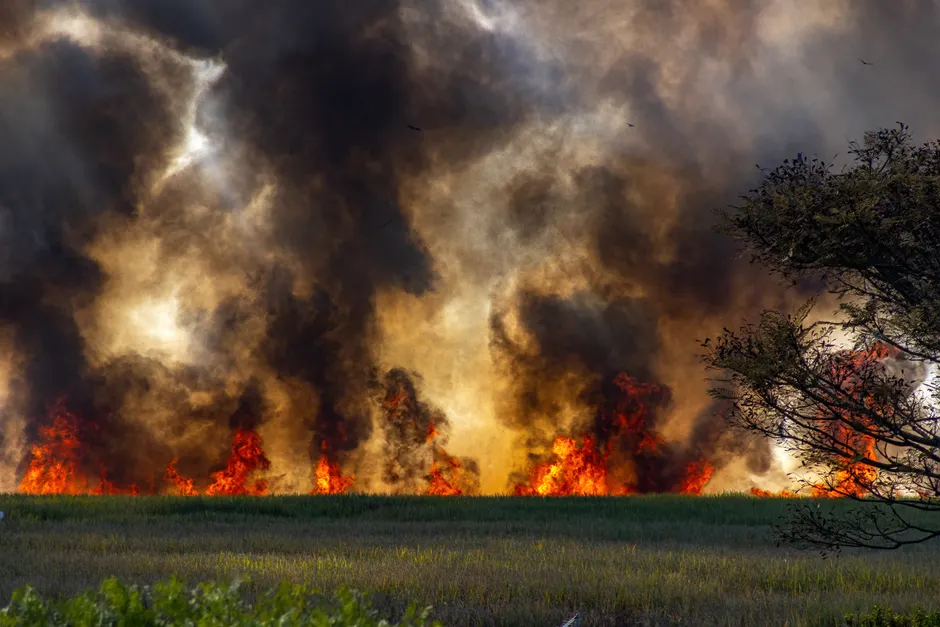
Strong winds pushed wildfires deeper into the area around Athens on August 2, forcing Greek officials to order more evacuations. The fire, which started near a town called Agios Vasileios on Friday, moved toward the seaside community of Porto Germeno and into forested mountains west of Athens. It threatened villages and an industrial area near the city of Megara. Three more communities — Kandili, Agia Skepi, and Toutouli — were told to evacuate as the fire spread. The Guardian
Nearly 500 firefighters and 23 aircraft were sent to fight the fire, but the winds made it too dangerous for some planes to fly low enough to scoop up seawater to drop on the flames. Firefighters rescued 254 people by boat from Agios Vasileios on Friday and another 12 from Porto Germeno on Saturday. Greek prime minister Kyriakos Mitsotakis was briefed on the situation. The Guardian
Greece's fire brigade had been on its highest alert level since July 31. On August 1, officials warned of extreme fire risk across several regions for the next day. Nearly 2,500 people were evacuated overnight, and extra firefighters were brought in on Saturday ahead of stronger winds. Reuters
Three firefighters have died battling the wildfires in Greece, according to Reuters. That brings the total confirmed firefighter deaths from the 2026 wildfire crisis across Greece, France, and Spain to at least six — three in Greece and three more recorded across southwestern France and central Spain in the two days before July 26. Reuters
The crisis stretches across three countries. In France, the largest wildfire was contained as of August 2 after 224,000 people were forced to flee their homes. That may have been the largest peacetime evacuation in French history. Active fires still burned across 420 square kilometers (162 square miles) of damaged forest. Nearly 3,000 firefighters were working on France's main fire and a second one in Provence that had stopped spreading but was not yet fully under control. The Guardian
Spain's major fires stopped spreading as of August 2. But combined, the evacuations across France and Spain have driven about a third of a million people from their homes and vacation spots. France's evacuation number grew from about 220,000 on July 26 to 224,000 by August 2. Spain had more than 75,000 people evacuated, with another 30,000 ordered to leave as of July 26. The Guardian
The crisis started getting worse in late July. Around July 23, more than 10,000 people were evacuated overnight in southwestern France as a fast-moving wildfire burned through at least 2,400 hectares (about 6,000 acres). By July 30, France, Spain, and Greece were all fighting major wildfires at the same time. Reuters
The climate background is striking. Europe has warmed at more than twice the global average since the 1980s, according to the EU's Copernicus Climate Change Service. Scientists at a group called World Weather Attribution calculated that human-caused climate change doubled the odds of the extreme fire conditions behind the French blazes. The Guardian
The situation is shifting from west to east. France and Spain, which took the worst of the evacuations and damage in late July, now appear to be stabilizing. Their fires are contained or have stopped spreading, though they are not fully put out. Greece is in the most dangerous phase, with winds actively pushing the fire forward and grounded aircraft making the job harder. This follows a pattern that fire experts have seen before in the Mediterranean: progress can be wiped out within hours when winds change, and without planes that can scoop water from the sea, firefighters lose their fastest tool for attacking fires in rugged mountains where trucks cannot easily reach.
The broader context here is about accountability and preparation. When scientists can say that climate change doubled the likelihood of the conditions behind the French fires, it changes the conversation from general climate trends to a specific link between warming and these particular fires. For governments dealing with rebuilding costs, insurance claims, and the political question of whether their emergency systems are built for a hotter continent, that distinction matters. The finding that Europe is warming at twice the global rate suggests the 2026 crisis is not a rare event but part of a trend. Planning based on how things used to be may be underestimating how bad things can get.