Why Are Bodies Still Being Found Under Gaza's Rubble Two Years Later?
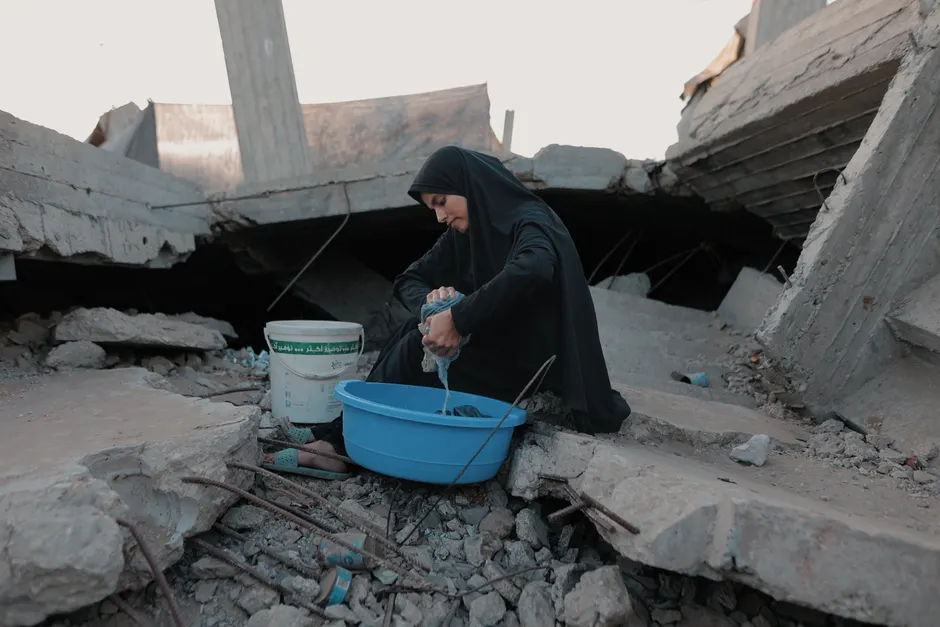
A mass funeral was held in Gaza for 112 people whose remains were pulled from the rubble of an Israeli strike that happened in November 2023. The strike hit Gaza City. Gaza's Civil Defence, the local emergency rescue team, said the remains came from that earlier attack. The recovery shows how finding and identifying people buried under destroyed buildings has become a slow and painful process that is still going on more than two years after the bombing. Haaretz
Body-recovery work in Gaza is carried out by the Civil Defence, which operates under the Hamas-run interior ministry. The International Committee of the Red Cross (ICRC), a neutral aid group that helps people in war zones, has been supporting the recovery efforts. ICRC spokesperson Patrick Griffiths said the organization provided gloves, shovels, protective equipment, and body bags, and rented two excavators (large digging machines) for the work. BBC
Civil Defence spokesman Mohammed Basel said a multi-storey building in the Sabra neighbourhood had been completely flattened, with possibly more than 180 civilians inside and around 90% killed. Rescue crews could not reach the site on the day of the strikes because they needed permission from Israel, arranged through a go-between like the ICRC, and the area was too dangerous to approach. It is believed that dozens more bodies remain unrecovered at the Sabra site. BBC
Relatives of the dead were at the scene while crews worked, helping guide them through the rubble. Nahed al-Hassayna showed the BBC the wreckage of his family's living room and held up belongings of two young relatives who were killed. Yousef Abu Sharia said he was the only survivor of his family, having lost his mother, father, uncle, and cousins under the rubble. BBC
Thousands more people remain missing across the Gaza Strip, with many thought to be buried under rubble from Israeli air strikes during the war. Gaza health officials have reported that over 69,000 Palestinians have died in the Israel-Hamas war. AP News
The scale of the recovery challenge has been clear since the early weeks of the conflict. In November 2023, families in Gaza dug by hand to retrieve bodies buried under rubble after Israeli airstrikes, with 27 bodies recovered in the first days after one strike while five people remained missing. Remains have also come back through other channels: the body of Mahmoud Shabat was among 195 Palestinians released by Israel over a 10-day period in late 2025. AP News AP News
The dangers around recovery and mourning go beyond the rubble itself. An Israeli strike on a funeral in the Gaza Strip in July 2026 killed at least seven people and wounded another 22. AP News
The broader context here is that Gaza's rescue teams face a web of obstacles that make an already devastating situation even worse. Civil Defence crews cannot simply go where they need to; they must coordinate access through a third party, in this case the ICRC. That is because they operate under the Hamas-run interior ministry, and Israel requires this layer of coordination before crews can enter certain areas. The ICRC's help, while practical, is limited to equipment and machine rentals. It does not fix the access delays that hold up recovery for days or more.
The gap in time between the strikes and the recovery, nearly three years in this case, shows how the sheer amount of debris from sustained bombing has created a recovery effort that could last for years. With thousands still unaccounted for, and the Civil Defence estimating that dozens more bodies remain at the Sabra site alone, mourning in Gaza has become tangled with the slow, dangerous work of clearing rubble. The mass funeral for 112 people is, by the numbers available, one event in a recovery effort with no clear end in sight.