Nigeria Is Giving Its Soldiers a Big Pay Rise — Especially the Frontline Ones

Nigeria's President Bola Tinubu has announced salary increases for the country's armed forces. The most junior soldiers will get an 80% pay rise, while senior officers will see smaller percentage gains. The change takes effect on September 1, 2026. It applies to about 250,000 military personnel across the army, navy, and air force, and raises the armed forces' yearly wage bill from $484 million to $678 million. BBC Business Insider Africa
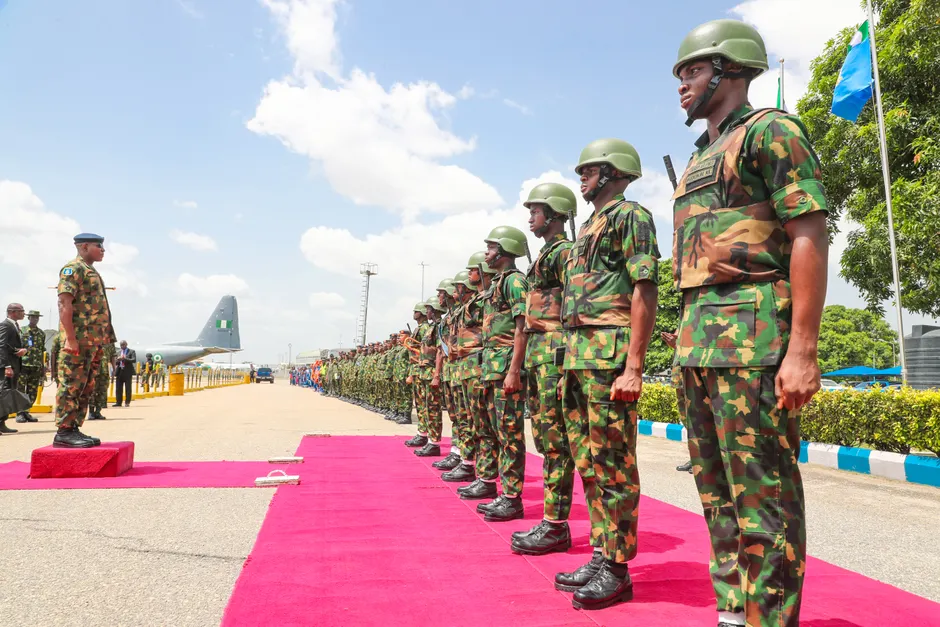
The pay rise is structured so that lower ranks benefit the most. Privates through staff sergeants — the soldiers who do most of the frontline fighting against bandits, kidnappers, and terrorists in Nigeria's north-west and middle belt — receive the full 80% increase. Warrant officers up to colonels receive 50%. Brigadier generals through generals receive 30%. BBC
Tinubu also committed to continuing to prioritise troop welfare and to modernise the armed forces with weapons and technology to address ongoing security threats. He praised the courage and sacrifices of service members operating against multiple armed insurgencies and criminal networks. BBC
Alongside the pay rise, the Nigerian army is being expanded to 12 divisions spread across the country. The goal is to improve coordination, intelligence sharing, and response times to security incidents. BBC Punch
Retired Major General Bashir Galma, a military expert, described the pay rise as what the armed forces had been calling for "for a long time." But he tempered his approval with a concern: future governments may struggle to keep up the higher funding. He also argued that other security agencies should get similar pay reviews and that broader welfare gaps — including uniforms, boots, and new rifles — still needed attention. BBC
The broader context here is why this pay rise is unusual. In the past, Nigeria has typically raised military salaries across the board, giving everyone roughly the same percentage. This time, the biggest gains go to the lowest ranks. That directly acknowledges the retention and morale problems among the soldiers most exposed to combat casualties in the north-east, north-west, and north-central regions.
The money side matters too. The roughly $194 million yearly increase comes as Nigeria's government is dealing with other financial pressures, including the economic fallout of removing fuel subsidies and a currency whose reduced value makes buying military equipment from abroad more expensive. Because the wage increase is a recurring cost — it must be paid every year, not just once — Galma's concern about whether future governments can sustain it carries real weight. In Nigeria's defence budget, personnel costs have historically taken up so much money that there is less left for equipment and infrastructure. A permanently higher wage bill without matching revenue growth could worsen that problem.
The 12-division army restructuring seems designed to pair the pay rise with a practical plan. More divisions mean more local command centres, which could help the military respond faster to threats in dangerous areas. But the announcement does not say whether the expanded structure will come with more equipment, logistics, or officers to staff it. That gap is where Galma's mention of uniforms, boots, and rifles matters. A larger, better-paid army that lacks basic equipment is not automatically a more effective fighting force.
The timing also raises practical questions. With just under four weeks before implementation, the Ministry of Defence and the military's pay systems have a narrow window to adjust payroll across three services and multiple rank tiers. The Defence Headquarters has not publicly explained how the transition will work.