Nigeria Is Adding 28,000 Soldiers to Its Army: Here's Why
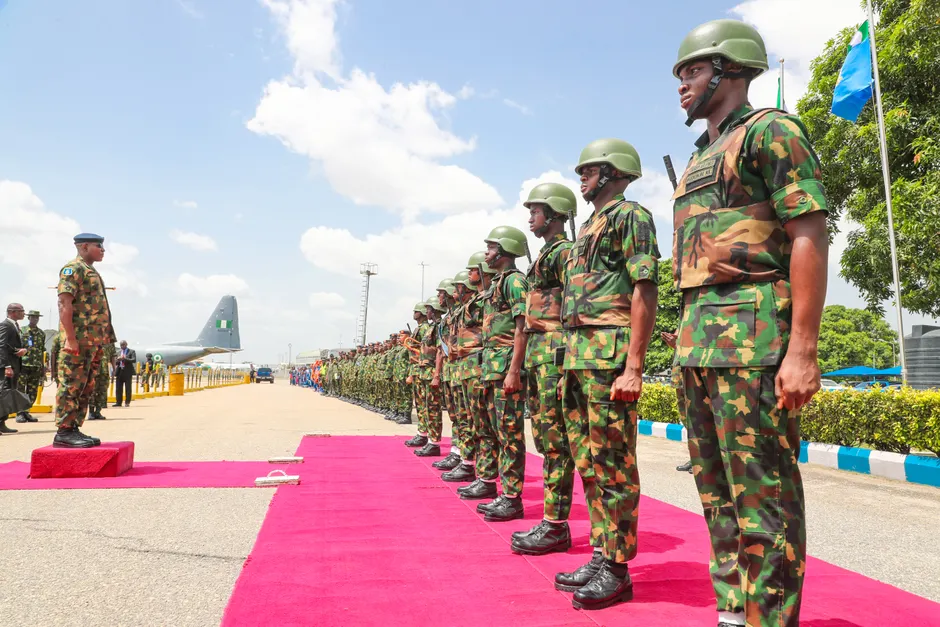
Nigeria's President Bola Tinubu has approved the country's biggest military expansion in recent memory, according to the BBC, Reuters, and Nigeria's Punch newspaper on July 24, 2026. The plan adds 28,000 new soldiers and creates four new army divisions.
A division is a large unit of soldiers, usually several thousand strong, that operates in a specific area. With four new divisions, Nigeria's army will have 12 in total. Right now, single divisions cover such large areas, sometimes entire states, that troops are spread thin and take too long to reach trouble spots. The government said the new divisions will improve co-ordination, intelligence sharing, and response times.
This builds on a security emergency Tinubu declared in November 2025. Back then, he ordered both the army and the police to recruit more people. The police were authorised to add 20,000 officers, and the army was told to expand its ranks. The State House published that declaration on its official website at the time.
One detail stands out: when the news broke about this new military expansion, the Nigerian State House website did not show any press release about it, even though international and domestic media were already reporting the story.
The expansion comes as Nigeria faces serious violence on several fronts. In the week before the BBC's report, an armed gang killed at least 20 villagers in Zamfara state, in the north-west. Separately, 46 students were kidnapped from a school in Borno state, in the north-east. The army rescued those students hours later, a quick response that is unusual, but that also shows how often these attacks happen.
Nigeria's security problems stretch across the whole country. In the north-east, Borno state has been a centre for insurgent attacks and kidnappings for years. In the north-west, armed bandits have escalated their violence. Other regions face separatist movements, kidnappings for ransom, and clashes between communities. When one division has to cover multiple states, it is harder to gather intelligence and deploy troops, especially when threats happen in different places at the same time.
The broader context here is that Nigeria's military has been stretched too thin for too long, trying to cover too much ground with too few troops, a problem that has persisted across multiple administrations. Creating four new divisions is a way to give each unit a smaller area to manage. You can think of it like a fire department adding more stations so each one can reach fires faster. Whether 28,000 new soldiers will be enough depends on how fast they can be recruited, trained, equipped, and retained.
The police expansion from the November 2025 emergency runs alongside this military growth. If 20,000 new officers are fully recruited and deployed, they would take on civilian policing tasks that soldiers have been doing, like routine patrols and checkpoints, freeing the army to focus on combat.
The fact that this expansion was approved about eight months after the emergency declaration suggests there was a gap between the president's order and actual planning. The specific numbers, 28,000 soldiers and four divisions, are the concrete details that followed from the broader mandate Tinubu issued in November 2025.
For countries nearby, Nigeria's expansion matters beyond its borders. Nigeria is the strongest military power in ECOWAS, a group of 15 West African nations that works together on regional security, and it has a history of contributing to peacekeeping and counter-terrorism missions in the region. When Nigeria's army is busy with internal security, it has less capacity for those external missions. The expansion could, over time, ease that pressure, but that depends on how fast the new divisions are set up and whether recruitment targets are met.