Why Ukraine Says Russia Just Had Its Worst Month of the War

Ukraine's military says Russia lost 42,800 soldiers in July 2026 — killed or wounded — which may be the highest monthly count Ukraine has reported all year. At the same time, President Volodymyr Zelenskyy restarted a major air strike campaign on August 4, hitting targets inside Russia and in Ukrainian territory that Russia controls. These numbers come as Russia dropped a record number of glide bombs (bombs that glide toward their target after being released from a plane) and as a key comparison of losses has shifted strongly in Ukraine's favor.
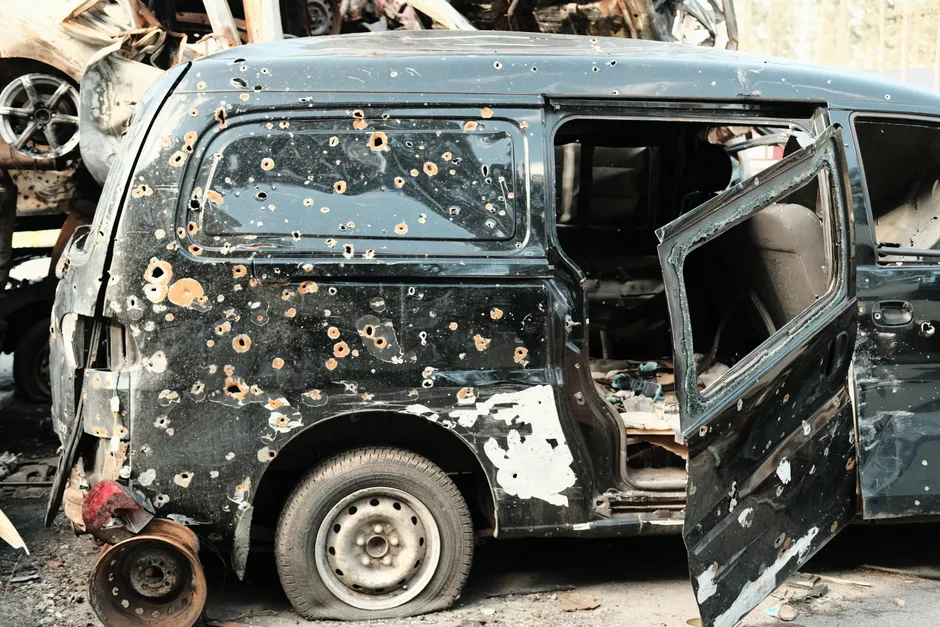
According to Ukraine's defence ministry, Russia used 8,300 glide bombs in July, more than in any other month of the war. That increase in bombing lines up with continued attacks on Ukrainian cities. On June 30, Russian glide bombs killed two people and injured at least 15 in Zaporizhzhia, per the regional governor. On August 3, Russian aircraft dropped eight glide bombs on a city in southern Ukraine within 90 minutes, killing one person and wounding dozens, according to regional chief Ivan Fedorov. Days later, Russia fired dozens of ballistic missiles at Kyiv and the surrounding region in early August, killing at least 17 people and destroying warehouses.
Zelenskyy told Fox News that Ukraine's own losses have reached 450,000 total casualties, of whom 50,000 have died. This is a rare moment where Ukraine has openly shared its total losses. Still, checking either side's numbers independently is very hard during an active war.
The gap between the two sides' losses has grown. The Center for Strategic and International Studies (CSIS), a research group, estimated that for every Ukrainian soldier killed or wounded, nearly eight Russian soldiers were killed or wounded in the first half of 2026. For most of the war, that ratio had been between 2:1 and 3:1. CSIS said the shift is largely due to Ukraine's growing use of drones. Zelenskyy said drones alone accounted for 30,272 of Russia's July casualties.
That drone advantage is the backbone of Ukraine's air strike plan. Zelenskyy called a 40-day Ukrainian air strike campaign a success and renewed it on August 4. The campaign has three parts: strikes on weapons factories and oil refineries inside Russia; attacks on energy systems and weapon shipments in occupied areas near the front line; and direct attacks on front-line positions. Ukraine's Security Service (SBU) said that during the first 40-day campaign, it hit 14 refineries, dozens of oil depots and loading terminals, 14 aircraft, and four airfields.
The broader picture here is that Ukraine is trying to wear down Russia's ability to supply and fuel its military, not just fight at the front line. Think of it like cutting off the supply trucks and fuel behind an army rather than only fighting the soldiers at the front. Striking refineries and oil depots limits the fuel Russia needs for its planes and tanks, while attacks on airfields aim to reduce how often Russian aircraft can fly bombing missions. The three-part plan links targets deep inside Russia with goals closer to the battlefield.
Russia has been increasing its own attacks too. Zelenskyy has said that each month Russia hits Ukraine with mostly Shahed drones (drones that circle an area before crashing into a target), over 150 missiles of various types, and more than 5,000 glide bombs. He has also said Russia's weapons industry plans to make more drones, glide bombs, artillery, and mortars. If those production increases happen, they could make up for some of the losses Ukraine has caused with its deep strikes. But how that plays out is still debated.
Another question is whether Russia will call up more troops. Zelenskyy believes Russia could draft up to half a million reservists in October 2026. A call-up that large would help Russia keep up its operations despite the losses Ukraine reports. But it would also carry political and economic costs for Moscow that are hard to measure from the outside.
A few things are worth watching. The 8:1 casualty ratio, even if roughly accurate, covers a time when Russia was pushing hard offensively and may have prioritized gaining ground over protecting its forces. Whether that ratio holds as Russia brings in fresh troops or changes tactics is unknown. Ukraine's deep strikes have shown they can reach far into Russian territory, but how much they hurt Russian fuel supply over time depends on how quickly Moscow can repair damaged sites and reroute supplies. And the casualty numbers from both sides are estimates made by countries at war — they point to trends and scale, not exact counts.
What is clear is that the war did not slow down in mid-2026. Both sides are pushing their advantages: Russia through sheer volume of firepower and possible troop call-ups, Ukraine through precise drone strikes and attacks deep behind enemy lines. The tug-of-war between Russia building more weapons and Ukraine striking Russian targets is likely to shape the fighting through the autumn.