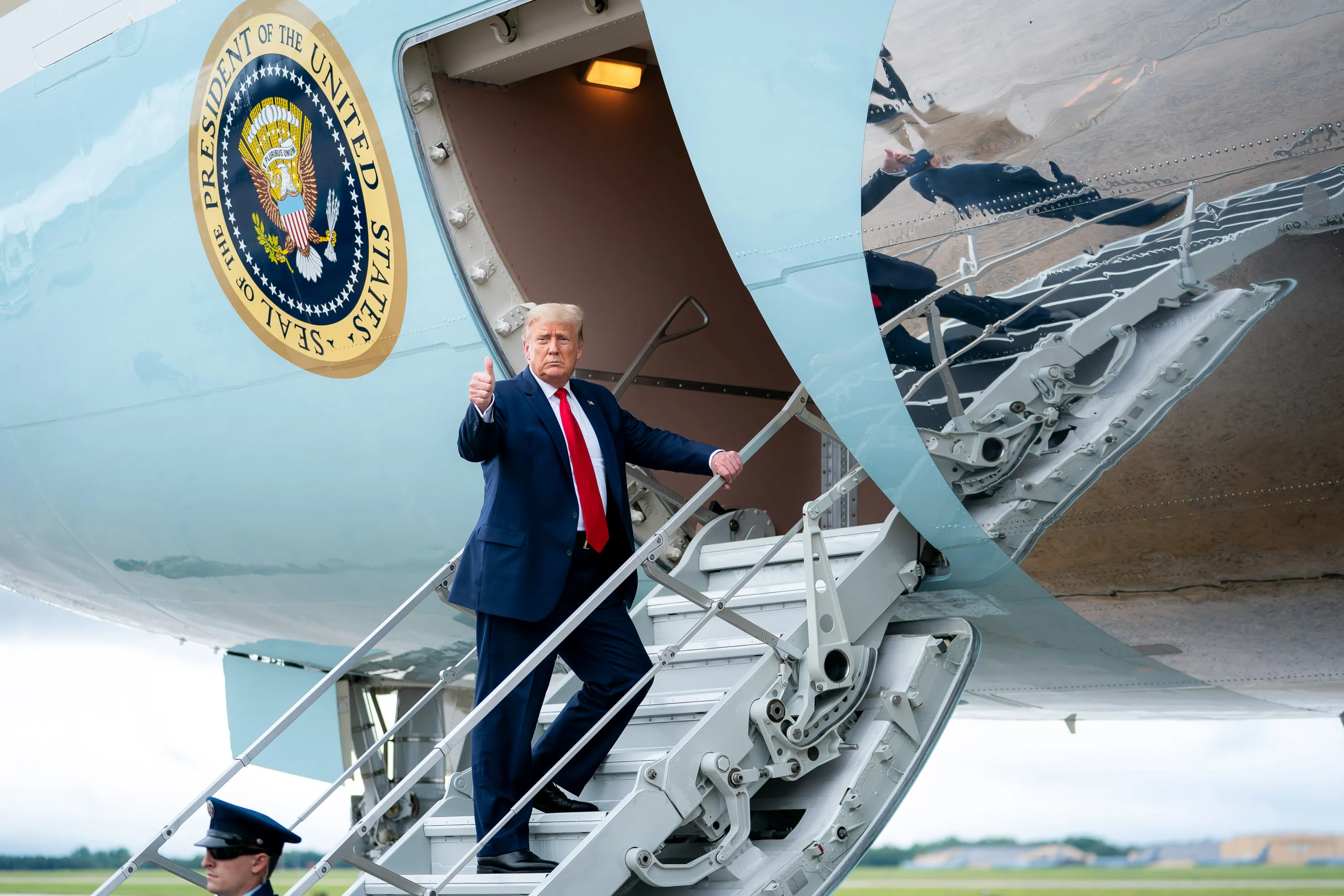
Air Force One Became a Decoy: Inside the Secret Operation to Shield Trump from an Iranian Threat

President Donald Trump was secretly moved from Air Force One to a different aircraft during his return from a NATO meeting in Turkey on 8 July 2026, after US intelligence identified an Iranian assassination threat against him, according to a Washington Post investigation published 10 August 2026 (Washington Post).
The operation, as detailed by the Post and subsequently reported by Reuters, ABC News, the BBC, and The Guardian, unfolded in Ankara. Trump boarded the traditional Air Force One jumbo jet on 8 July, but the aircraft served as a decoy — a plane meant to draw attention while the real departure happened elsewhere. With the assistance of an airport catering truck, a vehicle normally used to load inflight food rather than transport passengers, the president was transferred to a third, unmarked military aircraft for the actual departure from Turkish soil (Washington Post; Reuters; ABC News).
The Guardian, citing the same reporting, described Trump as having hidden in a catering container during the transfer (The Guardian). ABC News characterized the plan as elaborate, involving both the catering truck and a separate military aircraft (ABC News). Catering trucks were parked at Air Force One's position during the operation, according to the Post's follow-up reporting on 11 August (Washington Post).
The deception was carried out while traveling journalists and some staff were unaware. Trump spoke to reporters by phone during the flight back to the United States but did not disclose that he had been moved to a different plane (BBC). He was later seen disembarking Air Force One in the UK, a stopover on the return route, before boarding his newer, Qatari-gifted jet for the final leg to the US (BBC).
The BBC's diplomatic correspondent Paul Adams provided an on-air explainer of the reported plane swap, noting the unusual nature of using a catering vehicle for a presidential transfer (BBC).
The Washington Post reported that the secret operation was prompted specifically by an Iranian assassination threat against Trump and was executed covertly to protect the president (Washington Post). The New York Times had reported on 22 July that Iranian leaders had dug in against Trump's threats to strike Iranian bridges and power plants if Iran targeted any more ships, an escalatory exchange that frames the threat environment surrounding the NATO summit return (New York Times).
The broader context here is a US-Iran confrontation that has moved well beyond rhetorical escalation into operational threats against the president himself. The use of Air Force One as a decoy matters because that aircraft's call sign is universally recognized and its movements are normally among the most visible symbols of American power. The decision to abandon standard presidential travel protocols suggests the Secret Service and intelligence agencies assessed the Iranian threat as credible and immediate. The catering-truck method, while unconventional, fits a familiar pattern in high-threat environments: when motorcades or aircraft follow predictable routes, those routes become vulnerabilities. Think of it as a magician's misdirection — keep the audience watching the obvious target while the real move happens out of sight.
That Trump continued speaking to journalists during the flight without confirming the switch is itself notable. It suggests the deception was designed not only to physically protect the president but to maintain an operational facade in real time, controlling the information environment even among the press corps traveling with him. The fact that some staff were also unaware indicates the operation was tightly compartmented, shared on a need-to-know basis at the highest levels of the Secret Service and military planning.
The use of the Qatari-gifted jet for the final leg to the US raises separate questions about aircraft security certification and presidential transport protocols, given that the gift jet has been a point of domestic political contention. The Post's follow-up reporting on 11 August, examining what it termed a "White House ruse," suggests the story is still developing, with further details about the operation's planning and interagency coordination likely to emerge.
The episode also underscores the durability of the Iranian threat as a driver of US security posture. The Times's 22 July reporting on Trump's threats against Iranian infrastructure, paired with the now-revealed 8 July plane swap, places both events within a compressed window of escalation. Whether this operation represents a one-time response to a specific, time-limited threat or part of a sustained adjustment to presidential travel security remains an open question. What is clear is that the confrontation with Iran has reached a point where the most protected individual on earth was moved by catering truck to escape it.