Trump's Secret Plane Swap in Turkey: What Happened and Why It Matters

President Donald Trump confirmed on August 12, 2026 that he secretly switched airplanes while leaving a NATO summit in Turkey the previous month because of a credible Iranian missile threat. Trump told reporters that the Secret Service and the military directed him to travel on a different flight and plane, saying, "I just have to do what they say" BBC.
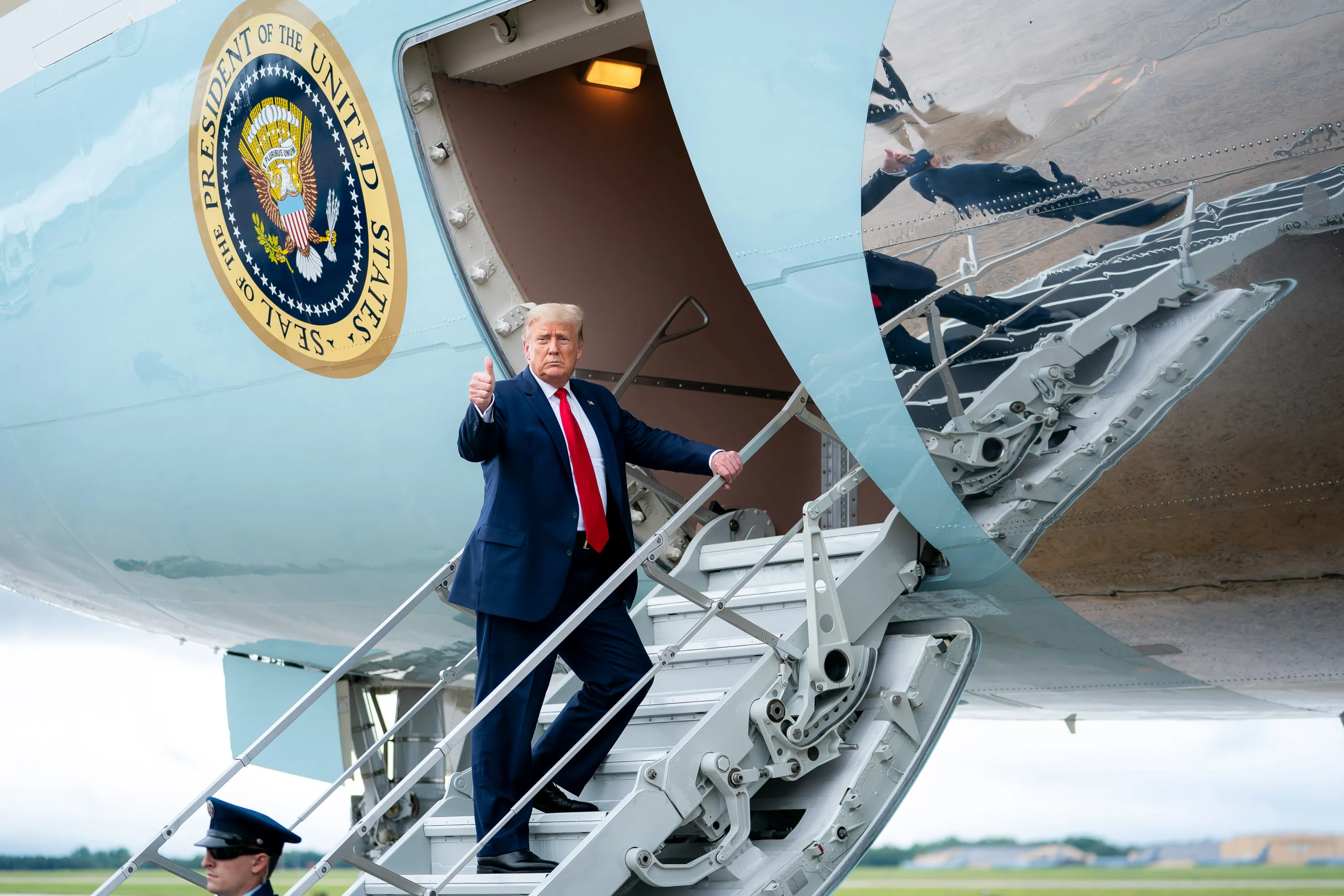
The ruse played out on July 8, 2026, in Ankara. Trump boarded the older Air Force One jumbo jet in front of television cameras, then was transported to a military aircraft with the help of a catering truck BBC. The New York Times reported on July 10 that Trump had changed planes at the urging of the Secret Service, flying on the older Air Force One jet as a security precaution rather than the newer model The New York Times.
Journalists and some White House staff aboard Air Force One did not know the president had been moved as part of the operation BBC. The Washington Post reported that Air Force One was then used as a decoy — a fake target meant to draw attention away from the president's actual aircraft — contradicting what officials had said publicly at the time The Washington Post. CNN confirmed the plane transfer, sourcing its details to the presidential travel pool — the group of journalists assigned to cover the president's movements CNN.
Officials told the BBC's US partner CBS News that the United States had detected a credible Iranian threat to fire a missile at the plane BBC. Trump had said during the NATO summit in Ankara that he was Iran's "number one target" BBC.
Trump said the military jet he ultimately boarded was at "greater risk" BBC. Former Secret Service agents described the plane swap as an extraordinary maneuver by the Trump administration to shield the president from an alleged assassination threat from Iran Time. Fox News reported that former Secret Service agent Bill Gage said the people aboard the aircraft left behind "probably did face an elevated risk" Fox News. The Associated Press and PBS NewsHour also reported that Trump used the ruse to fly out of Turkey following the summit because of the Iran threat, and that questions have been raised about safety AP; PBS NewsHour.
The operational details of the swap deserve close attention. Using a catering truck to move the president between aircraft suggests a layered deception designed to defeat surveillance — relying on ordinary ground activity to hide a critical movement. Deploying Air Force One as a decoy draws from a long-standing protective doctrine in which high-value assets are shielded through misdirection, much like a magician using one hand to distract while the other does the real work. Yet the decision to leave journalists and White House staff on the decoy aircraft introduces a difficult risk calculation. Protecting the president means prioritizing the commander-in-chief's safety, but knowingly exposing accompanying personnel, even inadvertently, to a credible missile threat raises questions about how much collateral risk is acceptable in executive protection.
Trump's claim that the military jet he boarded was at "greater risk" adds another layer of complexity. If the alternate aircraft was considered more vulnerable than Air Force One, the decision to move the president onto it suggests the Secret Service may have concluded that the decoy operation itself was the better survival strategy — betting on the element of surprise rather than the defensive features of the plane. The tension between these two assessments points to a threat picture that was changing rapidly, one that operators on the ground had to navigate in real time.
The broader context here is the state of US-Iran relations and the intelligence pipeline feeding such protection decisions. A credible threat to fire a missile at a presidential aircraft is a strategic escalation that goes well beyond standard threat warnings. It implies either a localized missile capability within range of Turkish airspace or a platform capable of intercepting the president's flight path. The fact that this intelligence was deemed serious enough to trigger an extraordinary mid-departure contingency speaks to its severity. How this event shapes the ongoing friction between Washington and Tehran — and whether it prompts retaliatory moves or changes to NATO summit security — will depend on the intelligence community's confidence in the threat assessment and the administration's willingness to share more operational details.