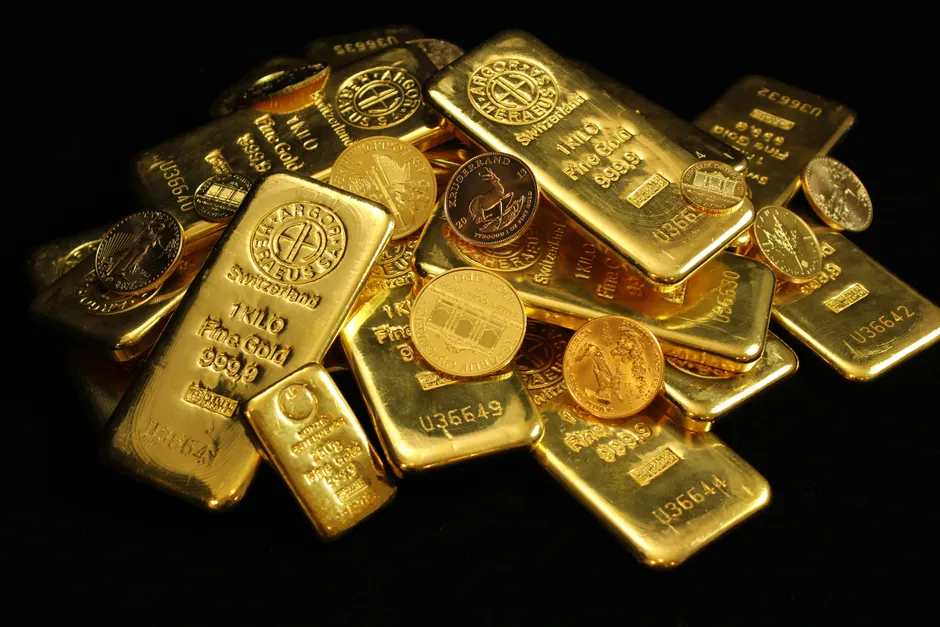
Gold Holds Above $4,300 as Stubborn Inflation Keeps the Bid Alive
Spot gold traded at $4,399.15 per troy ounce on August 12, 2026, up 0.66% from the previous day's close, according to TradingEconomics data. The move keeps gold within the $4,300–$4,720 range it has held through much of 2026, underpinned by US inflation readings that stay above the Federal Reserve's 2% target.
The inflation picture behind gold's strength is well-documented in recent AP reporting. Core consumer prices — which strip out food and energy costs — rose 3.1% year-over-year in July 2025, up from 2.9% in June, per AP figures published August 14, 2025. The August 2025 CPI report showed headline inflation at 2.9% and core at 3.1%, both unchanged from July and both above target. By September 2025, headline CPI had ticked up to 3%, the highest reading since January of that year, with core also at 3%.
Why does this matter for gold? When core inflation stays sticky, the Federal Reserve has less room to cut interest rates. That keeps "real yields" — the return on government bonds after subtracting inflation — relatively low. Low real yields make gold more attractive by comparison, because gold pays no interest; the opportunity cost of holding it stays small. The rising core trajectory from June through September 2025, from 2.9% to 3%, gave bullion a persistent tailwind.
Gold's price path through 2025 and 2026 traces that dynamic. Reuters reported spot gold at $4,330.39 on August 12, 2025, following US inflation data that day. By January 13, 2026, gold had steadied at $4,591.49 as investors booked profits below the $4,600 level. A May 11, 2026 Reuters dispatch showed spot gold at $4,723.40, with the article headline citing oil-driven inflation worries and faltering US-Iran peace talks. More recently, an August 10, 2026 Reuters report noted gold drifting lower from a seven-week peak ahead of US inflation data, with spot silver up 3.1% to $65.50 per ounce the same day.
The December gold futures contract on the COMEX — the primary US exchange for metals trading — opened at $4,135.20 on Monday, August 3, 2026, up 0.7% from the prior Friday's settlement, per Yahoo Finance. Spot prices that morning were reported at $4,051 per ounce at 10 a.m. Eastern, according to Fortune. The roughly $280 gap between that August 3 spot reading and the August 12 TradingEconomics figure reflects the range of day-to-day volatility and source-timing differences that characterize this market.
Silver's outperformance on August 10, with its 3.1% gain to $65.50, deserves a closer look. The gold-silver ratio — how many ounces of silver it takes to buy one ounce of gold — compresses when investors favor silver for industrial demand or inflation hedging. A move of that size in a single session suggests short-term positioning rather than a fundamental shift in supply and demand. Whether that outperformance lasts through the next CPI release will tell market participants whether the bid is tactical or structural.
The broader context here is a gold market that has absorbed a roughly $400-per-ounce gain over twelve months without a meaningful pullback below $4,300. That climb has been fueled not by a single catalyst but by a convergence: above-target inflation that limits the Fed's willingness to cut rates, geopolitical risk from US-Iran tensions, and consistent central-bank gold buying. Each Reuters dispatch cited above attributes the daily move to a slightly different driver, but the cumulative effect is a market where dips are shallow and the path of least resistance remains upward.
What investors should weigh is the asymmetry in the inflation data. Core CPI at 3% is not accelerating dramatically, but it is not converging on the Fed's 2% target either. If the next several prints hold in the 2.9%–3.1% band, the real-rate argument for gold weakens only marginally while the safe-haven bid from geopolitical uncertainty persists. The risk to the bullish case is a disinflationary surprise — inflation dropping faster than expected — which would compress the inflation premium already embedded in current prices.
No position recommendations here. The data says what it says: gold is bid, inflation is sticky, and silver is flashing.