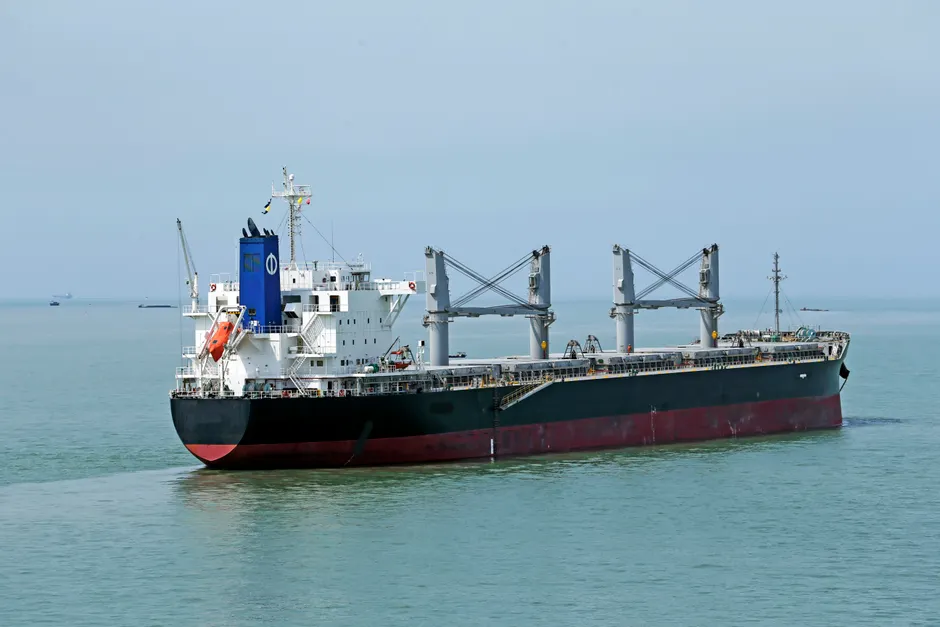
Oman's Coastline Hit by Massive Oil Spill from Grounded Shadow Fleet Tanker

A vast oil spill from the leaking tanker Caroline Bezengi has reached Oman's coastline, according to the country's Environment Authority, which confirmed on August 13 that monitoring results showed oil pollution on beaches in the Ras Madrakah area. The spill, already covering more than 2,000 square kilometres (770 square miles) of sea surface according to satellite imagery reviewed by oil spill specialist John Amos, threatens roughly 40km (25 miles) of coastline near Ras Madraka as well as Masirah Island, whose southern beaches could be contaminated within hours across a 10–20km stretch. Al Jazeera
The Caroline Bezengi, a 274-metre Suezmax tanker sailing under a Cameroonian flag, was en route from Russia to India when it ran aground. AP News The vessel had departed the Russian Black Sea port of Novorossiysk in April. Reuters reported that the tanker was carrying an estimated 800,000 barrels of sanctioned oil; other reporting places the cargo at close to one million barrels of Russian crude bound for Asia. Reuters The Caroline Bezengi is believed to be part of Russia's shadow fleet, the loose network of vessels used to bypass Western sanctions on Russian oil exports. Sanctions, in this context, are restrictions imposed by Western governments that ban or limit the sale of Russian oil above a certain price, aimed at cutting revenue to Moscow. OpenSanctions records identify Rentoor Shipmanagement and Villar Shipmanagement, both based in China, as the registered owner and operator, respectively. Al Jazeera
The chain of events leading to the grounding remains only partially understood. British maritime security firm Vanguard told AFP that the Caroline Bezengi suffered explosions in early June while sailing off the coast of Yemen, causing water to enter several sections of the vessel. The crew reported a suspected explosion on June 8. There has been no official explanation for the blasts, and no party has claimed an attack. An AFP investigation found the tanker had been stranded for several weeks near Oman's al-Qibliyyah Island, having run aground approximately 22 nautical miles (41km) from the coastal town of Sharbithat. Al Jazeera
Oil has been leaking continuously since the grounding. Reuters visual verification producer Catherine Cartier identified a massive slick emanating from the vessel off Oman's coast in July. Satellite images showed an oil sheen spreading northeast from the tanker. The slick has been concentrated around the Hallaniyat Archipelago off Oman's southern coast, the site of a marine reserve established last year. Oman's environment authority has confirmed oil contamination on beaches 125 miles north of the grounded tanker, pointing to the scale of coastal impact already realised. Al Jazeera An unnamed spokesperson for the UN International Maritime Organization said the IMO is closely monitoring the leakage. Al Jazeera
The environmental stakes are considerable. The Hallaniyat Archipelago, a recently designated marine reserve, hosts ecosystems that are now directly in the path of the slick. Masirah Island, known for its nesting turtle populations and fisheries, faces imminent contamination of its southern coastline. The full extent of ecological damage will depend on the volume of oil released, weather and current patterns, and the speed and effectiveness of any containment response, none of which has been publicly detailed.
The broader context here involves the regulatory architecture, or lack of it, surrounding sanctioned oil shipments. Shadow fleet tankers operate outside the insurance, maintenance, and oversight frameworks that govern conventional maritime commerce. Their flag registrations frequently shift, their ownership structures are opaque, and their cargoes move through jurisdictions where enforcement of Western sanctions is limited or nonexistent. Think of it as a parallel shipping industry, with its own vessels, routes, and rules of avoidance, designed to keep oil flowing past Western restrictions. The Caroline Bezengi's trajectory, from a Russian Black Sea port toward an Asian destination under a Cameroonian flag with China-based management entities, fits this profile precisely.
The spill also raises questions about coastal state responsibility and capacity. Oman now confronts a spill approaching its shores from a vessel that was neither Omani-flagged nor destined for an Omani port. The country's Environment Authority has been monitoring the leak for weeks, but the slick has continued to spread, with satellite imagery reviewed by Amos showing a footprint more than ten times larger than the 150 square miles the Omani agency reported in its own earlier analysis. NBC News That discrepancy may reflect differences in imaging methodology or timing, but it also points to the difficulty of accurately assessing a spill from a vessel that has been leaking for weeks in open water.
For policymakers and maritime regulators, the incident illustrates what might be called the environmental cost of sanctions evasion. When oil is moved on ageing, poorly insured, and anonymously owned vessels along routes that prioritise avoiding detection over navigational safety, the risk of grounding, collision, or structural failure rises. Coastal states along these routes absorb the consequences. The IMO's monitoring role, while important, does not extend to unilateral intervention in a vessel's operation; the organisation sets standards and facilitates cooperation, but enforcement depends on flag states and coastal states, precisely the actors whose capacities are most stretched in shadow fleet operations.