Two Earthquakes, One Family: The Delfín Brothers' Flight from Venezuela to Colombia
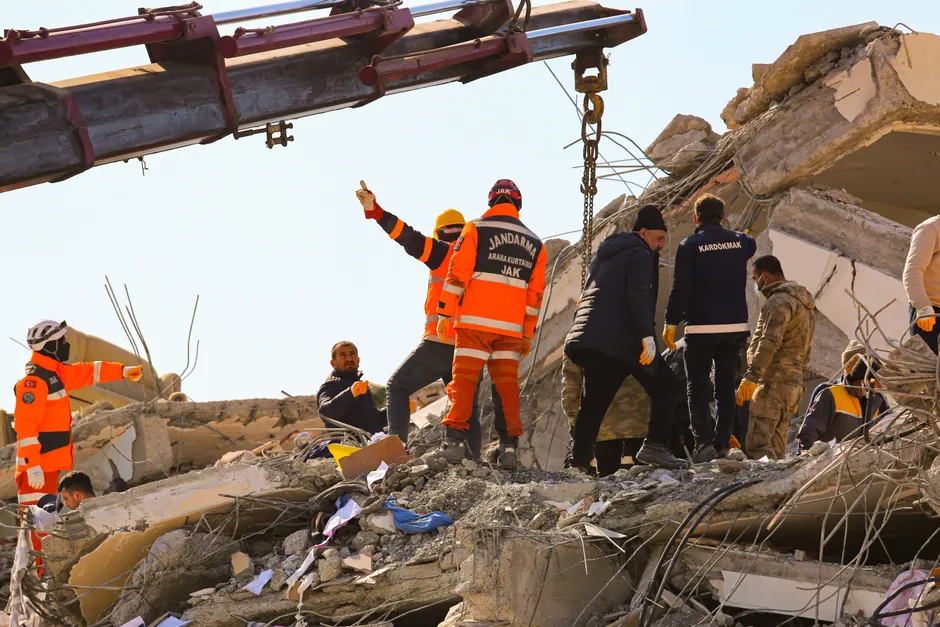
On the evening of June 24, 2026, two powerful earthquakes struck Venezuela just 39 seconds apart. With magnitudes of 7.2 and 7.5, the twin quakes killed more than 6,300 people, according to the Venezuelan government, and collapsed the 12-storey apartment building where the Delfín family lived (BBC).
Among those trapped under the rubble were the brothers' mother Yusmani, their grandmother Carmen, and their younger brother Moissés. Moissés, who was ten, had stayed home because he was grounded while his older siblings went to the beach that day (BBC).
Winder Delfín was 15. Deivi Delfín was 17. They had traveled to a beach on Venezuela's Caribbean coastline at the end of June, a trip that inadvertently placed them away from the building when the quakes hit. Their brother Moissés did not go with them. He stayed inside the apartment and was caught in the collapse along with Yusmani and Carmen (BBC; New York Times).
The brothers joined rescue efforts immediately after the earthquakes but had nowhere to sleep and nothing to eat for three days (BBC). Their father, Deivid, was in Colombia when the earthquakes struck. He returned to Venezuela and searched for his sons for three days before finding them (BBC).
After their father located them, Winder and Deivi spent nearly a month searching for their missing family members. They dug through debris every day for 26 days to recover the bodies of their mother, brother, and grandmother (New York Times; BBC).
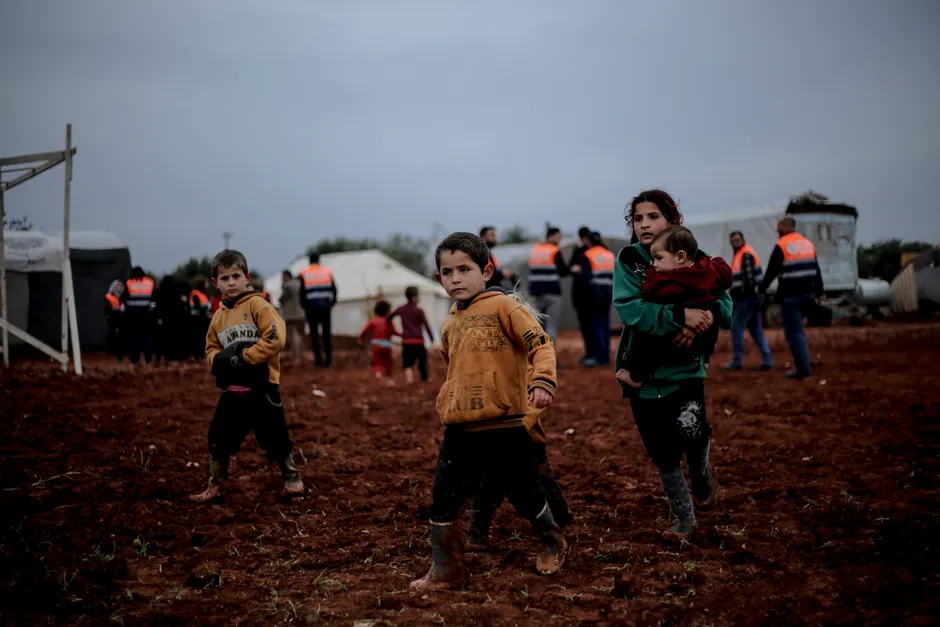
The Delfín brothers then fled Venezuela for Colombia, where they were caught by a second earthquake (New York Times). The first earthquake had destroyed their home and killed their mother, brother, and grandmother. The second forced them to survive yet another seismic event as displaced persons in a neighboring country.
The sequence of events places the Delfín family at the intersection of two compounding crises: a catastrophic seismic event in Venezuela whose death toll exceeded 6,300, and a subsequent earthquake in Colombia that struck survivors who had already lost their home and three immediate family members. The Venezuelan government's figure of more than 6,300 dead makes the June 24 double earthquake one of the deadliest seismic events in the country's modern history. The government's accounting in disaster contexts, however, has historically faced scrutiny from international observers.
What stands out in the Delfín brothers' account is the duration of their unsupported search. For 26 days, two teenagers, one of them a minor at 15, conducted daily recovery digs through the ruins of their own apartment building. Their father was absent when the earthquake struck and needed three additional days simply to locate his sons. The gap between state disaster response and the scale of family-level recovery efforts is visible in the details: no shelter, no food, and no organized extraction for nearly a month.
The fact that the brothers then encountered a second earthquake in Colombia after fleeing the first one draws attention to the geographic vulnerability of the northern South American corridor, where seismic activity along the Caribbean and South American plate boundaries can produce devastating sequential events across national borders.
The broader context here is what the Delfín brothers' trajectory from a Caracas-area collapse to Colombian seismic exposure reveals about displacement patterns that disaster response frameworks are not designed to absorb: survivors of one catastrophe becoming victims of another within weeks, across a border, with no institutional handoff between the two countries' emergency systems.