Builders Find €9 Million in Gold Hidden in a Belgian Cellar Wall — and Hand It Over
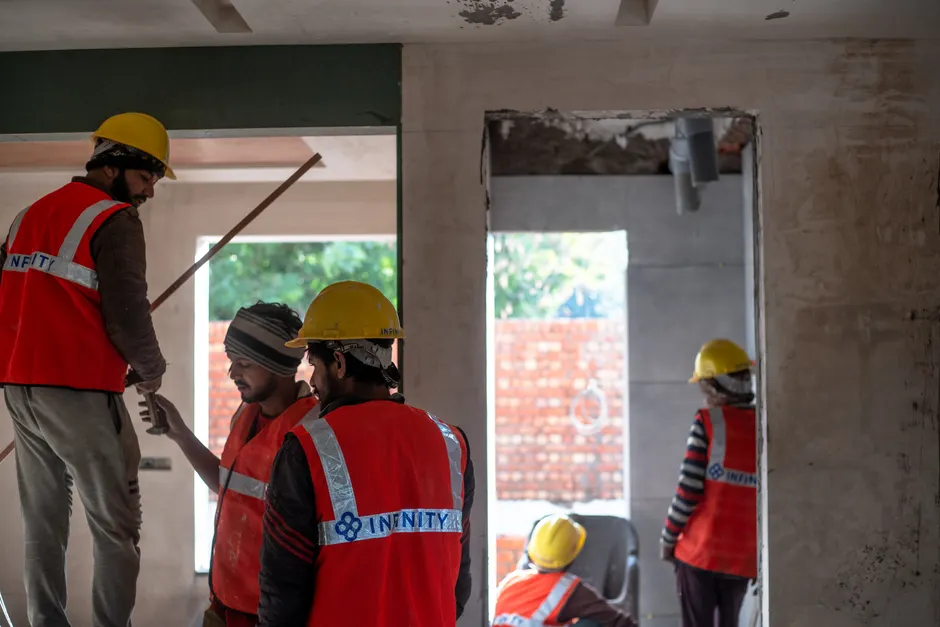
Construction workers renovating a property in East Flanders discovered a hoard of gold coins and gold ingots bricked into a cellar wall, valued at approximately €9 million (£7.5 million), and handed the find over to police rather than keeping it (VRT; The Sun).
The property belongs to CAW Oost-Vlaanderen, a welfare-support charity operating in Dendermonde, a Flemish community of roughly 47,000 people. The gold was found concealed within a wall in the cellar during renovation work at the site.
The site manager, identified only as Mario, described the find to Belgian broadcaster VRT. Another person involved in the discovery, named Kobe, acknowledged the temptation but said a €9 million hoard could not be kept hidden. The builders admitted they were tempted to keep it for themselves, yet ultimately alerted police, with one stating it would be theft to do otherwise (BBC; The Sun).
Geert Hillaert, director of CAW Oost-Vlaanderen, said his first reaction was "surprise and amazement." He expressed hope that the find might support the charity's welfare work, though the legal framework governing such discoveries makes any outcome contingent on a multi-year process (BBC).
A local prosecutor has launched an investigation, and the rightful owner of the gold is not yet known. Under Belgian law, the owner has five years — 1,823 days — to come forward and claim the hoard. Only after that period elapses, with no claimant, does the question of who gets the gold arise.
Belgian civil law has a specific framework for hidden treasure, known in legal terms as thesaurus — a Latin word meaning "treasure." Think of it as a built-in rule for buried or concealed valuables whose owner cannot be identified. If no owner comes forward and the find is not linked to criminal activity, the treasure is divided between the finder and the property owner. In this case, that would mean a split between the builders who discovered the hoard and CAW Oost-Vlaanderen, the charity that owns the property. If the investigation determines the gold is connected to criminal activity, the division rule would not apply, and the legal calculus shifts entirely.
Local police have urged the public not to visit the active construction site in search of treasure. In a lighter touch, the local police force updated its Facebook profile picture to an image of a gold coin following the discovery (BBC).
The broader context here is the unusual intersection of construction, charity, and civil property law that the Dendermonde discovery has produced. CAW Oost-Vlaanderen, an organization devoted to welfare support, now finds itself a party to a treasure-trove proceeding with implications that could, in Hillaert's expressed hope, benefit its social mission. The builders, for their part, acted as honest finders rather than silent beneficiaries, a choice that preserved their legal standing under Belgian civil law.
The five-year window creates a prolonged period of legal limbo. During that time, the gold remains subject to potential claims, and the prosecutor's investigation will need to determine whether the hoard's concealment in the cellar wall has any connection to criminal activity. The origin of the gold, the circumstances of its concealment, and the identity of whoever bricked it into the wall remain open questions.
For a charity operating in a modest Flemish town, a €9 million windfall would be transformative. Whether that materializes depends on outcomes that will not be resolved quickly. The legal architecture is methodical by design: it protects the rights of potential owners while creating a structured path for disposition when no claimant emerges. Until then, the gold sits at the center of an investigation, a charity's hopes, and a legal clock that has only just begun to tick.