A €9 Million Gold Hoard Found in a Belgian Sewer Trench — and the Legal Fight That May Follow

An 18-year-old student working a summer construction job in Sint-Gillis-Dendermonde, Belgium, discovered a gold hoard valued at roughly €9 million (£8 million) while digging sewer trenches on the site of a former brewery.
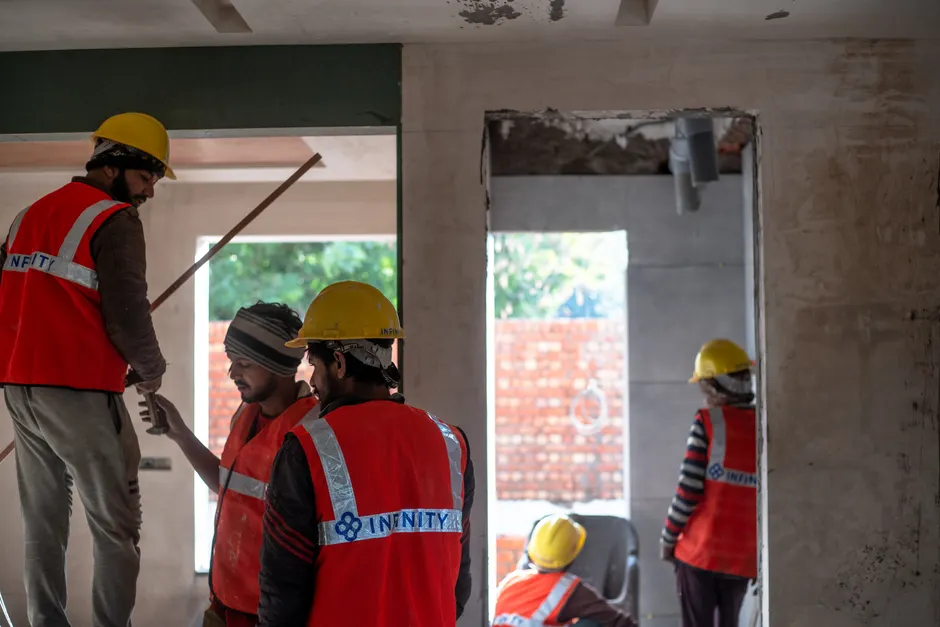
Kobe Philips, from the nearby town of Moerzeke, was employed as a job student — a temporary student worker — at the construction firm renovating the Brouwershuis, a property on Van Langenhovestraat about 30 kilometres north-west of Brussels. On a Tuesday morning at around 8:15 am, while workers were laying drainage pipes during a full-scale gutting of the building, Philips and a colleague came across a bag hidden inside a bricked-in cellar wall. Inside were gold coins, nuggets, and numbered bullion bars.
The hoard had been concealed beneath a grand villa built in the late 19th century for Theophilus Van Assche, the brewery's owner. Brewing on the site began in 1899 and ceased in 1970. The property is now being completely renovated by CAW Oost-Vlaanderen, a social welfare organisation, to create new offices and housing. Geert Hillaert of CAW told HLN that the Brouwershuis was being fully gutted when the discovery was made.
Philips and his colleagues called the police and notified CAW immediately after finding the gold. The treasure was then moved to a secure facility in Brussels, where it awaits a detailed official investigation to determine legal ownership. Hanne Ollevier of the East Flanders public prosecutor's office said authorities must first confirm that the bullion was not stolen property or the proceeds of criminal activity.
Under Belgian law, finders of treasure must wait at least five years for potential owners to come forward and claim the haul. That waiting period — a feature of Belgium's civil law tradition, which aims to balance the interests of finders, landowners, and possible heirs — combined with the prosecutor's investigation into provenance (the history of where the gold came from and how it was acquired), means the question of who ultimately owns the gold will not be settled quickly.
The Van Assche family connection looms over the ownership question. Former Dendermonde mayor Piet Buyse told HLN that the Van Assche family's fortune had certainly stayed in the family. If descendants can establish a legitimate chain of inheritance, they could potentially lay claim to the hoard during the statutory waiting period.
The composition of the find adds layers to the investigation. Numbered bullion bars are typically traceable through refinery or mint records, which could help authorities determine whether the gold was legitimately acquired, reported, and taxed — or whether it was hidden to evade detection. Gold coins and nuggets, by contrast, are harder to trace to a specific source. The mix suggests the hoard may have been assembled over time, though this remains a matter for the investigation rather than confirmed fact.
The broader context here is a Belgian legal framework that treats buried treasure as a contested asset rather than a straightforward finder's fortune. The five-year waiting period reflects a civil law tradition designed to balance the interests of finders, landowners, and potential heirs. In practice, these cases can become drawn out if multiple parties assert claims, or if the provenance investigation turns up irregularities. The public prosecutor's involvement signals that a criminal origin cannot be ruled out until the bullion's history is fully traced.
For CAW Oost-Vlaanderen, the discovery introduces an unusual complication into a routine renovation project. The organisation was converting the Brouwershuis into social infrastructure, not conducting an archaeological dig. Whether the find delays the renovation timeline, or whether CAW itself has any claim as the current property custodian, are questions that will likely turn on the specifics of Belgian property and treasure law.
Philips told the Belgian news network VTM about the discovery. His account, alongside reporting by HLN and Nieuwsblad, has made the find a national story in Belgium, drawing attention not only to the value of the hoard but to the legal and historical questions it raises about wealth concealed within the architecture of the country's industrial past.
The investigation by the East Flanders public prosecutor's office will need to establish whether the gold was lawfully acquired, whether any criminal reports were ever filed regarding its disappearance, and whether surviving Van Assche heirs can demonstrate ownership. Until those questions are answered, the hoard remains in state custody in Brussels, and the finder, the property owner, and any potential claimants are in a holding pattern that Belgian law has designed to last years rather than months.