A Student, a Sewer Trench, and €9 Million in Gold: Inside Belgium's Brewery Treasure Find

An 18-year-old Belgian student named Kobe stumbled upon gold worth roughly €9 million while digging a sewer trench during renovation work at a former brewery in Sint-Gillis-Dendermonde, Belgium. News of the discovery broke on August 14, 2026 (The Guardian; BBC).
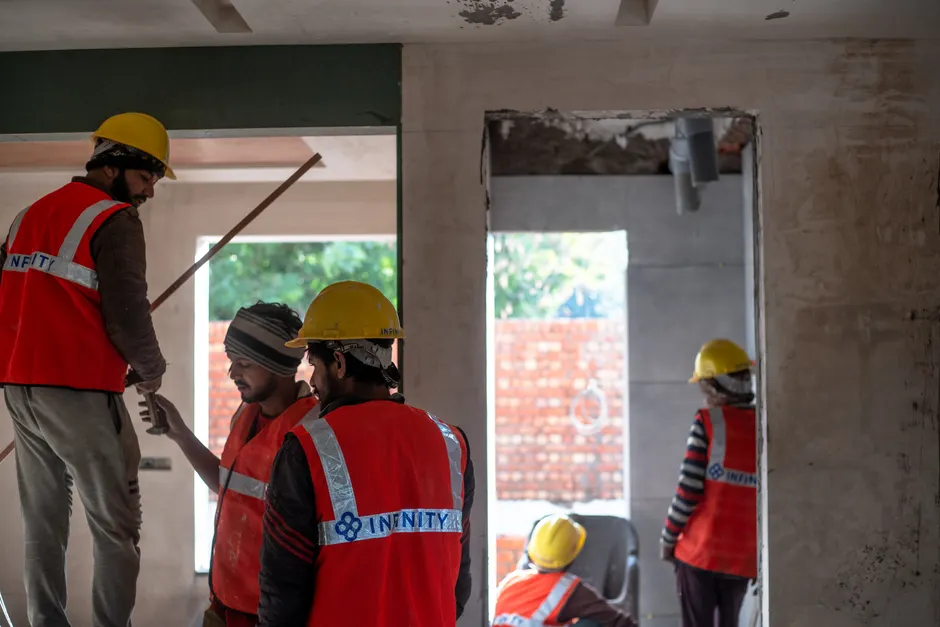
The hoard was found in a chest bricked into a cellar wall at the former Brouwershuis (Brewer's House), a building tied to CAW Oost-Vlaanderen, a regional welfare organization. Construction workers had been laying a sewage pipe as part of ongoing renovations when the chest came to light (HLN; AD; NY Post). Inside were gold bars and thousands of old coins (nu.nl; AD). Kobe reportedly thought the coins were ordinary €1 pieces at first (The Guardian).
The site itself has a layered institutional history. The Brouwershuis belonged to a former brewery complex, and the property is currently associated with CAW Oost-Vlaanderen. Belgian broadcaster VRT first reported the find on August 13, 2026 (VRT), with international outlets including the BBC, the Guardian, AP, and the New York Post picking up the story the following day (AP; NY Post).
Valuation figures across Belgian and international reporting converged at approximately €9 million, or about $10 million (HLN; VRT; NY Post). The student's own account of digging sewers at a former brewery confirms that his personal narrative and the institutional-site discovery describe the same event (The Guardian).
The most consequential dimension of this find is not the gold itself but the legal architecture it sets in motion. The Guardian reports that the discovery is expected to trigger a complex civil dispute over who owns the hoard (The Guardian). A treasure of this value, found bricked into a wall on a property with multiple layers of historical and institutional ownership, creates conditions for competing claims. Potential claimants include the current property owner (CAW Oost-Vlaanderen), the construction company or subcontractor that employed Kobe, and Kobe himself as the person who actually found the chest. Belgian civil law includes provisions for treasure finds — known as vondstenrecht — but the outcome depends heavily on the specific circumstances of the discovery, including whether the finder was acting in a professional capacity at the time.
The broader context here involves several factors worth weighing for anyone interested in how asset disputes unfold. The physical concealment of the gold, bricked into a cellar wall, suggests it was deliberately hidden, which raises questions about provenance — that is, the origin and chain of ownership of the gold — that could invite scrutiny beyond a straightforward civil ownership fight. The composition of the hoard, gold bars alongside thousands of old coins, hints it may have been assembled over time rather than stashed in a single event. If any portion of the coins or bars turns out to have been stolen, looted, or illegally obtained, the civil dispute could expand into criminal-law territory.
On the practical side, a €9 million valuation attached to a find on an institutional property undergoing publicly funded renovation adds a layer of public-interest scrutiny. The renovation context means the site was accessible to contracted workers, and the discovery happened in the course of employment. How Belgian courts treat the relationship between employment duties and treasure-finding rights will be central to any litigation. Organizations occupying historically complex sites often carry latent liabilities and assets that surface only during physical redevelopment. CAW Oost-Vlaanderen, as a welfare-sector entity, may face governance questions about how it handles an unanticipated windfall, particularly if public funding or regulatory oversight applies.
The find also draws attention to the role of incidental discovery in historically significant European sites. Belgium, like much of the Low Countries, has dense layers of construction built over centuries of prior use. Brewery sites in particular were often substantial commercial complexes with long occupational histories, so renovation-driven discoveries are not uncommon in the region, though the scale of this hoard places it in a different category.
No information has been reported yet regarding the provenance of the gold bars and coins, their historical period, or any involvement of law enforcement beyond the expected civil proceedings. The ownership dispute, when it materializes, will likely turn on fine-grained questions of Belgian property law, employment contracts, and the legal definition of a treasure find under the relevant civil code provisions.