Uber Partners with Zipline to Bring Drone Delivery to Uber Eats Nationwide

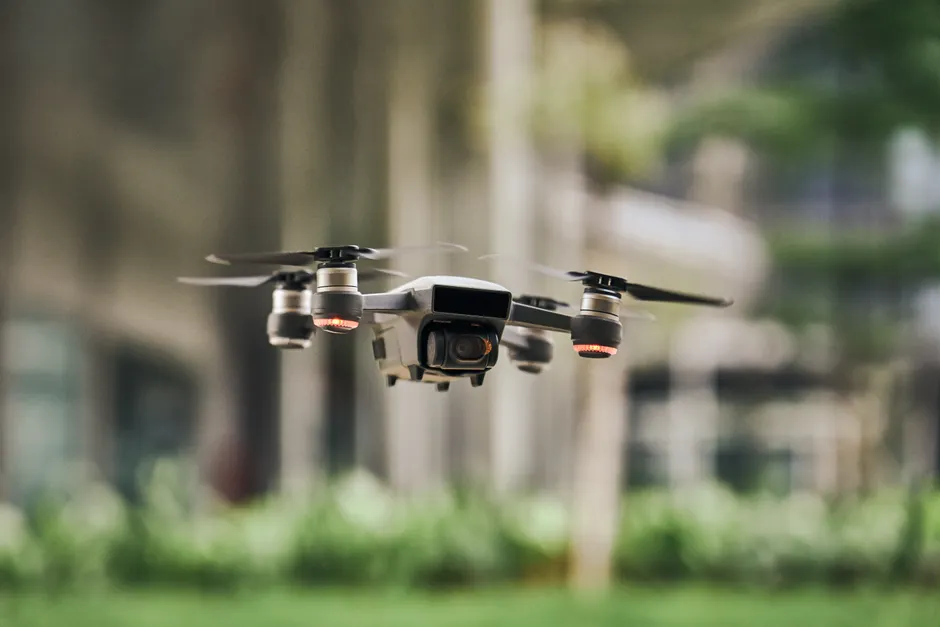
Uber announced a partnership with drone delivery company Zipline on August 17, 2026, to bring autonomous drone delivery to Uber Eats customers across the United States. Deliveries are set to begin later this year in Zipline's existing Dallas-Fort Worth market before expanding to dozens of additional cities. Uber also made a strategic investment in Zipline as part of the deal, though the company declined to comment on the financial details when asked by Reuters (Channel News Asia).
The two companies have set an ambitious target: one million daily drone deliveries by 2029 (The Verge). That figure, if reached, would amount to a scale of autonomous last-mile delivery — the final leg of getting a product to a customer's door — that no operator has come close to achieving in the U.S. market to date.
California-based Zipline brings substantial operating experience to the partnership. The company first began deliveries in Rwanda in 2016, transporting medical supplies to remote locations. It has since expanded operations to Ghana, Japan, Nigeria, Côte d'Ivoire, and Kenya, and has completed two million deliveries cumulatively. In the U.S., Zipline has been conducting drone deliveries in Texas since 2025 (The Verge).
This is not Uber's first move into drone delivery. In 2025, the company struck a similar deal with Flytrex that also included an investment. The Zipline partnership broadens that strategy by pairing Uber's delivery marketplace with an operator that has deeper infrastructure and a longer operational track record across multiple countries.
DoorDash, Uber Eats' primary competitor, has already launched its own drone delivery program. DoorDash Air began operations after receiving approval from the Federal Aviation Administration (The Verge). The competitive dynamic between the two food delivery platforms is now extending into the airspace above the last mile.
The regulatory environment for drone delivery is also shifting. The FAA has proposed new rules to expand drone delivery operations, following a 2025 executive order from President Donald Trump (The Verge). The specifics of those proposed rules will matter enormously to operators: restrictions on flying beyond the pilot's visual line of sight, pilot certification requirements, and airspace integration protocols have all been friction points that determine whether drone delivery can scale beyond pilot programs into something resembling a national service.
One analysis projects the drone delivery market could reach $7.7 billion by 2031 (The Verge). Whether that projection proves accurate or not, the capital flowing into the space, from both delivery platforms and their investors, indicates a belief that the economics of autonomous aerial delivery are approaching viability for consumer use cases, not just medical supply chains.
The partnership structure is worth noting. Uber is not building drones or operating a fleet. It is investing in an operator that already has one and layering its delivery marketplace on top. That is the same playbook Uber has applied in autonomous vehicles and other frontier logistics technologies: partner with the operator, provide the demand, and take an equity stake in the outcome. The approach limits Uber's capital exposure and operational risk while giving it a seat at the table if the technology scales.
For Zipline, the Uber partnership provides access to a consumer delivery volume that its medical supply chain operations in Africa, while operationally proven, never matched in terms of transaction frequency. Two million deliveries over a decade of operations is a meaningful proof of concept. One million deliveries per day is a different business entirely, requiring an order-of-magnitude expansion in fleet size, charging and maintenance infrastructure, airspace coordination, and customer-facing logistics.
Starting in Dallas-Fort Worth gives the partnership a controlled entry point. Zipline already operates there. The market has a dense suburban layout that suits current drone delivery range and payload constraints, and Texas has generally been receptive to drone delivery operators. Expanding to dozens of additional cities is where the operational and regulatory complexity will compound, since each metro area presents distinct airspace traffic patterns, municipal regulations, and weather considerations.
The broader context here is that food delivery platforms are under sustained pressure to reduce last-mile costs. Human couriers account for the largest single cost component in food delivery economics, and the unit economics — the profit or loss on each individual delivery — have been notoriously difficult to improve at scale. Autonomous delivery, whether aerial or ground-based, is the most credible path to structural cost reduction. Whether it arrives in time to matter for the current competitive landscape or becomes the next layer of infrastructure that defines the next one is a question that the Dallas-Fort Worth launch will begin to answer.