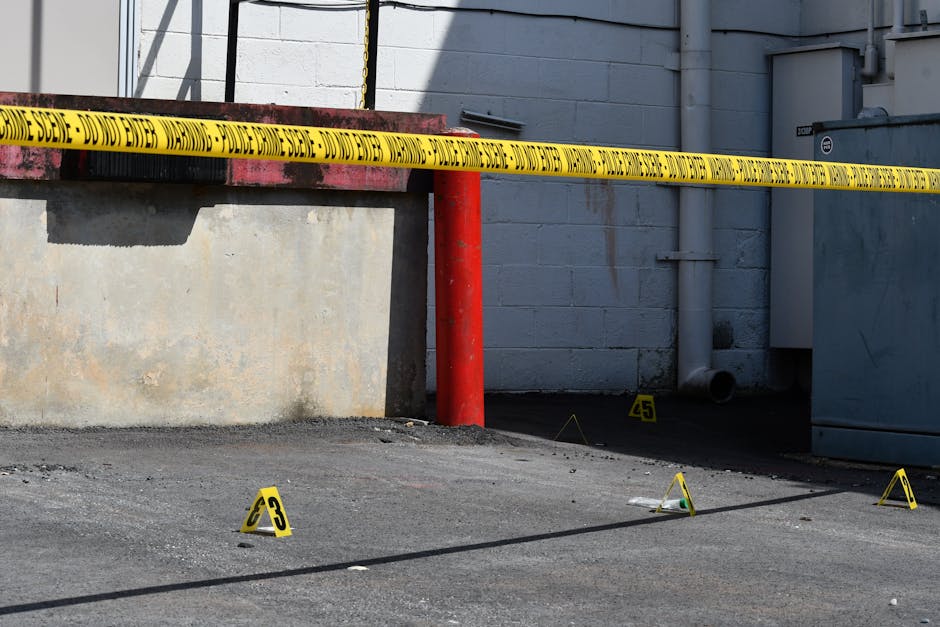
Arrest Made After Knife Attack in North Belfast

A man in his 30s has been arrested on suspicion of attempted murder following a knife attack in north Belfast, according to a statement from the Police Service of Northern Ireland. The victim was taken to hospital with serious injuries. As of June 9, 2026, officials have not released further details about the victim's condition.
Prime Minister Keir Starmer called the attack "horrific," according to BBC News. It is notable that the head of government commented directly on what is, technically, a devolved matter—one handled by Northern Ireland's own police and authorities rather than Westminster.
What Police Have Said — and What Remains Unknown
The facts confirmed by the PSNI are straightforward but significant: a serious knife assault occurred in north Belfast; the victim needed hospital treatment; and a man in his 30s was arrested on suspicion of attempted murder. An attempted murder charge means police believe they have reasonable grounds to think the person acted with intent to kill.
What has not been made public includes the exact location within north Belfast, when the incident happened, whether the victim and suspect knew each other, and whether formal charges have been filed. It's important to understand that an arrest on suspicion is not the same as being charged. Under Northern Ireland's equivalent of UK police detention rules—the Police and Criminal Evidence (Northern Ireland) Order 1989—there are strict limits on how long someone can be held without charge, and extending that time requires a magistrate's approval.
The PSNI's brief statement follows standard practice during an active investigation: release only essential information to protect the evidence and avoid damaging any future court case.
Why North Belfast Matters
North Belfast is not just any neighborhood. It is one of the most divided residential areas in the United Kingdom, split historically along religious and community lines—a legacy of decades of tension that the 1998 Belfast Agreement (the Good Friday Agreement) eased politically but never fully erased at street level. Areas where nationalist and unionist communities directly border each other—called "interface areas"—have historically been places where violence flares up, though the pattern and frequency of that violence has changed substantially since the worst years of the Troubles.
That said, it would be unfair to assume this incident has a sectarian or community dimension based on what we know so far. Knife crime in Belfast, like in many UK and Irish cities, has increased over the past decade in ways that often have nothing to do with politics or communal divisions. The PSNI has not suggested any such element is involved here.
The geography of north Belfast does matter in one practical way: any serious violent incident there gets close attention from local politicians, community leaders, and the press. The Prime Minister's comment, though brief, signals that the Westminster government is watching—even though the day-to-day police work is handled by Northern Ireland's own authorities.
The Bigger Picture on Knife Crime
Knife crime has been a persistent problem across the United Kingdom. England and Wales recorded over 50,000 knife crime offences in the year to March 2025. That number has come down slightly from the year before, but it remains near record levels. Northern Ireland, with a much smaller population, shows a different pattern overall, but the PSNI has acknowledged that serious assaults involving bladed weapons have been trending upward over several years.
Politicians and commentators in Britain and Ireland debate knife crime in two main ways: some push for tougher laws—stricter sentences, expanded stop-and-search authority by police, age limits on buying knives. Others point to underlying causes like poverty, the loss of community services, and social breakdown. Northern Ireland has an additional complication: the legacy of paramilitary groups and organized crime still plays a role in some street violence, creating challenges for policing that don't exist elsewhere in the UK in quite the same form.
We have seen this pattern before—a single violent incident in a sensitive location sparks a flurry of political commentary and public discussion that moves faster than the actual facts. In 2018 and 2019, several serious assaults in north and west Belfast triggered government statements within hours, long before investigators had worked out even basic details. The concern is not that politicians should stay silent—it is appropriate for them to respond—but that public debate can harden around one interpretation before investigators and prosecutors have finished their work.
What Happens Next
With a suspect in custody, the PSNI will focus on forensic evidence, witness statements, and CCTV footage—standard steps in any serious assault investigation. The victim's medical outcome will matter for the charges: if their condition worsens, police could escalate the charge; if they recover, prosecutors will decide what charge best fits the evidence.
Charging decisions in Northern Ireland are made by the Public Prosecution Service for Northern Ireland (PPS NI), which operates independently of the police. They use a two-part test: Is there enough evidence? Is it in the public interest to prosecute? Given the seriousness of an attempted murder charge, senior prosecutors will review the case carefully once police have compiled their file.
The PSNI is likely to release updates slowly and carefully as the investigation continues. People with information can report through standard channels, including the Crimestoppers anonymous line, though the initial PSNI statement did not mention a broader public appeal for witnesses—which may suggest investigators already have a clear line of inquiry.
The situation remains early. What is certain is that a serious, potentially life-threatening assault took place in north Belfast, a man is in custody on one of the most serious charges police can bring (short of murder itself), and it has already drawn comment from the highest levels of government. The fuller picture will depend on what investigators learn in the coming days.