Tesla's Cybercab Robotaxi Prepares for Public Debut in Austin

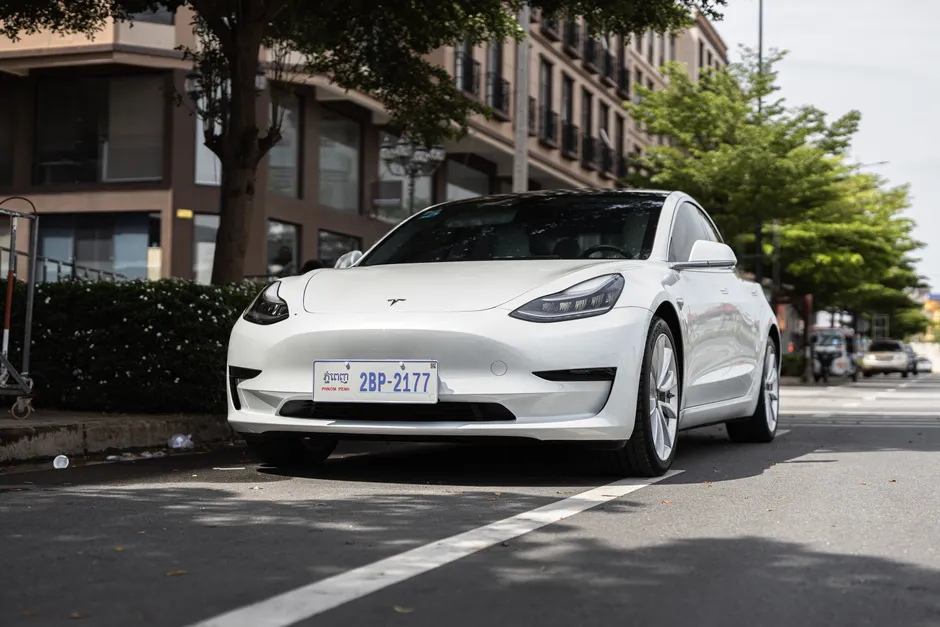
Tesla is preparing to launch its purpose-built Cybercab robotaxi to the public in Austin, Texas, as soon as this month, according to reporting by The Information and Reuters (The Information, Reuters). The Cybercab is a two-seater with no steering wheel and no pedals, designed to operate fully autonomously using Tesla's Full Self-Driving (Supervised) software (The Verge).
The rollout plan, according to Electrek, is to begin by offering Cybercab rides to Tesla employees on public roads before folding the vehicles into the company's existing Robotaxi service (Electrek). Tesla employees have been testing the fully driverless Cybercab on private roads around the company's campus since July (The Verge).
Austin is not a new market for Tesla's autonomous ride efforts. Tesla launched its Robotaxi service there in summer 2025, recruiting hundreds of workers to test and monitor the system, per The Information (The Information). More than a year after that launch, the service still uses human safety monitors in some markets (The Verge). The Cybercab, by contrast, has no manual controls at all, making the human-monitor fallback structurally impossible from inside the vehicle.
To prepare for that difference, Tesla recently completed a training program with first responders in Austin, teaching them how to move Cybercab vehicles in an emergency. Austin city spokesperson Brad Cesak confirmed the training (The Verge). Tesla also publishes first-responder guides on its website for safely handling its Robotaxi and Cybercab vehicles (Tesla).
Remote intervention is Tesla's primary external fallback. The company says it employs remote operators who can take control of the Cybercab in an emergency, though experts have questioned whether signal strength and latency — the delay between an action being initiated and its effect — could hamper reactions (The Verge). Tesla recently began adding Starlink hardware to its Cybercabs, an apparent effort to address connectivity concerns for those remote operators (The Verge, Electrek).
The scale of Tesla's unsupervised testing to date is modest but growing. Ashok Elluswamy, Tesla's head of AI, said the company's unsupervised robotaxis have driven 380,000 miles across six cities in two states (The Verge). Elon Musk, during a July earnings call, said Tesla needs to accumulate driving data specific to the Cybercab before putting large numbers of them on the road (The Verge). That admission frames the Austin launch as much as a data-collection exercise as a commercial service debut.
Geographic expansion has lagged the company's earlier ambitions. Tesla had aimed to begin Robotaxi operations in Arizona and Nevada by the end of 2025 but had not yet completed the necessary paperwork as of late October 2025 (The Information). Austin remains the sole confirmed public-launch city for the Cybercab.
Tesla's own product page describes the Cybercab as a purpose-built fully autonomous vehicle that will offer rides in the user's area in the future, emphasizing no driver, no expensive radar, low operational costs, and affordable point-to-point transport (Tesla, Tesla). The company's Robotaxi support page already invites users to schedule an autonomous ride for "safe and convenient point-to-point transportation" (Tesla). A Tesla careers posting for a Production Associate on the Cybercab Drive Unit suggests manufacturing ramp preparations are also underway (Tesla).
The architecture Tesla has chosen here is worth examining. The Cybercab has no steering wheel, no pedals, and no in-vehicle human fallback. The only external interventions are a remote operator whose effectiveness depends on network latency and signal reliability, plus first responders trained to physically manage the vehicle. That is a structurally different risk posture from the supervised robotaxi model Tesla has been running in Austin for over a year, where a human safety monitor sat in the driver's seat.
The Starlink integration is a tacit acknowledgment that cellular connectivity alone may not be sufficient for the remote-operator model at the latency and reliability thresholds emergency intervention likely demands. Whether satellite backhaul — routing data through satellites rather than cell towers — materially closes that gap is a question the first weeks of public operation may begin to answer.
Musk's own statement that Tesla needs more Cybercab-specific driving data before scaling is perhaps the most telling detail. It signals that the Austin launch is an early step in a fleet-level learning loop, not the culmination of one. The 380,000 unsupervised miles Elluswamy cited are real, but they are a fraction of the hundreds of millions of miles typically associated with establishing statistical confidence in autonomous safety at population scale. The cautious, employee-first rollout sequence Electrek described is consistent with that posture.
None of this means the launch will fail to materialize or that the approach is unsound. It does mean that what happens in Austin over the coming weeks is best understood as the beginning of a sustained operational learning phase for a vehicle architecture that has no manual fallback, not as a finished product arriving at scale. The industry has watched multiple autonomous-vehicle programs move from limited pilots to broader deployment over years rather than weeks. Tesla is now entering that same arc with a vehicle that, by design, removes the most familiar safety net of all.