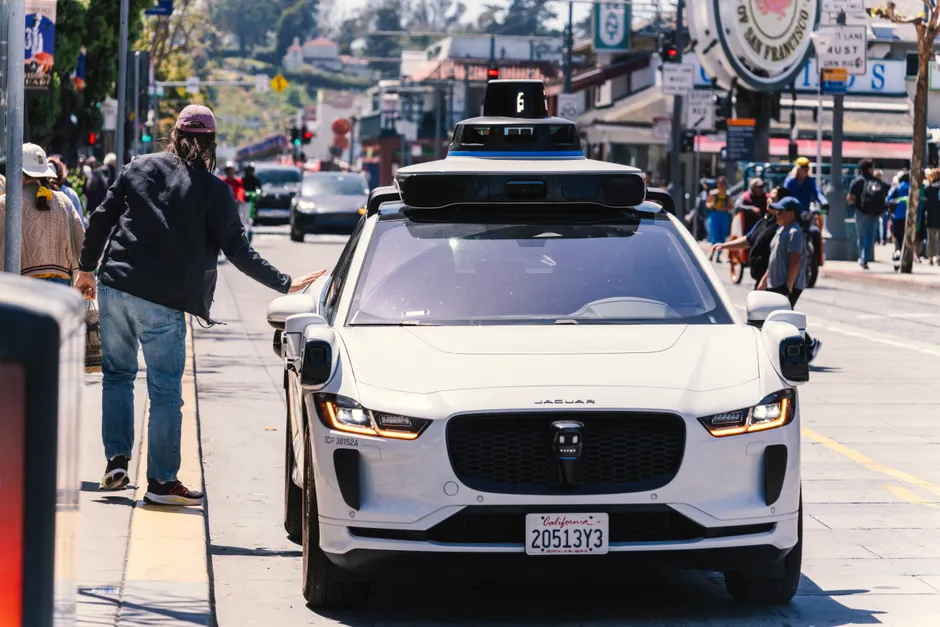
Waymo's New Safety Standard: How It's Using Human Driving as a Benchmark

Waymo's New Safety Standard: How It's Using Human Driving as a Benchmark
On 10 June 2026, Waymo announced a tool called ReD — Reference Driver — designed to measure whether its self-driving cars make decisions as safely as a human would. The announcement on the Waymo blog is tied to the company's plan to deploy fully autonomous vehicles under its 6th-generation driver platform, meaning no human safety operator sitting in the vehicle.
What ReD Actually Does
ReD is not a video simulation or a collection of driving footage. Instead, it is a computational model that encodes how competent human drivers avoid crashes — the way they perceive threats, how long they take to react, what gaps in traffic they consider safe, and what evasive manoeuvres they execute. Waymo uses this model as a reference point: given a particular scenario on the road, how would a skilled human driver respond, and does Waymo's self-driving system respond at least as well?
This approach matters because safety testing for autonomous vehicles has historically relied on metrics like miles driven without incident, how often human operators had to take control, or comparisons with average crash statistics. Each of these methods has limits — some are too broad, some only work in specific driving conditions, and some take years to accumulate enough data on rare accidents. By building a model of human collision-avoidance logic, Waymo shifts to a different kind of comparison: scenario by scenario, does the autonomous system behave as safely as a human would?
The ReD model likely captures parameters that driving safety researchers have studied for decades using instrumented cars on real roads — how quickly drivers react to hazards, what distances they consider safe when merging or turning, how far ahead they look for trouble, and how sharply they can swerve or brake if needed.
Why Now, and Why This Approach
Waymo's timing is important. In February 2026, the company confirmed that its 6th-generation system will operate fully autonomously — no human backup in the vehicle. That raises the stakes considerably. When a human safety operator can take over if something goes wrong, a self-driving system has a fallback. Without one, the system's own judgment is the last line of defense.
From an engineering perspective, ReD is therefore essential. Before deploying a fully autonomous vehicle, Waymo needs a clear, consistent, and repeatable way to answer a fundamental question: safer than what baseline? The human-driver reference model provides that answer and allows the company to test it across thousands of edge cases and unusual scenarios.
There is a regulatory angle here too. As regions from California to Arizona to parts of Europe begin writing formal rules for autonomous vehicles, they will almost certainly ask companies to show that their systems are as safe as — or safer than — human drivers. A documented, reviewable reference model like ReD is exactly what safety regulators and standards bodies will eventually want to see. By publishing ReD's design now, before regulators finish writing those rules, Waymo is partly shaping what those frameworks will end up requiring.
How ReD Fits Into Waymo's Broader Testing
Waymo has for years tested its self-driving system through a mix of real-world driving data, prepared test scenarios, and large computer simulations. ReD fits into the simulation and scenario-testing layer as a way to compare behaviour. Instead of asking only "did the system avoid a crash?", the model allows a deeper question: "did the system respond the way a competent human driver would have, or better?"
That is a meaningful refinement. A self-driving system could theoretically avoid a crash by making a manoeuvre that no human driver would ever execute — something that works once but turns out to be fragile and breaks when a slightly different version of the problem appears. A human-reference baseline adds a consistency check. It asks: is this not just safe, but also robustly safe in ways that align with how human drivers actually handle the road?
Worth flagging: ReD is not a model of perfect driving. Human drivers cause millions of crashes each year. The baseline here is competent, safety-conscious driving — a meaningful bar, but not an especially high one in absolute terms. Waymo's stated goal is that its system should avoid the crashes a competent human would avoid, and ideally prevent more crashes than humans do. Whether ReD's mathematical representation of human decision-making actually captures the full range of how competent humans behave in complex, chaotic driving situations is a question that independent researchers will certainly want to examine closely.
The Bigger Picture: How the Industry Is Maturing
The autonomous vehicle field has wrestled with safety testing methodology since serious self-driving programmes began. Early research from the RAND Corporation showed something sobering: to prove through real-world driving alone that a self-driving car is safer than humans, you would need hundreds of billions of test miles — an impossible bar. That finding pushed the entire industry toward computer simulation and carefully designed test scenarios, which is where most major programmes operate today.
We have seen similar patterns in other engineering fields as they matured. In cybersecurity, the industry moved from intuition-based approaches to formal threat models — frameworks like STRIDE became the language regulators and auditors expected to see. Autonomous vehicle safety is moving through a similar shift: from "we drove X million miles without major incidents" to "here is our formal model of the risks we face and here is how our system handles them." ReD is an early, public example of that transition for Waymo.
What Happens Next
Waymo has described ReD's concept but has not yet released the model itself for outside researchers to examine and challenge. That gap — between describing how something works and actually opening it up for independent verification — is something the safety research community will notice. Whether Waymo eventually publishes the details of ReD's parameters, invites academic review, or includes it in regulatory filings will signal how serious the company is about transparency and accountability.
The practical near-term stakes are high: the 6th-generation system's rollout into more cities and more driving conditions will inevitably encounter scenarios and edge cases that ReD's designers did not anticipate. A reference model is only as good as its ability to generalise beyond the problems its creators had already thought through.
For anyone interested in how autonomous vehicles become safe enough to trust, this is a development worth following. If ReD holds up under scrutiny, it could become more than just a tool for Waymo — it could shape how the entire industry thinks about validating that self-driving cars belong on public roads.