Waymo Expands Driverless Operations to Four Major US Cities
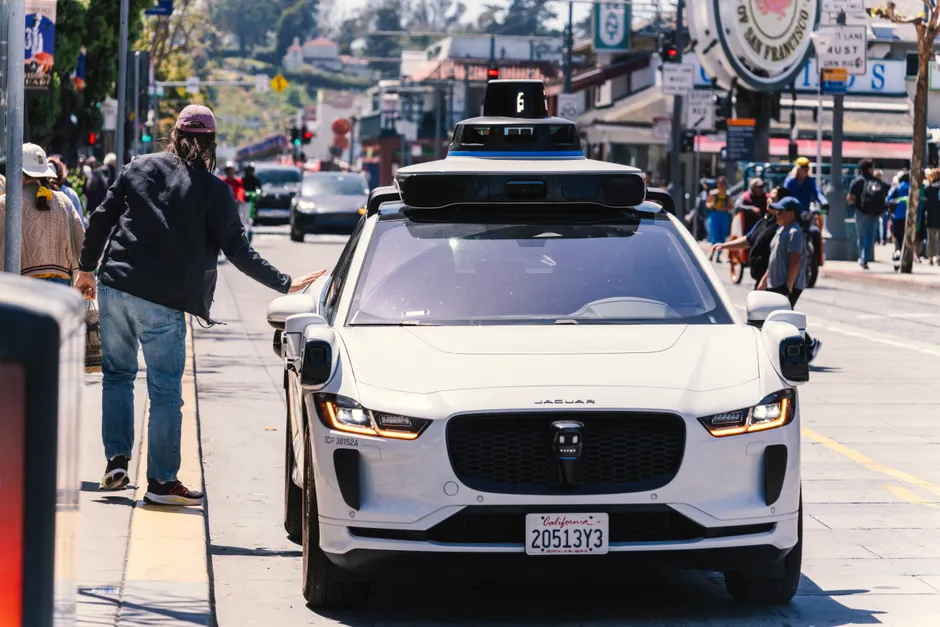
Waymo activated fully driverless robotaxi service in Las Vegas on July 8, 2026, followed by Denver, San Diego, and Tampa in the days that followed, according to the company and confirmed by CNBC and Electrek. Each market begins with employee-only service before opening to the general public shortly after, per Engadget. This staged rollout mirrors the approach Waymo used in Dallas, Houston, Orlando, and San Antonio, all of which already operate driverless.
With these four additions, Waymo will soon serve more than 10 US cities with fully autonomous robotaxis — no human driver in any of them. The company has also begun testing in London, its first foray outside the United States. That move signals a shift toward validating its self-driving system against different road types and driving conventions — narrower streets, roundabouts, and left-hand traffic — that do not exist in its US test markets.
Simultaneously, a partnership is fracturing. Uber and Waymo have ended their Phoenix robotaxi arrangement; riders can no longer request a Waymo vehicle through Uber's app. Uber is now pursuing its own autonomous strategy through partnerships with Lucid and Nuro, a dual approach that places Uber in the unusual position of both distributing competitors' fleets in some cities and building its own in others.
The safety data behind the expansion
Waymo timed the announcement to coincide with a safety analysis spanning more than 220 million fully autonomous miles through the end of March 2026 across five operating geographies, with Atlanta included for the first time. The company now logs more than 4 million autonomous miles per week, and Atlanta alone accounts for over 5.4 million of the cumulative total, according to Waymo's blog.
Measured against human-driver baseline statistics, Waymo reports its self-driving system was involved in 94% fewer crashes causing serious or fatal injuries, 82% fewer crashes with airbag deployment, and 82% fewer crashes involving any reported injury. The pattern holds for vulnerable road users: 93% fewer injury-causing crashes involving pedestrians, 84% fewer involving cyclists, and 84% fewer involving motorcyclists.
Atlanta's dataset is now large enough to evaluate independently, showing 94% fewer airbag-deployment crashes and 86% fewer injury-involving crashes compared to human drivers. Carol Flannagan, a research professor at the University of Michigan Transportation Research Institute, confirmed that the results are consistent across locations and that Waymo's methodology addresses the inherent difficulty of comparing autonomous and human driving records directly.
Waymo translates these figures into operational terms: approximately one fewer serious-injury-or-worse crash every eight days, roughly six fewer airbag-deployment crashes weekly, and about thirteen fewer injury crashes weekly relative to what human drivers would produce over the same mileage. Over Waymo's operating lifetime, the company estimates 47 fewer serious-or-fatal-injury crashes than the human baseline would predict. Before deploying in any new city, the Waymo Driver undergoes a formal safety review with published acceptance criteria on arxiv.
What's actually changing
What's shifting operationally in these four cities is more limited than the headline suggests, at least initially. Employee-only driverless service is a controlled testing phase, not a public launch — Waymo has used this sequence in every market before going fully public. The more significant development is structural: Waymo now operates across enough US metropolitan areas, with enough variation in climate and road geometry, that its aggregate mileage and crash-rate claims carry greater statistical weight than even a year ago.
The current rollout emphasizes Sun Belt cities, giving Waymo experience with hot-weather conditions, wide arterial roads, and the pedestrian density of areas like casino districts — environments that differ meaningfully from its original San Francisco and Phoenix testbeds. These geographic and operational variables matter because they force the self-driving system to perform across a wider range of real-world conditions.
The London tests represent a different kind of milestone: Waymo's first attempt to validate its system outside the United States, where it will encounter road types, traffic patterns, and driving norms it has not faced before. No timeline for driverless public service in London has been announced.
The Uber-Waymo split in Phoenix, set against Uber's competing partnerships with Lucid and Nuro, reflects a maturing market where ride-hailing platforms and autonomous vehicle developers are renegotiating control of the customer relationship. The fundamental question — whether Waymo's direct-to-consumer app model or Uber's marketplace approach will ultimately attract more riders — remains unresolved by this announcement, and neither company has signaled a public preference.


