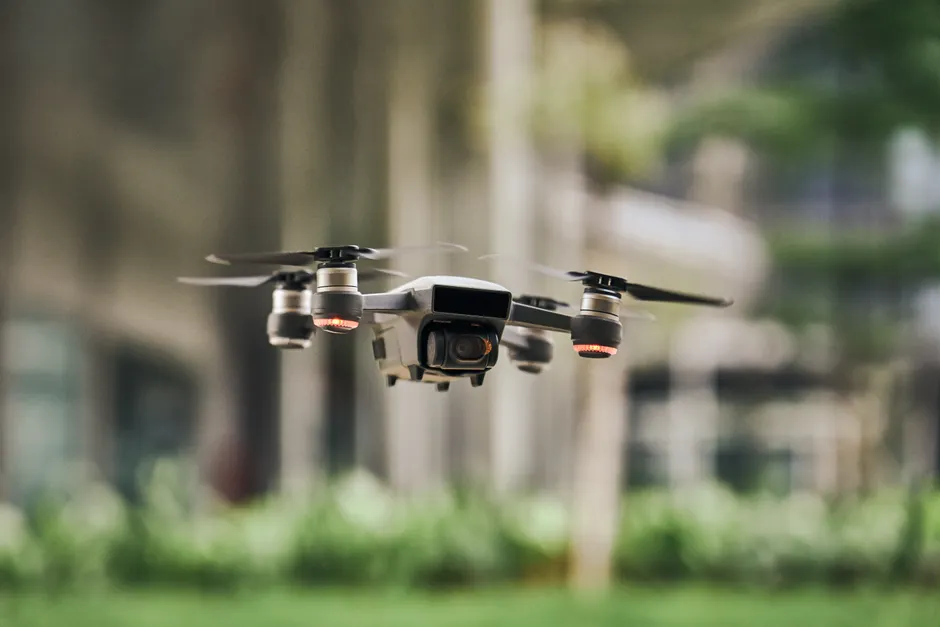
Amazon Prime Air Drone Drops Package Into Texas Swimming Pool as 500-City Expansion Begins

An Amazon Prime Air drone hovered over a Texas customer's swimming pool, opened its hatch, and released the package directly into the water on August 17, 2026. ABC7 News Bay Area shared video of the incident, which Storyful identified as involving customer Lindsey Austen and Prime Air aircraft N622AZ. ABC7 / Instagram
It was Austen's first drone delivery.
The video surfaced the same week Amazon announced plans to expand Prime Air to 500 cities and towns across the US. Tom's Hardware Amazon says that once its drones reach the delivery point, the system checks for people, pets, or vehicles in the way before releasing the package. The Verge
The Texas pool drop is not a one-off. A video from July 2025 shows a Prime Air drone in Arizona placing a package next to a customer's pool, where the propeller downwash — the downward blast of air from the drone's rotors — blew it into the water. That customer had let Amazon choose the delivery location. A separate May 2025 incident shows a drone dropping a package near a pond; the package bounced off the ground and tumbled in. The Verge
The mishaps go beyond water landings. Amazon halted drone deliveries in the West Valley Phoenix metro area last year after two of its MK30 drones crashed into a crane. Other documented incidents include a drone severing an internet cable and a collision with an apartment building. The Verge
Amazon did not immediately respond to The Verge's request for comment about the pool deliveries. The Verge
Amazon's own materials describe Prime Air as delivering millions of items in as fast as 30 minutes, with a current target of 60 minutes or less in active locations. Amazon The expansion to nearly 500 cities and towns is planned for this year. Amazon
The broader pattern here is worth examining. Amazon's pre-delivery safety check, as the company describes it, focuses on clearing the drop zone of people, pets, and vehicles. The incidents above suggest the system's spatial reasoning — its ability to identify a suitable surface for dropping a package — is less developed. A swimming pool is unoccupied, contains no pets or vehicles, and from a purely geometric perspective may look like a flat, clear surface. The Arizona incident adds another layer: even when the package lands on solid ground next to a pool, the MK30's downwash can push it into the water. That is a fluid-dynamics problem, not just a target-selection problem.
The MK30 is Amazon's current-generation delivery drone, and the crane collisions that grounded operations in Phoenix last year point to the same class of challenge: navigating complex suburban and urban airspace where static obstacles (cranes, cables, buildings) and dynamic variables (wind, downwash interacting with terrain) run up against the assumptions built into autonomous flight paths.
Expanding to 500 cities scales the surface area for these edge cases considerably. Every new delivery zone introduces different lot layouts, pool placements, overhead infrastructure, and local weather conditions. The incidents so far are individually minor, involving damaged packages rather than injuries. But the rate at which they are appearing in public video, set against the announced expansion, raises a straightforward operational question: whether the autonomous delivery pipeline can absorb a fiftyfold or larger increase in delivery volume without a proportional increase in the kinds of failures already documented.
Amazon's safety-check framework, as publicly described, does not appear to account for downwash displacement of packages after release, or for the possibility that a clear drop zone may be clear because it is a body of water. Both are tractable engineering problems. Whether they have been tractable enough, fast enough, is the question the Texas pool video puts in front of anyone watching the 500-city rollout get underway.