Japanese Propulsion Startup Letara Raises $16M to Move from Satellite Thrusters to Large Rockets

Letara, a spacecraft propulsion startup based in Sapporo, Japan, raised ¥2.6 billion (about $16 million) in a Pre-Series A round announced August 20, 2026. The round was co-led by Headline Asia, JIC Venture Growth Investment, and Incubate Fund, with strategic participation from NES Corporation, Toyoda Gosei, and Frontier Innovations (TechCrunch).
The funding will support a strategic expansion beyond Letara's current focus on small satellite thrusters. Co-CEO Shota Hirai told TechCrunch that the company plans to develop large rocket systems for the space, defense, and security markets. That is a notable scope change for a company that started in a narrower propulsion niche.
Letara was spun out of Hokkaido University in 2020, initially focused on building satellite thrusters. Its co-CEOs, Landon Thomas Kamps and Shota Hirai, researched rocket propulsion at the university before founding the company. The core technology is a hybrid propulsion system, which combines a liquid oxidizer with solid fuel. Hybrid rockets have historically traded lower thrust-to-weight ratios (a measure of how efficiently an engine produces thrust relative to its mass) for simpler manufacturing, easier handling, and lower cost compared to systems that use liquid fuel and liquid oxidizer together.
The global hybrid rocket propulsion market is projected to grow from $848 million in 2024 to $2.6 billion by 2032, according to data cited by TechCrunch. That growth provides the demand-side backdrop for Letara's expansion into larger systems, as defense and security budgets increasingly direct spending toward responsive, low-cost launch and in-space propulsion.
The strategic investor roster is worth a closer look for what it says about supply-chain positioning. NES Corporation operates in engineering and infrastructure services. Toyoda Gosei is a major automotive components manufacturer, bringing deep expertise in polymer and rubber materials that are directly relevant to solid-fuel grain formulation (the shaped solid fuel inside a hybrid motor) and nozzle insulation. Frontier Innovations rounds out the group. The presence of a materials-focused automotive supplier as a strategic investor in a hybrid propulsion startup is a logical fit: hybrid rocket motors depend heavily on the mechanical and thermal properties of their solid fuel grains, and automotive-grade polymer manufacturing at scale could meaningfully affect cost and reliability.
Japan's space sector has been building momentum through a combination of university spinouts, government-backed venture capital, and increasing alignment between commercial space technology and defense priorities. The JIC Venture Growth Investment co-lead role places this round within Japan's broader strategy of channeling public-adjacent capital into dual-use space technology. Letara's explicit mention of defense and security markets alongside space applications places the company squarely in the dual-use category that has attracted growing policy and investor attention in Japan and across allied Indo-Pacific economies.
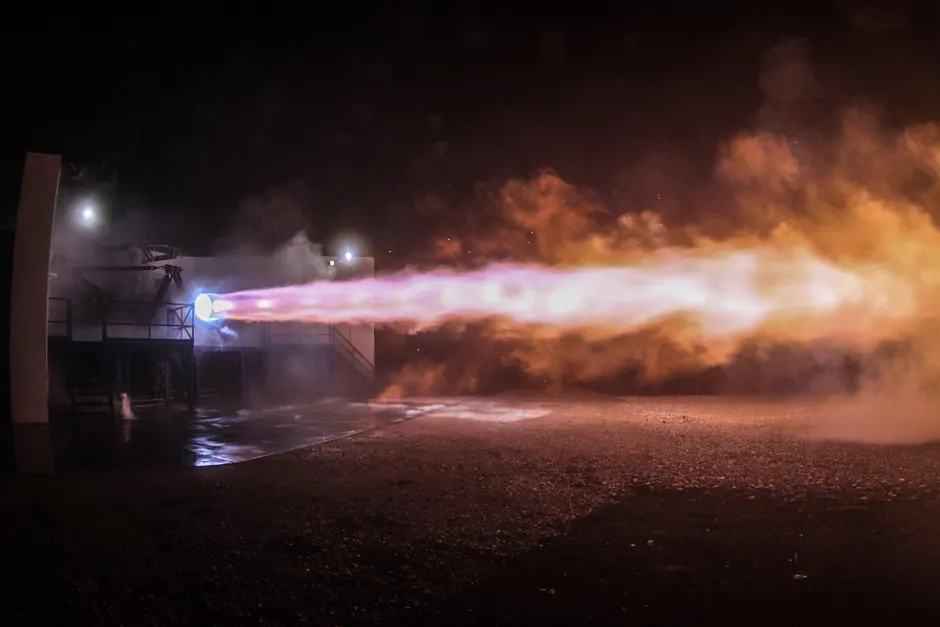
The jump from satellite thrusters to large rocket systems is a substantial technical and operational leap. Satellite thrusters operate at low thrust levels, with strict constraints on mass, power consumption, and propellant volume. Large rocket propulsion systems operate at orders-of-magnitude higher thrust, with fundamentally different combustion dynamics, thermal management, structural requirements, and qualification processes. The hybrid propulsion architecture Letara already works in scales more naturally upward to larger thrust classes than it does downward, which makes the expansion direction technically coherent. But the transition from research-grade hardware to flight-qualified large propulsion systems involves multi-year development cycles, extensive testing infrastructure, and regulatory engagement.
A ¥2.6 billion Pre-Series A round is a meaningful capital base for a company at this stage, particularly one with university spinout origins and a focused technical team. The inclusion of strategic investors with materials and manufacturing expertise alongside institutional venture capital suggests an intent to build toward industrial production rather than purely research milestones.
The broader question the funding raises is whether Letara can execute the transition from component-level satellite thrusters to integrated large rocket systems within the runway this round provides. The direction is technically coherent and the investor mix is well-suited, but the gap between building thrusters for small satellites and building large rocket propulsion systems is considerable, and the timeline to flight-qualified hardware is measured in years, not months.