Linkdaze's Smart Calendar Targets the Whole Household, Not Just One Person's Schedule
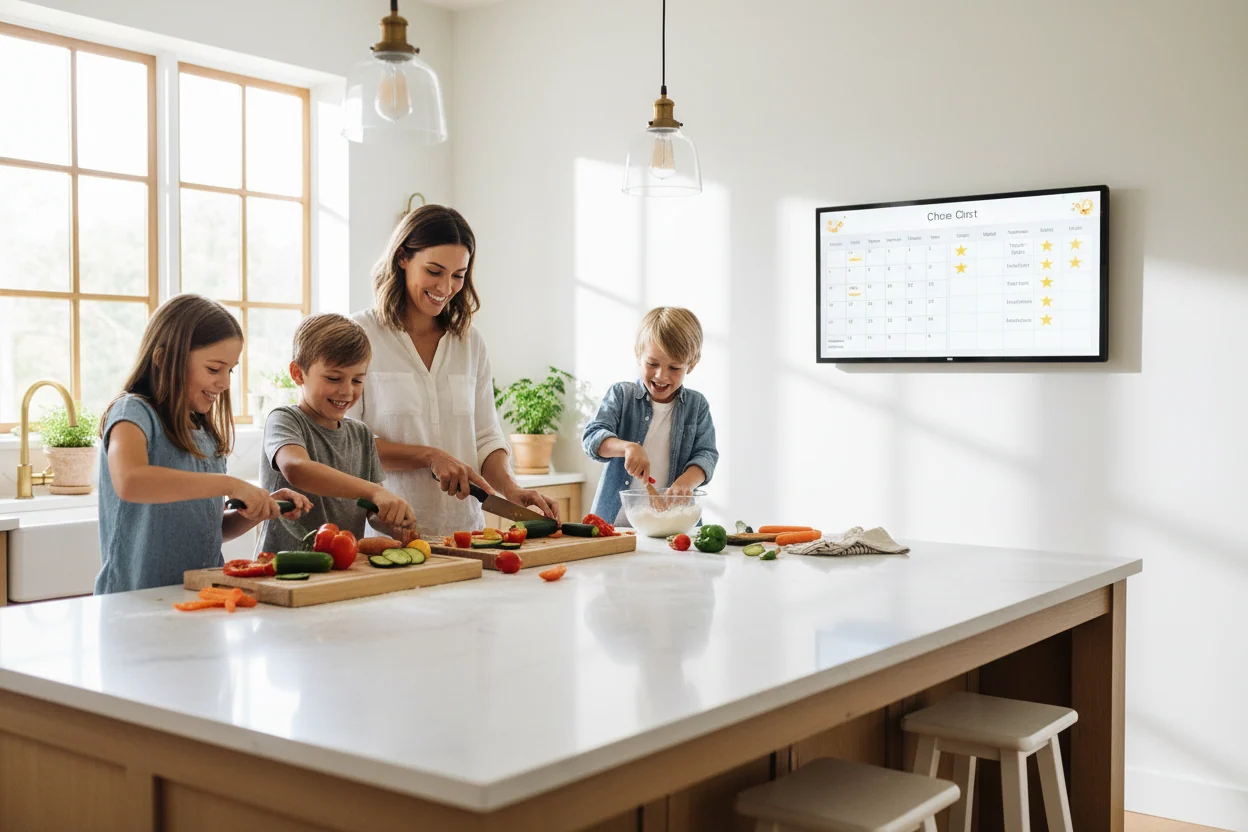
Linkdaze, which launched in December 2025, makes a touchscreen tablet built specifically for household scheduling — not personal time management. The device pulls in calendars from Google, iCloud, Outlook, Yahoo, and Cozi, and supports any calendar that exposes a subscribable URL, using color coding to tell family members apart on a shared display (TechCrunch; Linkdaze).
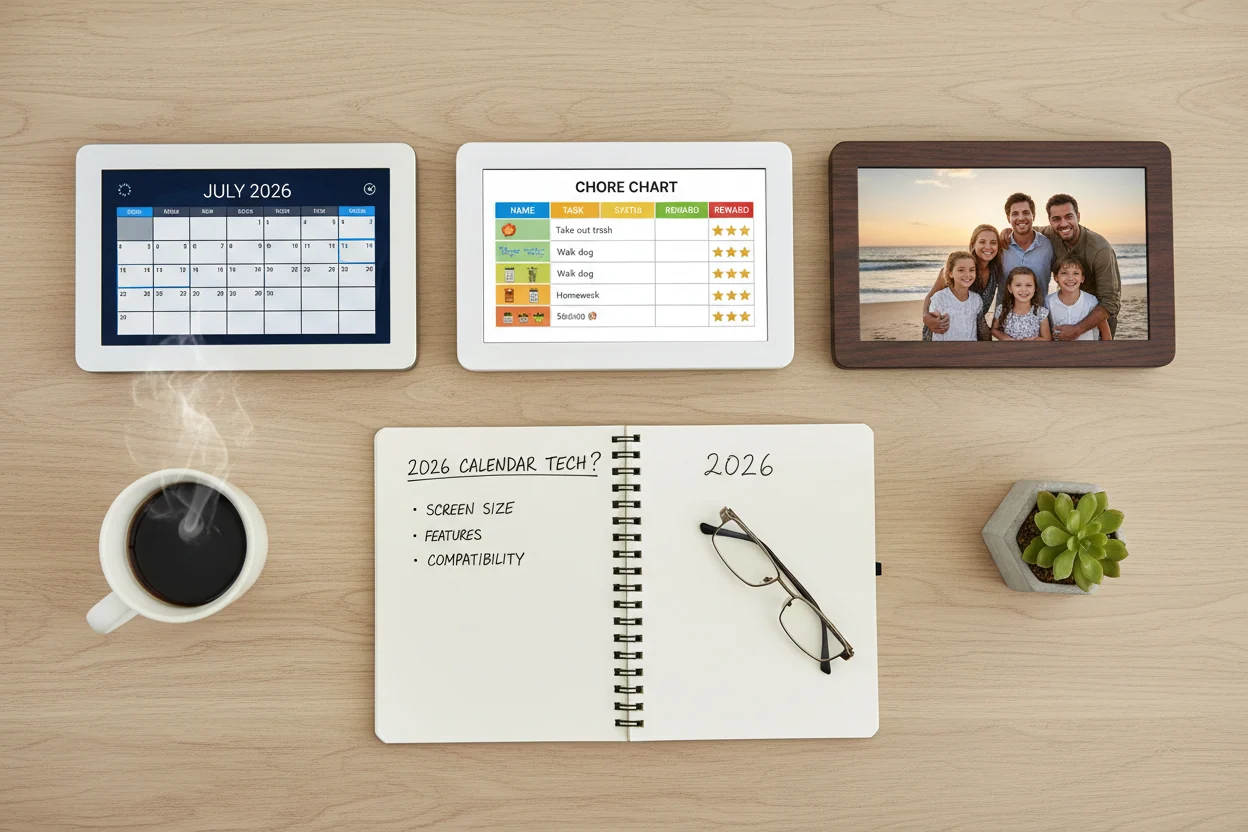
The calendar ships in two sizes: a 10.1-inch model at $119.99 and a 15.6-inch model. Both are available on Amazon and can be set up with a table stand or wall-mounted. Both models include the same core features: multi-account calendar sync, an interactive chore chart with star-based rewards, AI meal planning, a shopping list, and a digital photo frame mode (Linkdaze; Amazon; Linkdaze).
The standout feature is an AI meal planner with what Linkdaze calls Snap-to-Sync. A user photographs a paper recipe card, a handwritten list, or a school lunch menu, and the system converts the image into a digital meal plan plus a matching shopping list. The meal planner can also suggest meal ideas and generate recipes on its own, without needing a photographed input (TechCrunch; Linkdaze; Mezha).
The rewards chart lets a child earn stars toward a prize they choose, tying the chore system to a concrete incentive (Linkdaze).
Pricing is where Linkdaze draws its sharpest line. The company does not require a monthly subscription for any core feature, including meal planning and the Snap-to-Sync AI import. By contrast, Skylight, a competing smart-calendar brand, gates additional functionality behind a $79-per-year subscription. Skylight's 10-inch model starts at $149.99 when the subscription is paid, making it $30 more expensive upfront than Linkdaze's comparably sized model before factoring in the recurring fee (TechCrunch; Linkdaze).
Linkdaze positions itself for buyers who want a "buy it, done" product and identifies Apolosign as the other no-subscription option in the category. The company has published its own 2026 buyers' guide comparing subscription-free smart displays, noting that a single AI-generated meal plan and its resulting shopping list can cover one grocery run, with time saved on shopping cited as a selling point (Linkdaze; Linkdaze).
Linkdaze also markets the device's physical durability, claiming it survived being knocked off its table stand without breaking — a pitch aimed at households where a wall-mounted display on a kitchen wall is more aspiration than reality with young children in the mix (Linkdaze).
The broader context here is the subscription fatigue that has settled across consumer hardware over the past several years. Smart-display makers have largely followed the same playbook as connected-fitness and smart-home companies: sell the device at one price, then gate software features behind a recurring fee that compounds over the product's lifetime. Linkdaze's no-subscription stance is a bet that enough buyers have internalized the total-cost-of-ownership lesson and will choose a higher one-time cost over a lower, perpetual meter. Whether that holds as a durable competitive advantage depends on how quickly the company can iterate on the AI meal-planning and Snap-to-Sync features without introducing a paid tier to fund that development. The feature set today is competent; the question is whether it stays free.
For households already deep in the Google or iCloud calendar ecosystem, the synchronization layer is the critical dependency. Linkdaze supports URL-based calendar feeds, which covers most providers that expose a subscribable ICS endpoint — a standard format for sharing calendar data over the web. But the reliability of that sync depends on the upstream provider's refresh cadence (how often it pushes updates) and the device's polling behavior (how often it checks for changes), neither of which Linkdaze's public materials detail. In practice, that is the kind of thing a buyer discovers on the first morning a soccer practice gets rescheduled and the wall display does not reflect it for an hour.