OpenAI Consolidates Its Core Products Under One Leader: What It Means for Users and Developers

OpenAI's head of product, Thibault Sottiaux, now oversees every core product the company ships: the API (the interface developers use to build on OpenAI's models), agent infrastructure (the tools for building AI agents — autonomous programs that carry out multi-step tasks), the enterprise business, the full ChatGPT suite including ChatGPT Work and ChatGPT classic, and Codex, the company's AI coding tool. He reports directly to co-founder Greg Brockman (TechCrunch).
Sottiaux's portfolio covers the products most tied to OpenAI's revenue and developer community. The role was formalized through an internal reorganization this past May, when Brockman took control of product leadership and tapped Sottiaux to run the core product and platform teams (Wired). Before that, Sottiaux served as the engineering lead for Codex (Wired; YouTube). Among Codex users, he is known less by title than by function: the person who resets their token limits — the caps on how much they can use in a given period — each time the product hits a growth milestone (TechCrunch).
That detail is small but telling. It points to a kind of product management that is deeply hands-on, where capacity planning and rate-limit policy are the levers for managing explosive developer adoption in real time. Codex's trajectory, like that of the broader API and agent platform, depends not just on how capable the models are but on throughput (how many requests the system can handle), quotas, and the infrastructure decisions that determine whether a developer stays or leaves.
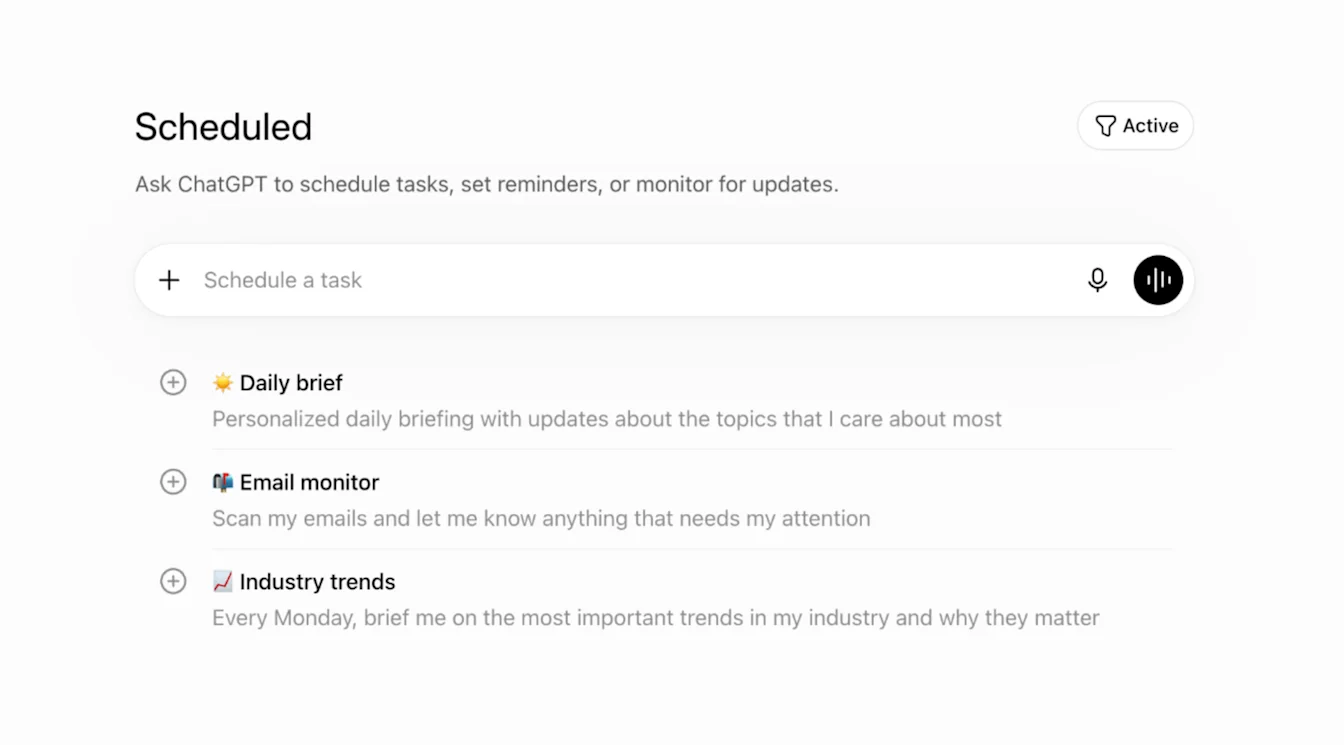
ChatGPT Work occupies a different segment of Sottiaux's portfolio. Described as a platform for office workers to use AI agents, it launched as part of OpenAI's Plus plan at $20 per month (TechCrunch). The positioning is notable: rather than putting agent features behind a pricier enterprise tier, OpenAI folded them into the consumer-facing Plus subscription. For individual knowledge workers, that puts agent-infused workflows within the same price point as the standard ChatGPT Plus offering.
The breadth of Sottiaux's portfolio spans developer infrastructure (API, Codex), agent tooling (agent infrastructure, ChatGPT Work), and both consumer and enterprise products. That reflects an organizational logic in which product leadership coordinates tightly across layers that have historically been separate. The API team's decisions about rate limits and model access affect Codex users directly. ChatGPT Work's agent capabilities depend on the same underlying infrastructure. Having a single product leader across all of these surfaces creates a unified set of trade-offs rather than isolated, conflicting ones.
The Codex token-limit resets are the clearest indicator of what this means in practice. Sottiaux's intervention at growth milestones suggests that demand is outpacing the company's pre-set capacity allocations, requiring manual adjustment rather than automatic scaling. That is a pattern familiar to anyone who has watched infrastructure-heavy products hit adoption inflection points. The question for developers building on the platform is whether OpenAI can move from reactive capacity management to provisioning that stays ahead of demand.
The launch of ChatGPT Work within Plus, rather than as a distinct tier, signals something distinct about OpenAI's go-to-market approach for agent features in the workplace. By not creating a separate, higher-priced plan, the company is treating agent-mediated productivity tools as a core feature set for individual subscribers. Whether that strategy holds as usage intensifies and compute costs scale is an open question, but the current structure lowers the barrier to adoption for the exact audience — individual office workers — that has the most immediate, self-directed use cases.
For the developer ecosystem, Sottiaux's combined oversight of the API and Codex means that decisions about model access, pricing, and rate limits are made with visibility into how they ripple across both the raw API surface and the higher-level coding tool. That alignment matters as agent infrastructure becomes a larger share of what developers build on top of. Inconsistent policy across those layers would create friction; unified leadership reduces that risk.
The broader context here is one of concentrated authority. Consolidating this much product surface under one person reporting to a co-founder means decision-making over OpenAI's commercial products sits in a very small number of hands. That has the benefit of speed and coherence, but it also creates a single point of strategic dependency. If the bet pays off, the integrated portfolio should produce a more consistent experience across developer and consumer surfaces. If it doesn't, the tight coupling that enables speed becomes the same coupling that propagates missteps.
Sottiaux's trajectory from Codex engineering lead to head of all core products is a path visible in real time through the token-limit resets that Codex users encounter directly. The engineering credibility earned in that role now extends across a portfolio where infrastructure decisions, capacity planning, and user-facing product design intersect daily. For a company whose products sit at the center of how a growing number of people work and build, the coherence of that portfolio under a single leader is one of the more consequential organizational facts in the current landscape.