Apple's New Mac Mini Gets the M6 Chip and a Higher Starting Price
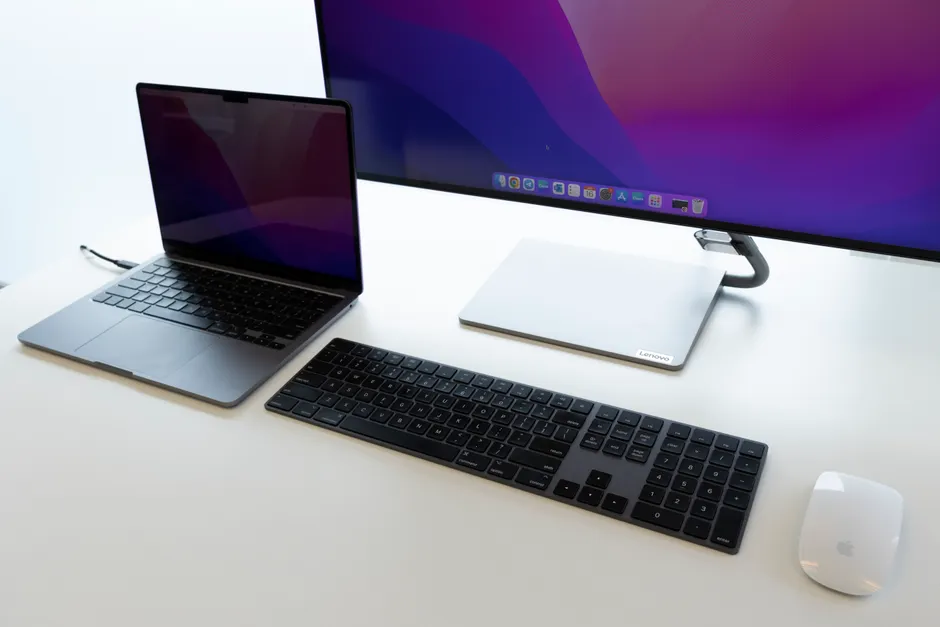
Apple unveiled a new Mac Mini running on its M6 chip on August 25, 2026. The base configuration ships with 16GB of RAM and 256GB of storage at $899. The M6 processor pairs a 12-core CPU with a 12-core GPU, up from the 10-core CPU and 10-core GPU on the M4 model it replaces. Apple stated the new Mac Mini's AI performance is 4x better than the M4. Pre-orders are open now, with units shipping after September 22 (TechCrunch).
Alongside the M6 base model, Apple released an M5 Pro variant of the Mac Mini with 512GB of storage and 24GB of RAM, starting at $1,699. The M5 Pro chip ships by default with a 15-core CPU and 16-core GPU, and can be upgraded to an 18-core CPU and 20-core GPU. Both Mac Mini variants include Wi-Fi 7, Bluetooth 6, and a 2.5Gb Ethernet port, with an optional 10Gb port upgrade. The machines ship with macOS 27 and Siri AI.
Apple also updated its Mac Studio line with M5 Max and M5 Ultra configurations. The M5 Max base Mac Studio starts at $2,499 with 36GB of unified memory and 512GB of storage. The M5 Ultra base model starts at $5,499 with 96GB of unified memory and 1TB of storage. (Unified memory is Apple's term for RAM that is shared between the CPU and GPU on the same chip, which speeds up data access compared to having separate memory pools.)
The pricing shift at the entry level is stark. Apple discontinued the previous base Mac Mini, which offered 256GB of storage and retailed for $599. The company had been offering a 512GB M4 Mac Mini at $799 as its most recent base model. The new M6 Mac Mini replaces that at $899 — a $100 increase over the M4 base and a $300 jump from the discontinued $599 entry point. Notably, the new base configuration reverts to 256GB of storage, half what the M4 base offered.
The broader context is that Apple is consolidating its desktop lineup around a clear performance ladder. The M6 Mac Mini targets mainstream users, the M5 Pro Mac Mini targets prosumer workflows (think photo editors, developers, and content creators who need more horsepower but not a workstation), and the M5 Max and M5 Ultra Mac Studio sit at the professional ceiling. The M6 sits below the M5 Pro in the hierarchy, which may seem counterintuitive given the higher generational number, but it follows Apple's pattern of staggering chip families across product tiers. The M6 is the new mainstream silicon; the M5 Pro and Ultra remain the high-performance options, presumably until their own generational successors arrive.
The 4x AI performance claim over the M4 is the figure most worth scrutinizing. Apple did not specify which workloads or benchmarks produced that multiplier, and the gap between a 10-core/10-core M4 and a 12-core/12-core M6 alone would not yield a 4x leap in general computing performance. The claim likely reflects the M6's Neural Engine throughput (the dedicated hardware block on Apple silicon that accelerates machine learning tasks), on-device inference latency, or a combination of architectural improvements in the memory subsystem and dedicated ML accelerators. For developers running on-device models, the practical question is whether that 4x figure holds across real inference workloads or applies to a narrow benchmark. Apple's integration of Siri AI into the macOS 27 shipping image suggests the company is positioning the M6 Mac Mini as a capable local AI inference machine, not just a general-purpose desktop.
The connectivity upgrades are notable for a machine at this price point. Wi-Fi 7 and Bluetooth 6 bring the Mac Mini current with the latest wireless standards, and the 2.5Gb Ethernet port as a default (with 10Gb as an option) signals Apple's awareness that the Mac Mini frequently serves as a home or small-office server, not just a desk computer.
In this author's view, the $899 entry price with halved storage is the real story. Apple has consistently pushed Mac Mini buyers upmarket over successive generations, and the combination of a higher base price with less baseline storage than the preceding model continues that trajectory. The $599 Mac Mini is gone. The $799 Mac Mini is gone. What remains is a more capable machine at $899, one that ships with meaningfully better silicon and modern connectivity, but one that costs more to get into and starts from a lower storage floor.
The M5 Pro Mac Mini at $1,699 with 24GB of RAM and 512GB of storage is, by comparison, a more straightforward value proposition for professionals who need the core count. And the Mac Studio configurations anchor the top end with memory capacities that make serious on-device model work practical: 96GB on the M5 Ultra base is enough unified memory to run large AI models locally without relying on slower disk storage as a backup.
All new machines ship September 22. Pre-orders are live now.


