Ice Avalanche Likely Triggered Deadly Flash Floods in Nepal's Rasuwa District
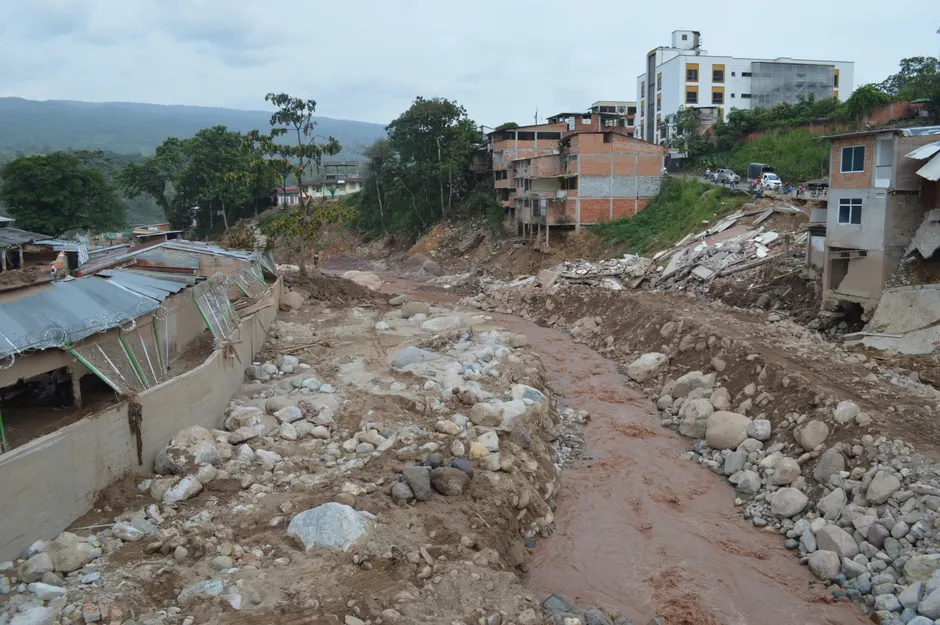
Flash floods in Nepal's Rasuwa district, near the Tibet border, killed at least 22 people on August 26, 2026, with scientists pointing to an ice avalanche as the likely trigger. Hundreds of people remain out of contact. An initial assessment suggests that an ice avalanche blocked the Lhende river, causing the sudden flood in the Bhotekoshi river Kathmandu Post. Nepali authorities are investigating whether a glacial lake also burst in addition to the avalanche that blocked the Lhende river Kathmandu Post.
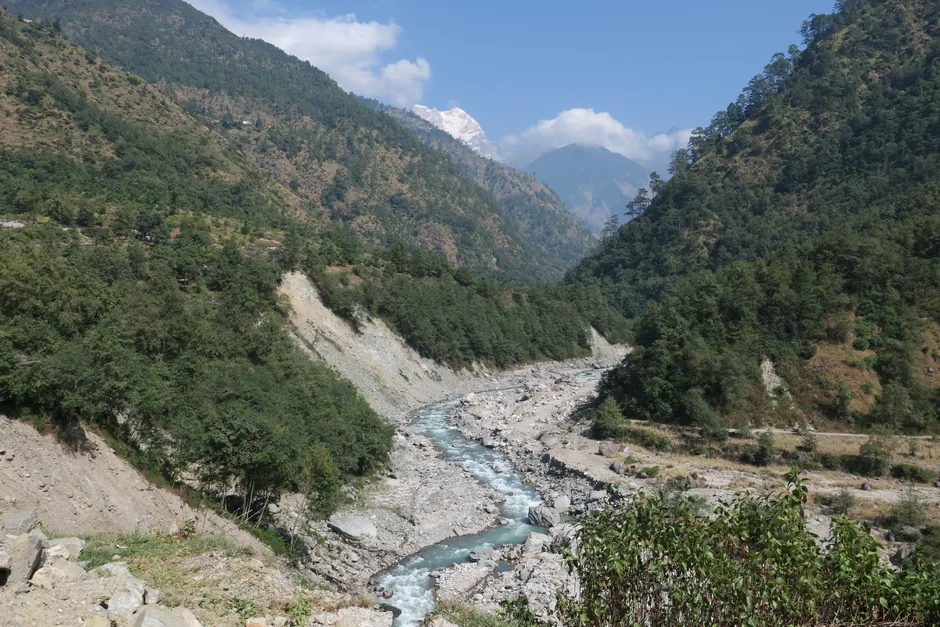
A glacial lake outburst flood, or GLOF, happens when a lake dammed by ice or natural debris suddenly releases its water. These events can send massive volumes downstream with little warning. The Rasuwa disaster follows a Reuters report attributing a separate deadly Himalayan lake flooding event in India, likely caused by chunks of ice falling into a lake in an apparent avalanche, in October 2023 Reuters. These events fit a pattern of cascading cryospheric hazards across the Hindu Kush Himalaya. The cryosphere refers to portions of the Earth where water exists in frozen form. Ice loss rates have doubled in the region since 2000, according to an assessment by the Kathmandu-based International Centre for Integrated Mountain Development (ICIMOD) BBC.
The Bhotekoshi event adds to a series of high-altitude floods in Nepal and the broader region driven by complex ice-rock interactions. On April 21, 2024, a flood from the glacial lake Birendra Tal in the Budhi Gandaki River, Gorkha, was triggered by a massive ice avalanche after the breaking of ice ICIMOD. Later in 2024, a massive rock avalanche above a glacial lake in the headwaters of the Thame watershed triggered a flood that destroyed trekking infrastructure in Nepal's Everest region, according to an ICIMOD study ICIMOD.
Not all recent Himalayan floods involve glacial lake outbursts. The Chamoli flood, for instance, was triggered by a massive landslide and ice-rock avalanche, not a GLOF, because there were no significant glacial lakes in the area ICIMOD. The Seti River flood was similarly caused by ice and rock avalanches on the southern flank of the Annapurna mountain, which produced a massive flash flood ICIMOD.
The hazard inventory extends across the Himalayan arc. A comprehensive study assessing flood danger posed by glacial lakes across the Tibetan Plateau found 210 of them, or 16%, to be dangerous BBC. In the China-Nepal connectivity region, researchers identified 2,688 glacial lakes (≥0.001 km²) with a total area of 116.10 ± 8.53 km² as of 2022 Science of the Total Environment. Researchers have used satellite data spanning nearly three decades to assemble a census of glacial lake outburst floods across India, Nepal, and Bhutan EOS.
The scale of the threat has prompted efforts to improve early warning capabilities. A 2026 arXiv paper titled 'Toward Satellite Early Detection of Glacial Lake Outburst Floods in the Nepal Himalaya: A Feasibility Assessment Using Free Satellite Observations' assesses the feasibility of using free satellite observations for early detection of GLOFs in the Nepal Himalaya arXiv. Nepal has long faced a threat from global warming as melting glaciers feed the risk of more deadly disasters such as the avalanche on Mount Everest Reuters.
The broader context here is that the Hindu Kush Himalaya is experiencing an accelerating cryospheric transition. As ICIMOD's doubling-of-ice-loss finding makes clear, the physical conditions for mass-wasting events (the downhill movement of soil, rock, and ice under gravity), ice avalanches, and subsequent downstream flooding are intensifying. The fact that authorities are still investigating whether a glacial lake outburst compounded the Bhotekoshi flood points to the difficulty of real-time hazard attribution in remote headwaters. The 2024 Thame and Birendra Tal floods showed that even when a glacial lake is present, the trigger is often an upstream mass movement, rock avalanche, or ice collapse that displaces water rapidly. The Rasuwa event appears to follow that template.
Looking at what this means for monitoring and infrastructure, the reliance on free satellite observations, as assessed in the 2026 arXiv paper, takes on added urgency. With 2,688 glacial lakes catalogued in the China-Nepal connectivity region alone, ground-based monitoring at every vulnerable site is not feasible. Satellite-based early detection, if proven operational, could narrow the gap between hazard onset and downstream warning. The 22 confirmed deaths and hundreds out of contact in Rasuwa reveal the human cost of that gap.
The repeated pattern of ice or rock avalanches triggering downstream floods, rather than gradual glacial lake expansion, also complicates risk modeling. The Chamoli and Seti River events showed that significant flood hazards exist even without glacial lakes in the immediate area. Risk frameworks that focus narrowly on lake size or bathymetry (the measurement of water depth) may miss the cascading hazard posed by permafrost degradation, hanging glaciers, and unstable rock walls above existing water bodies.