A River Under Siege: Nepal's Repeating Flood Crisis on the Bhote Koshi

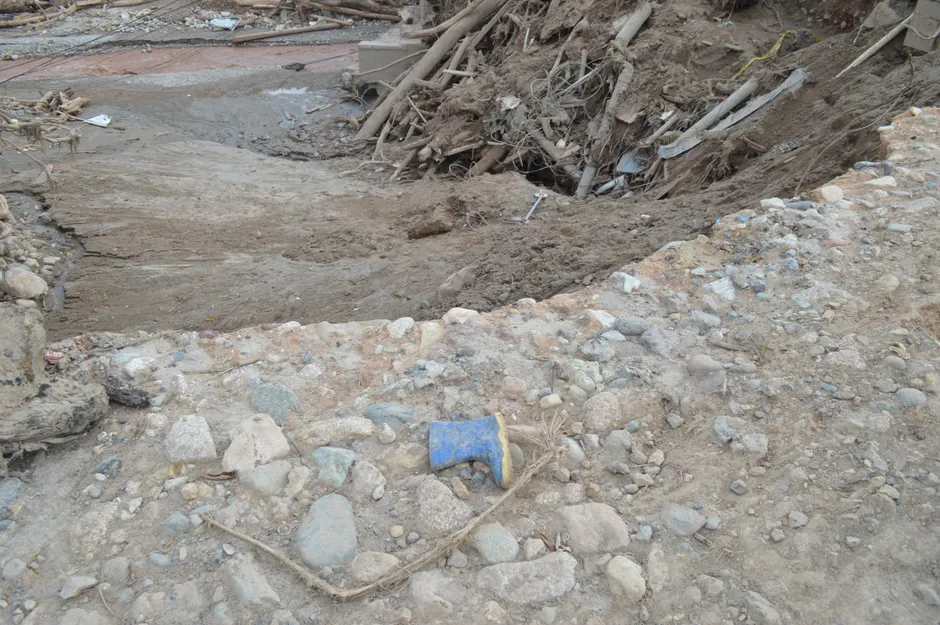
A flash flood along the Nepal-Tibet border on August 26 killed at least 18 people and left hundreds of tourists missing, according to reporting from the Strait Times. The floodwaters struck villages and project sites near the border, washing away infrastructure in their path.
This disaster is the latest in a recurring pattern of transboundary flooding along the Bhote Koshi River, a waterway that begins on the Tibetan plateau and flows south into Nepal. The Bhote Koshi has been the channel for at least two deadly flood events in the past thirteen months, both linked to the drainage of glacial lakes on the Chinese side of the border.
Glacial lakes form when meltwater from retreating glaciers pools behind natural dams made of rock and ice debris, known as moraines. When those dams break, the water rushes downstream with little warning — a process scientists call a glacial lake outburst flood, or GLOF. Think of it as a bathtub overflowing all at once rather than draining slowly.
In July 2025, a flood on the Bhote Koshi killed at least nine people and left more than two dozen missing, according to Reuters. Nepal's climate body attributed that event to the drainage of a Tibetan glacial lake, connecting the flooding to upstream glacial dynamics rather than monsoonal rainfall alone. An earlier Reuters dispatch from July 8, 2025 reported at least eight killed and over two dozen missing after the same river flooded and washed away the 'Friendship Bridge' on the Nepal-China border.
The August 26 event, also on the Nepal-Tibet border, again washed away villages and project sites. The death toll of at least 18, with hundreds of tourists reported missing, is a significantly higher casualty figure than the July 2025 flooding. The Strait Times did not specify in its reporting whether a glacial lake drainage was again the trigger, though the geographic and hydrological overlap with the July 2025 event is substantial.
The broader context here is the accelerating pace of GLOFs across the Hindu Kush-Himalayan region. As temperatures rise, glacial meltwater accumulates in lakes held back by moraine dams that are themselves degrading. When those dams fail — whether through ice avalanches displacing lake water, meltwater surges overtopping the dam, or structural collapse — the resulting discharge can travel tens of kilometers downstream with little warning. Nepal's climate body already established the causal link between Tibetan glacial lake drainage and Bhote Koshi flooding in the July 2025 event, which provides a plausible mechanism for the August 26 flood pending further attribution analysis.
The transboundary dimension compounds the response challenge. A flood originating in Tibet reaches Nepali communities downstream with the warning time dictated by whatever information flows across the China-Nepal border. The 'Friendship Bridge' crossing, already destroyed in the July 2025 event, shows how border infrastructure itself sits in the flood's path. The hundreds of tourists reported missing suggests the area was experiencing significant visitor traffic at the time of the flood, raising immediate search-and-rescue complications in steep, remote terrain.
The recurring nature of these events along the same river corridor demands attention. Two major flood events on the Bhote Koshi in just over a year, both linked by geography and at least one by confirmed glacial lake drainage, suggests that the upstream Tibetan glacial system is in a period of active instability. For downstream communities, engineering projects, and border infrastructure along the Bhote Koshi, the interval between events is narrowing.
What this means for the region is sobering. The August 26 flood reinforces a hardening consensus among glaciologists and disaster risk researchers that the Hindu Kush-Himalaya is entering a phase in which GLOF frequency is rising, and transboundary river corridors connecting Tibet to Nepal and northern India face compounding exposure. The presence of hundreds of tourists in the affected zone also points to the gap between hazard risk assessments and the realities of high-altitude tourism in glacially fed valleys. No early warning system can fully mitigate a sudden glacial lake discharge in terrain this steep, but the differential in casualty figures between July 2025 and August 2026 — where deaths doubled and the missing count moved from dozens to hundreds — suggests either a more severe hydrological event or greater exposure of people and assets in the flood's path.
Neither outcome is reassuring. Both point to the same trajectory for a river corridor that has now shown, twice in thirteen months, that upstream glacial instability translates rapidly into downstream catastrophe.