Flash Floods in China and Nepal: A Disaster Crossing Borders

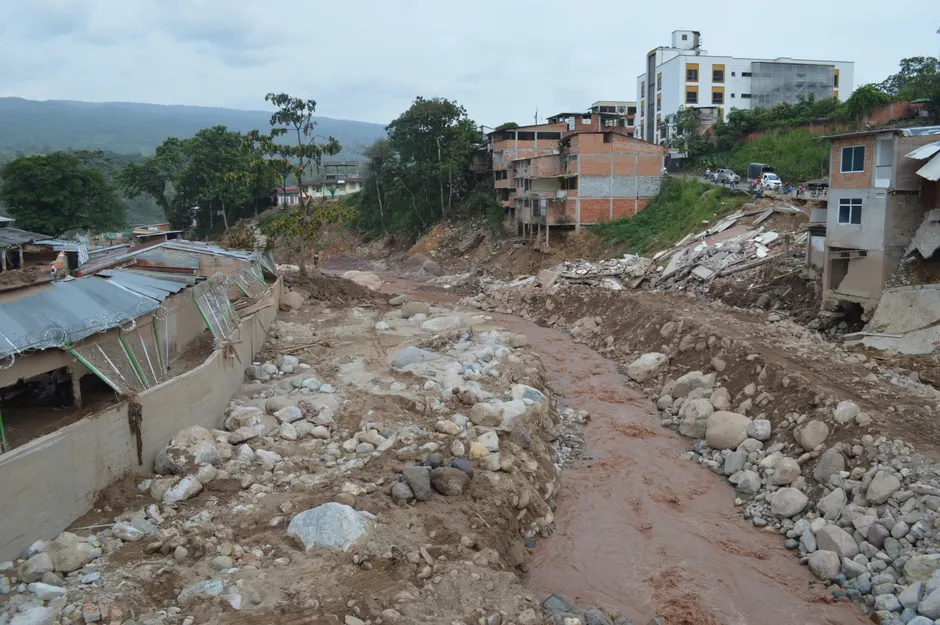
At least 95 people have been confirmed killed in catastrophic flash flooding across China and Nepal, with the death toll likely to rise and hundreds of tourists reported missing CNN. Over 350 people are missing in the Nepal flash floods alone, including 384 travellers of whom 291 are foreigners The Hindu. Reuters separately reported 65 dead, 30 missing, and 1,146 people rescued across 22 flood-hit districts in Nepal Reuters. PBS NewsHour reported at least 22 people killed and hundreds of tourists, workers, and others left missing after an avalanche triggered the deadly flash floods in Nepal on Wednesday PBS NewsHour.
Nepal's National Disaster Risk Reduction and Management Authority (NDRRMA) reported 33 disaster-related incidents across various parts of the country, with one person dead and 18 others injured. India's Ministry of External Affairs stated in its Operation Dost press release that its officials are reaching out to some ten Indian nationals reportedly stranded in Nepal, and that efforts are ongoing to trace a missing Indian national MEA.
Officials with Nepal's department of meteorology and hydrology told the BBC that satellite images show a massive chunk of ice, possibly part of a glacier, that collapsed from a mountain on the Tibetan side, bringing down rocks and other sediments BBC. The falling ice and rocks may have generated a volume of water through friction, and the remaining rock and sediment debris created a dam on the Lhende river below that initially obstructed its flow but ultimately caused it to breach. Some Nepali academics in China said they had been given similar accounts about the flood's cause by some Chinese experts.
China's Xinhua news agency described the event as a mudslide in Nepal in a post on X. Some glaciologists were ruling out the earlier suspicion that the event was caused by the collapse of a glacial lake. The BBC's environment correspondent reported on August 26, 2026 that monsoon clouds hindered satellite-image analysis of the flood's origin in the Himalayas, including in Tibet.
The discrepancy in casualty figures across outlets reflects the fluidity of an active disaster zone spanning difficult terrain. The concentration of foreign nationals among the missing, 291 of 384 travellers per The Hindu's count, elevates the diplomatic stakes for multiple governments. India's Operation Dost outreach is already operational, and other embassies in Kathmandu will face similar pressure to account for and assist their citizens as search and rescue efforts expand.
The broader context here involves how this disaster crosses national boundaries. If the originating event was a glacial collapse on the Tibetan side, as Nepali meteorology and hydrology officials describe from satellite imagery, it shows how hazards originating upstream in China directly create risks downstream in Nepal. Chinese state media characterizing the event as a mudslide in Nepal, rather than an upstream glacial collapse in Tibet, introduces a narrative divergence that could complicate bilateral technical cooperation on disaster risk reduction. The corroboration from Nepali academics receiving similar accounts from Chinese experts suggests some degree of scientific consensus is forming at the technical level, even if official framing diverges.
Monsoon cloud cover preventing satellite-image analysis means that definitive attribution of the mechanism, whether a friction-generated flood from a debris dam breach or another process, will require ground or aerial assessment. Until imagery clears, the friction-dam-breach model advanced by Nepali officials remains the leading working hypothesis.
The ruling out of a glacial lake outburst flood (GLOF) by glaciologists narrows the diagnostic field. A GLOF is the sudden drainage of a glacial lake dammed by moraine or ice. It is a well-documented hazard in the Himalayas with established early warning protocols. A glacial collapse generating friction-induced water and a subsequent debris dam breach is a more complex cascade, less predictable and harder to model with existing monitoring infrastructure. Think of a GLOF as a bathtub overflowing: you can see the water rising and have time to act. The friction-dam-breach model is more like a pipe bursting inside a wall: the failure happens out of sight, and the damage arrives suddenly. The distinction matters for how regional early warning systems are designed and where monitoring resources are allocated along trans-Himalayan river systems.