Waymo Says 200 Million Autonomous Miles Prove Cameras Alone Aren't Enough for Self-Driving
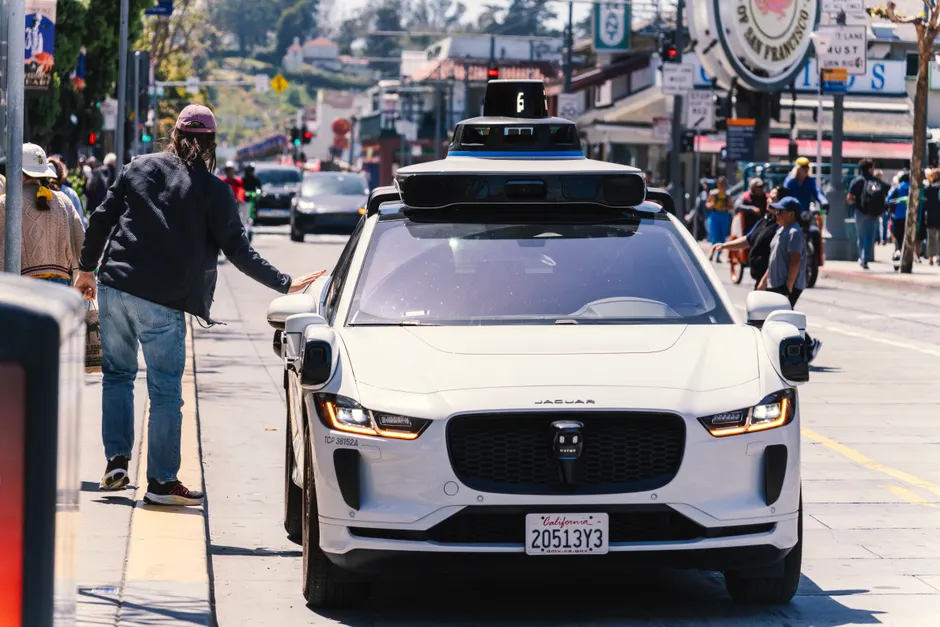
Waymo VP of Onboard Software Srikanth Thirumalai published a blog post on August 26, 2026, titled "10 AI Lessons from Driving 200+ Million Fully Autonomous Miles," in which he argued that camera-only sensor suites are insufficient for fully autonomous driving. "Cameras are incredible, but they aren't enough," Thirumalai wrote, stating that data accumulated over more than 200 million real-world autonomous miles indicates that safe, fully driverless operations at scale require additional sensor modalities (The Verge).
Waymo's own vehicles use cameras alongside lidar and radar to build a redundant, multi-sensor picture of the environment. Lidar (light detection and ranging) fires laser pulses to measure distances to surrounding objects, while radar uses radio waves to detect things like vehicle speed and position. Thirumalai framed this architecture as a necessity rather than a preference, positioning the company's 200-million-mile dataset as the evidentiary basis for that claim. The post appeared on Waymo's official Waypoint blog at waymo.com/blog/2026/08/10ailessons (Waymo Blog).
The timing is pointed. Tesla is preparing for the official launch of its Cybercab, a vehicle designed without a steering wheel or pedals. Tesla's approach to autonomy relies on cameras alone, a strategy rooted in Elon Musk's long-standing position that lidar is "a crutch" and that companies depending on it are "doomed." Musk has argued that humans drive primarily using their eyes, and that autonomous systems should likewise rely on vision (The Verge).
Tesla's head of AI, Ashok Elluswamy, reinforced that stance on a recent earnings call, stating that Tesla can achieve safe, comfortable, and affordable autonomy using cameras only, and pushing back against the claim that lidar, radar, and HD maps are prerequisites for full self-driving (The Verge).
The two companies also diverge sharply on the role of high-definition maps. Waymo uses HD maps — detailed, pre-built digital representations of roads, lane markings, and infrastructure — to accelerate its validation process, enabling fully autonomous service from a rider's first trip. Thirumalai described maps as another input, functioning as a form of "mental memory." Musk has called high-detail mapping for autonomous driving "a really bad idea," favoring a more generalized approach that does not depend on pre-mapped environments (The Verge).
The sensor debate is not merely an engineering disagreement. New Jersey's state legislature is considering a bill that would legalize robotaxis only if they incorporate multiple sensor types, a requirement that would effectively ban camera-only systems like Tesla's from operating in the state. The legislative scrutiny signals that the technical architecture choices Waymo and Tesla have made could become regulatory fault lines rather than purely commercial ones (The Verge).
Waymo is not alone in its multi-sensor stance. The vast majority of autonomous vehicle operators, including Zoox and Motional, deploy lidar alongside radar and cameras in their sensor suites. Tesla's camera-only approach remains the industry outlier among companies pursuing fully driverless ride services (The Verge).
The broader context here is a collision between two philosophies of autonomy that are now moving from the lab to the street simultaneously. Waymo is publishing operational data from 200 million driverless miles as evidence for its sensor-fusion and HD-map architecture. Tesla is preparing to put steering-wheel-free vehicles into commercial service on the strength of a vision-only neural network stack. Each company is implicitly asking regulators, riders, and investors to accept a different definition of what constitutes sufficient safety evidence.
The regulatory dimension is where this disagreement has the most immediate practical consequence. If states like New Jersey codify multi-sensor requirements into robotaxi law, the camera-only thesis faces not a technical rebuttal but a legal exclusion. That would compress Tesla's addressable market for Cybercab at launch, regardless of how the underlying neural networks perform. Conversely, an architecture requiring HD maps and fleet-wide lidar carries its own scaling constraints, including the cost and time needed to map new cities before service can begin.
What makes this moment distinct from earlier rounds of the sensor debate is that both sides now have skin in the game at commercial scale. Waymo is operating driverless rides in multiple cities. Tesla is preparing to launch a purpose-built robotaxi. The argument over whether cameras alone are enough is no longer theoretical, and the institutions that will adjudicate it — from state legislatures to insurance underwriters to riders themselves — are now paying attention.


