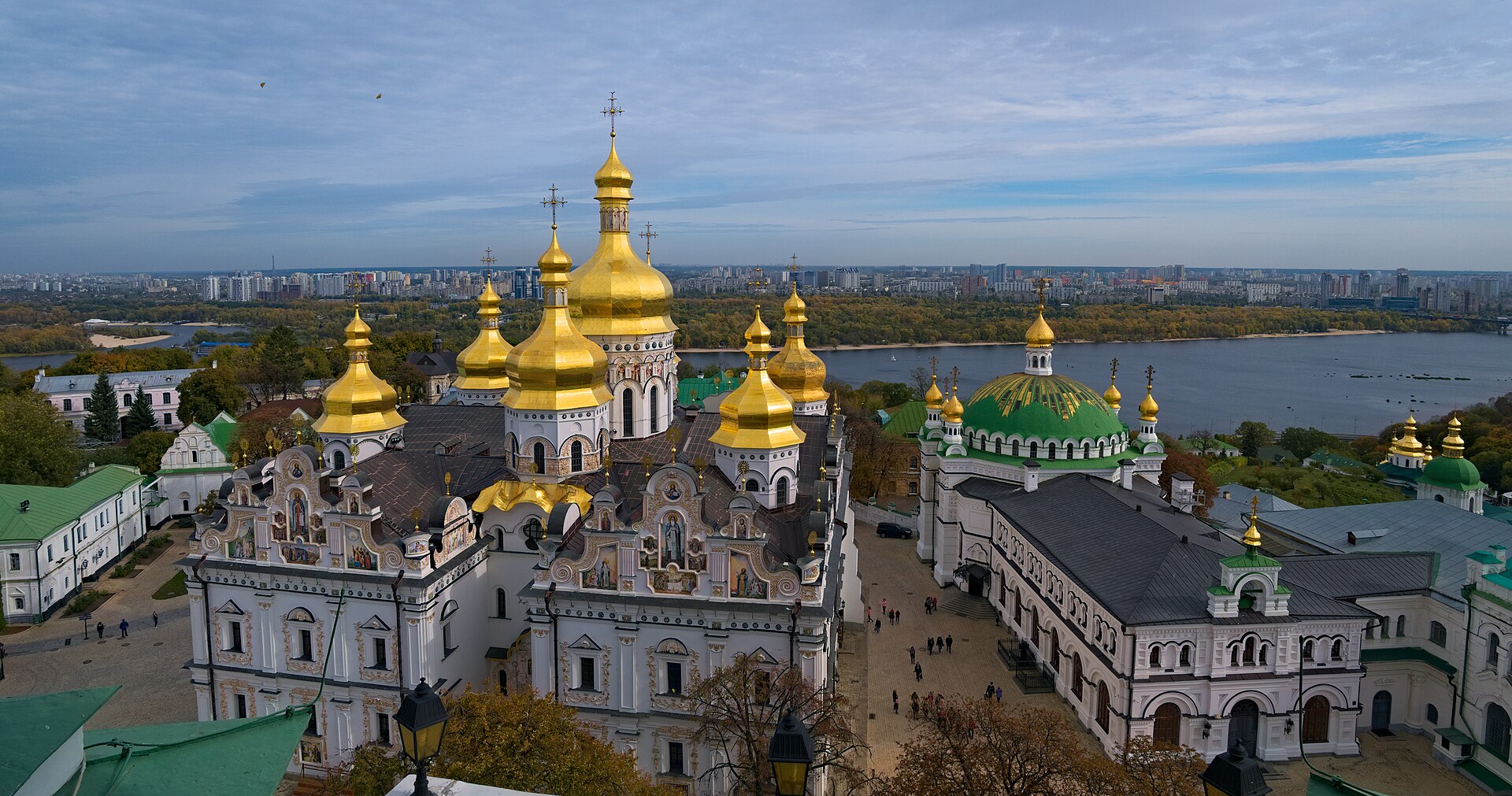
A Historic Cathedral Burns: Russia Strikes Ukraine's Most Sacred Monastery

A Historic Cathedral Burns: Russia Strikes Ukraine's Most Sacred Monastery
Russian drones struck the roof of the Dormition Cathedral at Kyiv-Pechersk Lavra in the early morning of June 15, 2026, setting off fires across the medieval monastery complex. Emergency crews brought the blazes under control, according to Ukraine's Verkhovna Rada.
Fires erupted at both the Dormition Cathedral and the nearby Mystetskyi Arsenal before firefighters extinguished them. President Volodymyr Zelensky's office released a statement noting that Zelensky personally thanked the teams who responded. At the time of the statement, officials had not yet finished assessing how badly the cathedral's structure had been damaged.
Why This Site Matters
The Dormition Cathedral is the spiritual and architectural heart of the Pechersk Lavra complex, located in Kyiv's historic Pechersk district. For Eastern Orthodox Christians worldwide, it ranks among the most important religious buildings. The cathedral was originally built in the eleventh century, destroyed by Soviet authorities in 1941, and rebuilt after Ukraine's independence. Today, it is led by Metropolitan Epiphanius, head of the Orthodox Church of Ukraine.
The site's current religious leadership reflects a major shift: the Ukrainian government transferred the monastery grounds away from a congregation affiliated with the Russian Orthodox Church — a process that has caused diplomatic and legal tensions for years before this attack even occurred.
Part of a Wider Pattern
This strike fits into a troubling trend. Since Russia's full-scale invasion began in February 2022, Ukraine's Ministry of Foreign Affairs has documented damage to more than 700 religious sites across the country. The Interior Ministry reports an even broader toll: between February 24, 2022 and December 25, 2023, 872 cultural heritage objects were destroyed or damaged. The monastery itself had already been hit in a January 2026 Russian attack on Kyiv, making this the second documented strike on the same complex.
The broader context here matters for understanding what the international community can do. The monastery holds UNESCO World Heritage status — a designation established by a 1972 international convention that requires all countries, including Russia, to protect cultural property and refrain from deliberately targeting it. Ukraine is also a signatory to the 1954 Hague Convention on the Protection of Cultural Property in wartime. If evidence shows the cathedral was deliberately targeted, rather than hit by accident, that kind of documentation could be used in war crimes investigations already underway at the International Criminal Court.
The Symbolic Weight
The Kyiv-Pechersk Lavra sits at the crossroads of Ukrainian national identity, Orthodox Church politics, and the competing historical narratives that Russia has invoked to justify its invasion. A strike here inflicts damage that travels far beyond the bricks and mortar — it carries psychological and symbolic weight. Whether Russian forces aimed directly at the cathedral's roof or hit it as part of a larger attack on Kyiv, the effect lands on one of the most internationally recognized symbols of Ukrainian cultural survival.
What unfolds next will depend on two things. First, the full extent of the physical damage once engineers complete their assessment. Second, how the international community — and especially Western governments — responds to the incident. Ukraine has strategically used documented attacks on cultural heritage to maintain political attention from its Western allies and to strengthen its case in international forums. Images of a burning Orthodox cathedral broadcast globally give that effort renewed momentum. For Russia, this strike adds to a record that UNESCO, the International Criminal Court, and allied governments have been carefully documenting for over four years.