Glacial Collapse in Tibet Triggers Cross-Border Flood Disaster in Nepal
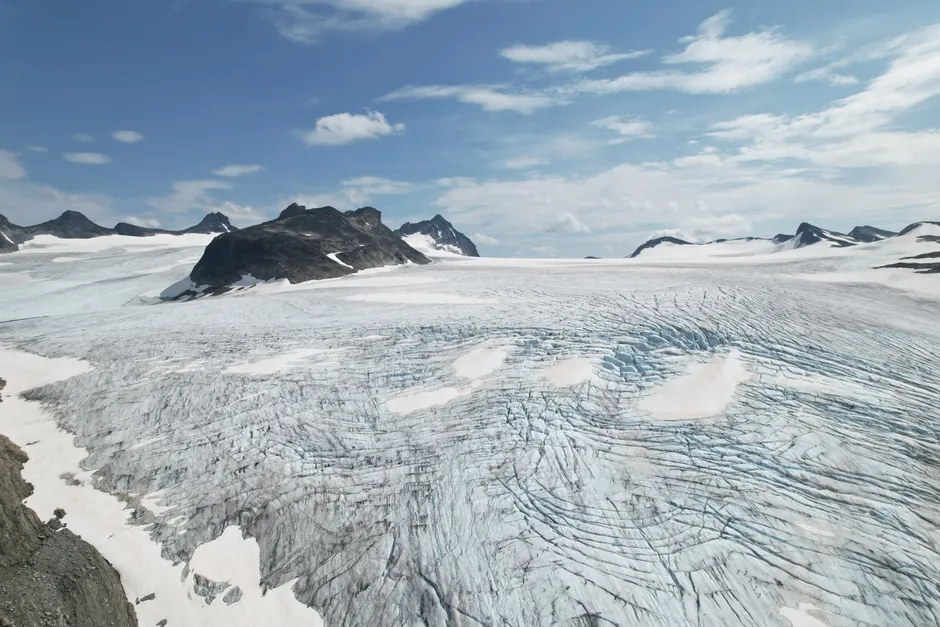
At least 359 people have been killed in Nepal and three in Tibet, with nearly 1,400 missing, after glacial floodwaters devastated the region in late August 2026, according to an Al Jazeera liveblog dated August 27. The catastrophe began with a glacial collapse in Tibet that sent massive flash floods and mudslides downstream, sweeping through Nepali river systems with little warning.
The toll has climbed steadily as recovery operations expanded. On August 26, NPR reported that mudslides in Tibet caused by a glacial collapse left three dead and 558 missing on the Chinese side, while Nepali police confirmed at least 162 killed at that point. By August 27, The Hindu placed the Nepali death toll at nearly 160 killed and over 750 missing, including 133 Indian nationals. The Al Jazeera figure from August 27, the most recently published consolidated count, raises the total to at least 362 dead across both countries and approximately 1,400 missing.
The scale of the disaster has overwhelmed Nepal's mortuary infrastructure. Morgues ran out of capacity, and authorities turned to dry ice, QR codes, and abandoned buildings to manage the growing number of recovered bodies (Hindustan Times). The Bharatpur mortuary, which can hold around 250 bodies, has been stretched beyond its limits as corpses continue to be pulled from river systems (India Today). As of 9:30 a.m. on Thursday, August 27, 137 bodies had been recovered along the Chitwan stretch of the Trishuli and Narayani rivers alone. Eleven additional bodies recovered along the Trishuli in Gorkha, swept downstream by the Bhotekoshi flood, were sent to Gandaki for processing (Kathmandu Post). Earlier reporting from August 27 had confirmed 64 bodies and human remains recovered from the Trishuli and Narayani rivers, a figure that rose sharply within hours.
The identification crisis compounds the logistical strain. Bodies carried tens of kilometers downstream by fast-moving floodwaters have arrived in various states of decomposition, making visual recognition impossible in many cases. The deployment of QR codes, presumably linked to digital identification databases, is an improvisation forced by the mismatch between the number of dead and available forensic capacity. Dry ice and repurposed buildings extend preservation time but do not resolve the underlying bottleneck in forensic identification.
The broader context here is the intersection of Himalayan glacial dynamics and the disaster-response infrastructure of one of South Asia's poorest countries. Glacial lake outburst floods, known as GLOFs, occur when glacial ice or moraine dams collapse, releasing enormous volumes of impounded water in sudden, high-energy surges. The Hindu Kush-Himalaya region contains thousands of glacial lakes, and monitoring infrastructure across Nepal, Tibet, and northern India remains uneven. A glacial collapse on the Tibetan side sending floodwaters across an international border into Nepal illustrates the transboundary character of the hazard, which does not align with the jurisdictional boundaries of the states that must manage its consequences.
The casualty figures span multiple jurisdictions and are evolving rapidly. The discrepancy between the 162 deaths confirmed by Nepali police on August 26 and the 359 reported by Al Jazeera on August 27 reflects the pace of body recovery along downstream river systems rather than contradictory reporting. The 558 missing in Tibet, reported by NPR on August 26, and the 750-plus missing in Nepal reported by The Hindu on August 27, together account for the approximately 1,400 missing figure cited by Al Jazeera, though whether these tallies overlap or are fully additive remains unclear from the available sourcing.
Nepal's river systems have functioned as a grim conveyor belt, carrying victims from upstream flood zones in the Bhotekoshi basin through Gorkha and into the Trishuli and Narayani corridors in Chitwan. The concentration of recoveries along these specific river stretches suggests the flood's energy dissipated over a considerable distance, depositing victims across a wide geographic span. Rescue and recovery operations are necessarily distributed across this corridor, fragmenting the institutional response across multiple districts and administrative boundaries.
The inclusion of 133 Indian nationals among the missing adds a cross-border human dimension to the disaster, though the circumstances of their presence in the affected zones are not detailed in the available reporting. Nepal and India share open borders and significant seasonal labor migration, and river corridors in central Nepal are commercially active routes.
What remains unresolved is the final toll. With nearly 1,400 people unaccounted for and recovery operations still underway, the numbers are likely to shift in the coming days. The mortuary crisis in Bharatpur and downstream districts is a leading indicator of how much further the death count may climb.