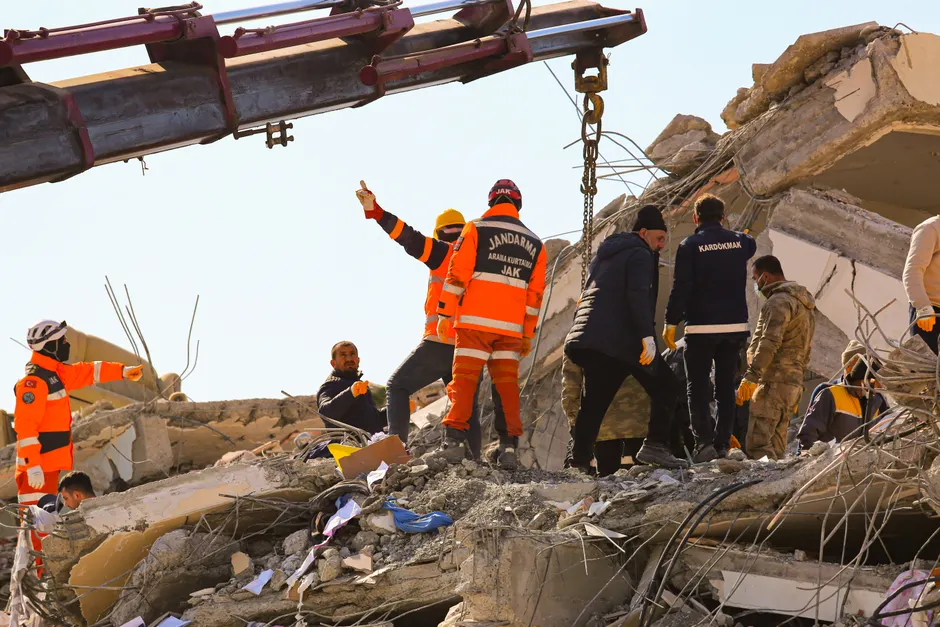
Himalayan Glacier Collapse Triggers Deadly Flash Flood on Nepal–Tibet Border
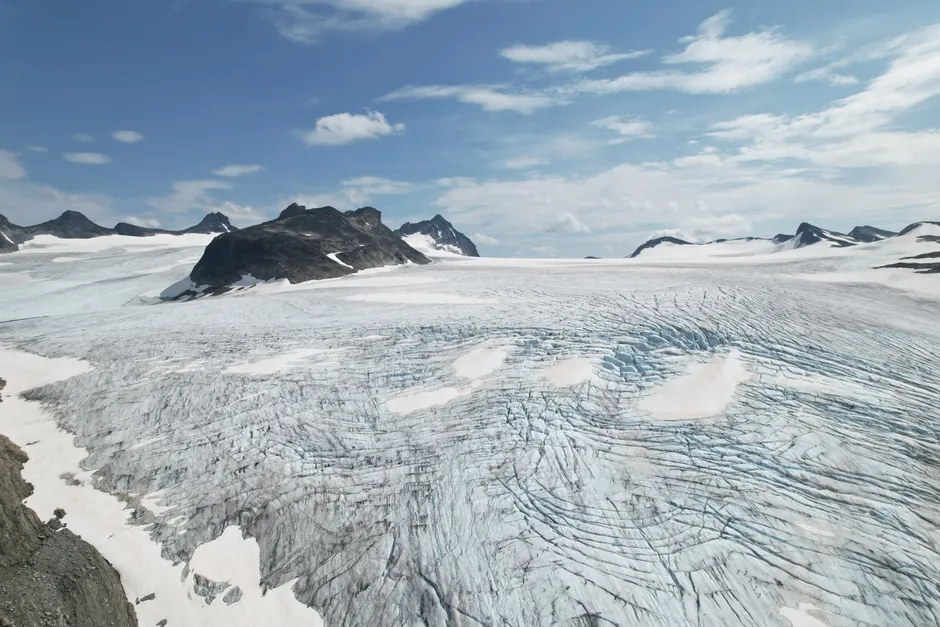
A section of a Himalayan glacier broke off and crashed onto the valley floor near Nepal's border with Tibet on August 26, 2026, triggering a flash flood that has killed over 390 people across Nepal and Tibet, with more than 1,400 still missing (AP News). Satellite imagery reviewed by experts shows a green mountainside now buried in debris, confirming the scale of the collapse (Reuters).
The death toll rose rapidly in the hours and days following the event. As of August 26 reporting, Antarctic Glaciers documented 270 bodies recovered and approximately 1,400 people unaccounted for. By August 28, AP News placed the death toll above 390. Earlier figures from EarthSky on August 27 reported at least 300 dead and over 900 missing as of 11 UTC that day. The trajectory of these numbers points to a disaster still unfolding, with search and rescue operations complicated by the remote, high-altitude terrain and damaged infrastructure.
Nepal's Department of Hydrology and Meteorology concluded that the August 26 flood was caused by a glacial lake outburst in the Lhende river near the Nepal-China border (ABC News). Reuters separately characterized the event as the lower section of a Himalayan glacier collapsing, placing more than 1,000 people missing across Nepal and Tibet (Reuters). A glacial lake outburst flood, or GLOF, occurs when a glacial lake's natural dam — typically a ridge of rock and sediment called a moraine — fails or overtops, releasing a massive volume of trapped water downstream. The Lhende river basin, situated along the tectonically active and heavily glaciated Himalayan front, is consistent with known GLOF hazard zones.
Nepal's National Disaster Risk Reduction and Management Authority (NDRRMA), headquartered at Singh Durbar in Kathmandu, is coordinating the emergency response through its National Emergency Operation Centre (NEOC). The NEOC operates a toll-free emergency line at 1234, with additional contact numbers at 01-4211535, 01-4211197, and 01-14211467. NDRRMA can also be reached via email at info@bipad.gov.np and ndrrma@gmail.com, with its official portal at www.ndrrma.gov.np. The agency's web accessibility contact person is Sandipa Khadka, reachable at +977 9841406790.
The discrepancy in casualty figures across sources reflects how difficult it is to get accurate information in the immediate aftermath of a complex Himalayan disaster. The most recently published source, AP News on August 28, reports over 390 killed and more than 1,400 missing. Earlier-dated sources, including Reuters on August 27, cite over 1,000 missing. The upward revision in the death toll between August 26 and August 28 follows a familiar pattern in high-altitude disasters: access to affected areas is delayed, and body recovery proceeds slowly as floodwaters recede and debris is cleared.
The broader context here is the accelerating hazard profile of Himalayan glaciers under warming conditions. The Hindu Kush-Karakoram-Himalaya region contains the largest volume of ice outside the polar regions, and glacial lake outburst floods have been a documented and recurrent threat across this mountain system. The August 26 event involved a glacier section detaching and crashing into the valley, which may have either directly displaced water or triggered a secondary GLOF by destabilizing a glacial lake. The Lhende river identification by Nepal's Department of Hydrology and Meteorology matters because it localizes the source to a specific transboundary basin shared between Nepal and China, raising questions about cross-border early warning coordination and the adequacy of existing glacial lake monitoring infrastructure on both sides of the border.
For emergency responders and humanitarian organizations operating in the region, the practical implications are immediate. The missing-to-dead ratio, with over 1,400 unaccounted for against 390-plus confirmed dead, suggests that the final toll could climb substantially. Remote river valleys in this corridor have limited road access, and the flood likely destroyed bridges and trails, cutting off affected communities. Helicopter access, the primary mode of transport for search and rescue in Nepal's high Himalaya, is weather-dependent and already stretched during the late monsoon season.
NDRRMA's NEOC remains the primary coordination node for information. Organizations and individuals seeking to verify operational details or coordinate with Nepalese authorities should use the toll-free number 1234 or the direct lines listed above. The transboundary nature of the disaster, affecting both Nepal and Tibet, also implicates bilateral disaster response mechanisms between Kathmandu and Beijing, though no details on Chinese-side coordination have been reported in the available sources.
This event fits within a documented pattern of glacial hazards across the Himalayan arc, but the casualty figures, if confirmed at these levels, would place it among the deadliest glacier-related disasters in recent memory. Reuters's August 27 report placed the event in the context of "the world's deadliest glacier disasters," though comparative ranking depends on final toll figures that remain in flux. What is clear is that a section of Himalayan glacier collapsed on August 26, 2026, near the Nepal-Tibet border, generating a flash flood that has claimed hundreds of lives and left well over a thousand people unaccounted for across a remote and difficult-to-access mountain region.