Nepal's Deadly Glacial Flood: What Happened and Why the Risk Is Growing

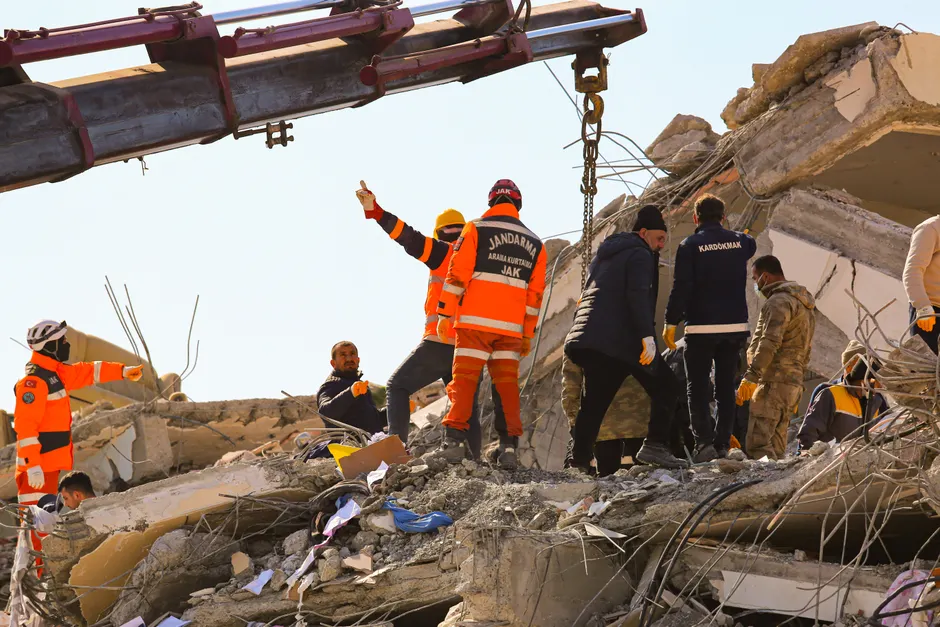
At least 579 people are confirmed dead after catastrophic flooding struck the Nepal-Tibet border region in late August 2026, with more than 1,500 people reported missing across Nepal and China's Tibet, according to Al Jazeera's August 27 report. The Hindu, reporting on August 28, placed the death toll at 579, with 538 of those in Nepal alone. The Guardian, also reporting on August 27, had placed confirmed dead at 392 and the missing at more than 1,400. The rising figures reflect the most recently available counts from a disaster still unfolding.
Scientists say the deadly flash flood was likely caused by a large chunk of glacier breaking off and temporarily damming a river, according to AP News. The New York Times, reporting on August 26, described the trigger as an enormous piece of ice snapping off a glacier. This mechanism is consistent with what ICIMOD — the International Centre for Integrated Mountain Development — classifies as a glacial lake outburst flood, or GLOF: a sudden, catastrophic release of water from an unstable glacial lake. Think of it as a natural dam that suddenly gives way, sending a wall of water rushing downstream.
Nepal sits at the center of this risk geography. According to the UN, Nepal has more than 2,000 glacial lakes, of which 21 are considered potentially dangerous. ICIMOD's own inventory, however, identified 47 potentially dangerous glacial lakes within Nepal's Koshi, Gandaki, and Karnali river basins alone. The Hindu Kush Himalaya region contains more than 25,000 glacial lakes in total, according to ICIMOD.
The disaster also follows a documented precedent in the same region. In August 2024, a GLOF from Thyanbo glacial lake swept away the village of Thame, as documented in an ICIMOD press release. That event showed how vulnerable downstream communities are to sudden glacial lake drainage — a vulnerability ICIMOD expects will grow. The organization states that the frequency of glacial lake outburst floods and the risk from potential GLOFs are expected to increase as the climate continues to change, with rising temperatures forming new lakes and expanding existing ones.
The discrepancy between the UN's count of 21 potentially dangerous lakes and ICIMOD's identification of 47 in three major river basins reflects differences in methodology, basin-level detail, and evolving assessment frameworks. Neither figure captures the full upstream-to-downstream risk corridor, which extends across the Nepal-Tibet border and complicates any unilateral early-warning system. The cross-border dimension of this disaster, with casualties and missing persons reported in both Nepal and Tibet, adds a diplomatic layer to what is already a complex humanitarian and geophysical event.
ICIMOD characterizes glacial lakes as inherently unstable features, subject to catastrophic drainage when triggered by ice or rock avalanches, seismic activity, or the structural failure of moraine dams (the ridges of rock and sediment that naturally hold back glacial meltwater). The mechanism identified in the current disaster — a glacier chunk breaking off and temporarily damming a river before releasing a flood wave downstream — fits within the GLOF category even if the specific failure mode may differ from a classic moraine-dam breach. Precise determination of the trigger will require detailed field investigation, which is typically impeded in the immediate aftermath by damaged infrastructure and continued hazard exposure.
The numbers tell their own story about escalation. On August 27, the confirmed dead stood at 390 or 392, depending on the source. By August 28, The Hindu reported 579 dead. The missing count, exceeding 1,500 as of August 27, has not been reconciled with subsequent reporting. Whether those missing are presumed dead, displaced without communication, or in areas still inaccessible to search teams remains unclear from available reporting. The gap between confirmed dead and missing, combined with the scale of infrastructure disruption typical of GLOF events in mountainous terrain, suggests the final toll may not be settled for weeks.
The broader context here is a widening gap between the expanding catalog of identified hazards and the pace at which mitigation infrastructure can be deployed. ICIMOD's inventory work has produced actionable, basin-level data identifying specific dangerous lakes. Yet the Thame village event in 2024 showed that identification alone does not prevent catastrophe. Early warning systems, controlled lake drainage, and community-level evacuation protocols all require sustained investment and cross-border cooperation between Nepal and China, particularly for river systems that traverse the border. The current disaster, coming two years after Thame, raises the question of whether the gap between hazard identification and hazard mitigation is narrowing fast enough relative to the accelerating risk profile ICIMOD describes.
The climate dimension is unavoidable but should be stated precisely. ICIMOD's position is that rising temperatures are forming new glacial lakes and expanding existing ones, increasing both the frequency of GLOFs and the population at risk. This is not a prediction of a single event but a statement about a shifting baseline — a new normal in which more unstable bodies of water sit perched above populated valleys. What the Nepal-Tibet floods confirm is that the shifting baseline has operational consequences now, not in some projected future. Each degree of warming adds volume to these unstable impoundments. The catastrophe in Nepal is consistent with that trajectory, and the trajectory, per ICIMOD's most recent assessment, is upward.