Nepal-Tibet Flash Floods: Death Toll Reaches 633 as Search Continues for Nearly 3,000 Missing
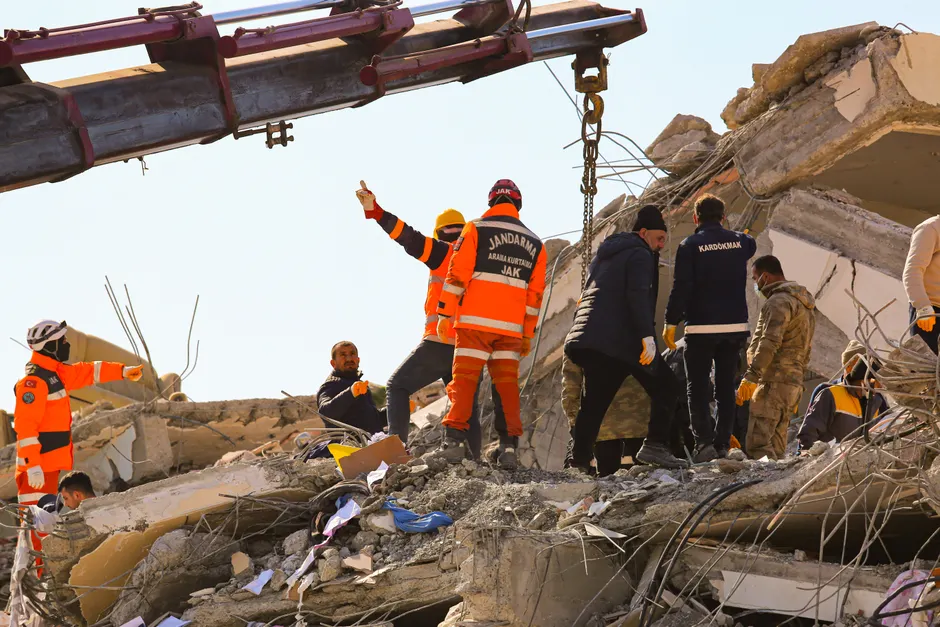
The death toll from catastrophic flash floods along the Nepal-Tibet border has climbed to 633, with nearly 3,000 people still missing across both sides of the frontier, as rescue operations entered their fourth day on 29 August 2026. Nepal's disaster agency confirmed 626 fatalities on the Nepali side, while China's Xinhua news agency reported seven deaths in Tibet The Guardian.
The floods struck on Wednesday, 26 August 2026, triggered by a melting glacier high in the Himalayan mountains that sent a cascade of water surging into populated valleys. Nepal's Ministry of Home Affairs identified the epicenter as the Bhote Koshi River in Rasuwa District, where a massive flood at 8:40 AM local time caused heavy loss of life and property Nepal Ministry of Home Affairs. The toll has risen sharply in the days since: Reuters reported 359 dead with nearly 1,000 missing on 27 August, Nepal police put the figure at 469 on 28 August, and the current count of 626 was reported by Nepal's disaster agency on 29 August Reuters.
The number of people unaccounted for conveys the scale of the disaster. Nepal's disaster agency reports 2,426 people missing on the Nepali side. Xinhua reported 554 missing in Tibet. Among the missing are at least 777 foreigners, with Nepal's disaster agency reporting 517 unaccounted for and Chinese officials putting the number at 260 The Guardian. The high number of missing foreigners reflects how popular the trans-Himalayan trekking routes through the Rasuwa border corridor are with international visitors.
More than 3,700 people have been rescued in Nepal as of 29 August, though adverse weather has hampered the air operations that are critical to reaching isolated valley communities Click2Houston. The Red Cross estimates at least 93,000 people have been affected by the disaster overall. UNICEF has reported at least 18 schools destroyed and another 20 damaged, affecting approximately 10,000 school-age children.
Chinese authorities have offered one cautious note of relief: the risk of a lake formed after the glacier collapse bursting near the China-Nepal border has decreased, as the lake's size appears to be shrinking. Such glacial lake outburst floods, known as GLOFs, are a well-documented hazard in the Hindu Kush-Himalaya region. They occur when rising temperatures destabilize glacial ice and the natural rubble walls, called moraine dams, that hold back meltwater. When those walls give way, the trapped water rushes downstream with little warning.
Nepal's government has begun mobilizing both domestic and international resources. The Ministry of Home Affairs issued an official disaster relief appeal following the 26 August flood, and the government has allocated three designated locations to collect relief materials for those affected along the Bhotekoshi River NDRRMA. Finance Minister Swarnim Wagle stated that the country would need up to $5 billion to rebuild after the floods, a figure that reflects not only immediate infrastructure damage but the long-term reconstruction of homes, schools, roads, and bridges across rugged terrain The Guardian.
Prime Minister Balendra Shah, a 36-year-old former Kathmandu mayor and rapper known as "Balen," faces the first major natural disaster of his premiership. Nepal's disaster management infrastructure has been tested before, and the NDRRMA's own daily bulletins in the days preceding the flood recorded 50 disaster-related incidents across the country in a single 24-hour window, suggesting broader hydrological stress across the region.
The $5 billion reconstruction estimate must be weighed against Nepal's constrained fiscal position. International disaster relief appeals typically draw commitments from multilateral lenders like the World Bank, bilateral partners, and humanitarian agencies, but the money often arrives far more slowly than the situation on the ground demands. The cross-border dimension adds another layer of difficulty: the disaster spans Nepal and the Tibet Autonomous Region of China, requiring coordinated search and rescue along a frontier that is both geographically hostile and politically sensitive.
The trajectory of the death toll, from 31 reported in the NDRRMA's bulletin of 26 August to 626 three days later, illustrates the grim arithmetic of Himalayan disasters. Bodies are recovered as waters recede and access routes open. The missing figure, currently approaching 3,000 across both countries, will likely determine whether this event ranks among the deadliest glacial disasters in the region's recorded history.
For now, the immediate priority remains search and rescue, constrained by weather and terrain. The secondary phase, damage assessment and reconstruction planning, is already being framed by Nepal's finance ministry in terms that signal an appeal for substantial international assistance.


